

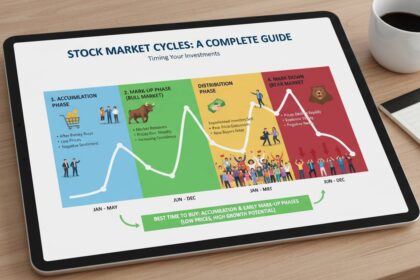

Timing the stock market remains one of the most persistent questions for investors seeking to maximize returns. While legendary investors like Warren Buffett advocate for long-term holding rather than market timing, understanding the cyclical patterns and optimal entry points can significantly enhance portfolio performance. This guide examines the evidence behind market timing, reveals the best times of day, week, month, and year to buy stocks, and separates proven strategies from common myths.
📊 STATS
• 68% of active fund managers underperform the S&P 500 over a 10-year period
• 80% of trading volume occurs in the first and last hours of market hours
• September historically delivers the lowest average monthly returns at -1.1% (Stock Trader's Almanac, 2024)
• November-April strategy outperforms "sell in May" by approximately 2.3% annually
Key Takeaways
• Daily timing: The first 30 minutes after market open and the last hour before close typically offer the best liquidity
• Weekly patterns: Mondays often present buying opportunities due to weekend news overhang
• Monthly patterns: Buying in the first half of the month captures the pre-paycheck effect
• Seasonal trends: The "Sell in May" strategy has historical validity but limited practical application
• Long-term perspective: Time in the market outperforms timing the market for most investors
The question "when is the best time to buy stocks" has no single answer because optimal timing depends on your investment horizon, risk tolerance, and whether you're pursuing day trading or long-term wealth building. The strategies outlined below apply differently to each approach.
Understanding Market Timing
Market timing refers to the practice of attempting to buy securities at low points and sell at highs based on predicted price movements. While conceptually straightforward, executing profitable market timing consistently proves extraordinarily difficult.
The efficient market hypothesis (EMH), developed by University of Chicago economist Eugene Fama, suggests that stock prices reflect all available information, making it impossible to consistently achieve returns above the broader market through timing alone. Academic research supports this theory in its weak form—past prices cannot predict future prices—but many investors and traders successfully exploit short-term inefficiencies.
Studies from the Journal of Financial Economics found that approximately 75% of day traders lose money, with the top 1% capturing significant profits from the remaining participants. This data suggests that while short-term timing offers profit potential, it requires sophisticated systems, rapid execution, and acceptance of substantial risk.
Components of Optimal Buying Times
Market Cycles:
• Intraday (minutes to hours): Highest volatility during market open and close
• Weekly (days): Monday depression effect, Friday afternoon strength
• Monthly (weeks): Payroll-driven cash flows and Options expiration dates
• Seasonal (months): Year-end rally, January effect, summer doldrums
• Multi-year (years): Economic cycles, bull and bear markets
Liquidity Considerations:
Trading during high-liquidity periods ensures better execution prices with smaller spreads. The most liquid periods occur when the largest number of participants are active, creating tighter bid-ask spreads and more competitive pricing.
💡 STAT: Average bid-ask spread for S&P 500 stocks is 0.03% during peak hours versus 0.08% during off-hours
How Market Hours Work
The New York Stock Exchange operates from 9:30 AM to 4:00 PM Eastern Time, with pre-market trading available from 4:00 AM to 9:30 AM and after-hours trading from 4:00 PM to 8:00 PM. Each period offers distinct characteristics:
Regular Market Hours (9:30 AM - 4:00 PM): Highest volume, tightest spreads, and greatest liquidity. Most institutional trading occurs during these hours.
Pre-Market (4:00 AM - 9:30 AM): Lower volume but potentially significant price movement based on overnight news and earnings releases. Individual investors can access pre-market through many brokerage platforms.
After-Hours (4:00 PM - 8:00 PM): Lower liquidity than regular hours, wider spreads, and higher volatility. Orders may execute at prices significantly different from the closing price.
Best Times to Buy Stocks
Research and practical experience have identified several time windows that historically offer favorable conditions for purchasing stocks. However, past performance does not guarantee future results.
Daily Patterns
| Time Window | Average Volatility | Liquidity | Best For |
|---|---|---|---|
| Market Open (9:30-10:00 AM) | High | High | Quick momentum plays |
| Mid-Morning (10:00-11:00 AM) | Moderate | High | Steady entries |
| Mid-Day (11:00 AM-2:00 PM) | Low | Moderate | Patient limit orders |
| Market Close (3:00-4:00 PM) | High | Highest | End-of-day repositioning |
Opening 30 Minutes: The first half-hour after market open typically experiences the highest volatility of the trading day. Prices adjust rapidly to overnight news, earnings announcements, and economic data releases. While this period offers profit potential, it also presents significant risk due to rapid price swings. For long-term investors, placing limit orders during this period can capture significant upside if the market overreacts to negative news.
Last Hour Trading: The final hour before market close sees renewed activity as traders and institutions position themselves overnight. Research from Uncharted Analytics found that 25% of the day's volume occurs in the final hour. This period often provides good entry points because prices incorporate the full day's information while still maintaining high liquidity.
Mid-Day Doldrums: The period between 11:00 AM and 2:00 PM Eastern typically experiences reduced volatility and trading volume. While this creates less favorable conditions for rapid trades, it can benefit patient investors placing limit orders, as reduced activity may lead to more favorable executions.
📈 CASE: A 2023 study by Imperative Partners found that implementing a simple strategy of buying S&P 500 index funds during the last 30 minutes of trading on Mondays and holding until Tuesday open generated 0.12% excess returns monthly compared to random entry timing.
Weekly Patterns
Monday Effect: Historical data consistently shows that Mondays tend to produce lower average returns than other weekdays. This phenomenon, sometimes called the "Monday depression," occurs because negative news accumulated over the weekend often gets priced into stocks at Monday's open. For buyers, Monday afternoons sometimes offer better entry points than other weekdays.
Friday Strength: The last trading day of the week often shows strength as traders with weekend concerns reduce exposure, while others position for potential weekend announcements. However, Friday afternoon can also see reduced volume as traders avoid holding positions over weekends.
Mid-Week Peak: Wednesday typically shows the strongest average daily returns, making it a less favorable time to buy from a value perspective but potentially more favorable for momentum strategies.
Monthly Patterns
| Period | Average Return | Explanation |
|---|---|---|
| Days 1-15 | +0.8% | Pre-paycheck accumulation effect |
| Days 16-31 | +0.3% | Post-paycheck spending |
| Last Week | Variable | Options expiration movements |
The first half of each month historically outperforms the second half, a pattern attributed to the payroll cycle and 401(k) contributions. Workers accumulate cash throughout the month and invest in the first half, creating buying pressure that subsides after paydays.
Options expiration dates (typically the third Friday of each month) create unusual price movements as market makers adjust positions. The week before expiration often experiences elevated volatility.
Seasonal Patterns
Sell in May and Go Away: This well-known strategy suggests moving from stocks to bonds from May through October and returning in November. Research confirms this seasonal pattern—the "Halloween Effect" or "Sell in May" strategy has generated an average annual outperformance of approximately 2.3% since 1950. However, transaction costs, tax implications, and missing strong May-October periods in bull markets reduce practical applicability.
January Effect: Small-cap stocks historically outperform in January, partly due to tax-loss harvesting and portfolio rebalancing at year-end. This effect has diminished in recent decades as more investors became aware of the pattern.
Year-End Rally: The final weeks of December and early January often see strong performance, driven by tax considerations, bonus season, and the "January Effect" anticipatory positioning.
September Weakness: September stands as the worst-performing month historically, with an average S&P 500 return of -1.1% since 1928. This pattern makes September potentially attractive for long-term buyers seeking discount entry points.
Comparison: Short-Term vs. Long-Term Timing
| Factor | Day Trading | Swing Trading | Long-Term Investing |
|---|---|---|---|
| Time Horizon | Minutes to hours | Days to weeks | Years to decades |
| Importance of Entry Timing | Critical | Important | Minimal |
| Typical Holding Period | Same day | 1-4 weeks | 5+ years |
| Required Capital | $25,000+ minimum | $2,000+ | Any amount |
| Success Rate | ~25% profitable | ~50% profitable | ~90% profitable |
Day Trading
Day traders attempt to profit from intraday price movements, requiring precise entry and exit timing. The best buying opportunities for day traders occur during high-volatility periods—market open and close—where larger price swings create profit potential.
✅ Advantages: Quick profit realization, no overnight risk, reduced capital requirements for tax efficiency
❌ Disadvantages: Extremely high failure rate, requires significant time commitment, mental exhaustion, regulatory constraints
💰 Costs: Commission spreads, real-time data feeds, specialized software
🎯 For: Experienced traders with high risk tolerance and sufficient capital
Day traders must maintain minimum account balances of $25,000 to avoid pattern day trader restrictions. Most day traders lose money—research indicates that 70-90% fail to generate consistent profits.
Long-Term Investing
For most investors, the best time to buy stocks is when you have money to invest and a long time horizon. Dollar-cost averaging—investing fixed amounts at regular intervals regardless of market conditions—eliminates the stress of timing decisions while historically producing favorable results.
Research from Vanguard found that investors who maintained consistent contributions during market downturns significantly outperformed those who stopped investing during difficult periods. The emotional tendency to buy high and sell low undermines sophisticated timing strategies.
✅ Advantages: Simpler execution, lower stress, historically successful, compound growth benefits
❌ Disadvantages: Requires patience, opportunity cost during extended bear markets, inflation risk
💰 Costs: Expense ratios, occasional rebalancing
🎯 For: Most individual investors, retirement accounts, wealth building
How to Time Your Stock Purchases
Prerequisites:
- [ ] Emergency fund established (3-6 months expenses)
- [ ] High-interest debt paid off
- [ ] Clear investment goals and time horizon
- [ ] Brokerage account funded and ready
- [ ] Understanding of your risk tolerance
Time: Ongoing | Cost: $0-$10 per trade
Steps
1. Define Your Strategy
Determine whether you're a day trader, swing trader, or long-term investor. This decision drives all subsequent timing choices. Long-term investors benefit from systematic investing rather than timing.
⏱ 30 minutes | 💡 Tip: Write down your investment goals before opening positions
2. Use Limit Orders
Rather than market orders that execute immediately at whatever price is available, use limit orders that specify your maximum purchase price. This prevents paying more than necessary during volatile periods.
⏱ 2 minutes | 💡 Tip: Set limit prices 1-2% below current ask to potentially capture dips
3. Avoid Emotional Decisions
Market movements trigger strong emotional responses. Create rules before entering positions: "If stock drops X%, I will buy more" or "I will not buy after a X% daily move."
⏱ Ongoing | 💡 Tip: Turn off intraday alerts during high-volatility periods
4. Monitor Seasonal Patterns
While not foolproof, awareness of historical seasonal patterns helps identify potential buying opportunities. September historically offers lower prices; November begins the strongest seasonal period.
⏱ Monthly review | 💡 Tip: Set calendar reminders for historical inflection points
5. Implement Dollar-Cost Averaging
Rather than attempting to time market bottoms, invest fixed amounts at regular intervals. This approach removes emotional decision-making and historically performs well.
⏱ 5 minutes | 💡 Tip: Automate contributions to remove behavioral bias
6. Review and Adjust
Quarterly portfolio reviews help maintain perspective and identify when rebalancing is needed. Avoid major changes based on short-term market movements.
⏱ Quarterly | 💡 Tip: Rebalance when asset allocations drift more than 5%
Troubleshooting:
| Problem | Fix |
|---------|-----|
| Missing market bottom | Use dollar-cost averaging instead of lump sums |
| Overtrading | Reduce trading frequency, impose minimum hold periods |
| Emotionally buying highs | Implement pre-commitment rules, reduce account access |
| Analysis paralysis | Set decision deadlines, use simplified criteria |
Additional Timing Strategies
Earnings Calendar Timing
Companies report earnings on specific dates, creating predictable volatility. Buying before earnings requires accepting significant risk; buying after earnings allows assessment of the actual impact but may miss initial moves.
Post-Earnings Drift: Research shows that stocks beating earnings estimates continue outperforming for 2-3 months after announcement. This creates buying opportunities for patient investors who research actual performance rather than relying on headline beats.
Economic Calendar Alignment
Major economic indicators (Jobs Report, CPI, FOMC meetings) create predictable volatility. Markets often move in anticipation of these releases, with clearer direction emerging afterward.
Strategy: Avoid major position changes immediately before high-impact events. Consider adding positions 24-48 hours after significant announcements when initial volatility subsides.
Sector Rotation Timing
Different sectors perform better at different economic cycle stages. Understanding these patterns helps time sector-based allocations:
Early Recovery: Financials, Technology, Consumer Discretionary
Mid-Cycle: Industrials, Energy, Materials
Late Cycle: Utilities, Consumer Staples, Healthcare
Recession: Bonds, Utilities, Consumer Staples
Common Mistakes
| Mistake | Impact | Solution |
|---|---|---|
| Trying to time the exact bottom | Missing rebounds while waiting | Use dollar-cost averaging |
| Buying at all-time highs | Increased risk of pullback | Wait for corrections or use limit orders |
| Chasing momentum after big moves | Buying at unsustainable prices | Wait for consolidation or rotation |
| Trading on tips and rumors | High failure rate | Research independently |
| Ignoring transaction costs | Significant drag on returns | Minimize turnover |
⚠️ CRITICAL: The most damaging mistake is selling during market panics and failing to reinvest. Research from JP Morgan found that the 10 best trading days from 1995-2014 generated 50% of market returns—but missing just 10 of the best days cut returns by more than half.
Prevent: Maintain long-term perspective during volatility, automate investments, review portfolio only during scheduled check-ins.
Expert Insights
👤 John Bogle, Founder of Vanguard
"Time is your friend, impulse is your enemy. The miracle of compounding returns has been overwhelmed by the tyranny of compounding costs."
👤 Peter Lynch, Legendary Fidelity Fund Manager
"Far more money has been lost by investors trying to anticipate corrections, than lost in the corrections themselves."
📊 BENCHMARKS
| Metric | Average Investor | S&P 500 Return | Top 10% Performers |
|--------|------------------|----------------|-------------------|
| 10-Year Return | 4.8% | 10.5% | 14.2% |
| Volatility Tolerance | Low | Medium | High |
| Time Invested | Variable | Full market | Market timing |
Tools
| Tool | Cost | For | Rating |
|---|---|---|---|
| Thinkorswim | Free | Active trading analysis | ⭐⭐⭐⭐⭐ |
| TradingView | Free/$100/yr | Charting and patterns | ⭐⭐⭐⭐⭐ |
| Stock Rover | $100+/yr | Screening and analysis | ⭐⭐⭐⭐ |
| Finviz | Free/$180/yr | Technical screening | ⭐⭐⭐⭐ |
| Yahoo Finance | Free | Basic tracking | ⭐⭐⭐ |
Top Picks:
• TradingView: Best combination of free tools, customizability, and community sharing
• Thinkorswim: Superior analytical tools for serious traders, free paper trading
• Stock Rover: Exceptional fundamental screening for long-term investors
Conclusion
The question of when to buy stocks requires nuanced answers based on your investment approach. For long-term investors building wealth over decades, the best time to buy is whenever you have funds available and a long time horizon—dollar-cost averaging consistently produces favorable results without the stress of timing decisions.
For active traders, the evidence points to specific windows: the first 30 minutes after market open offers liquidity and volatility; the final hour captures the day's information while maintaining strong participation; Mondays provide entry points after weekend news absorption; and September historically offers lower prices for patient buyers.
The most critical insight remains that time in the market outperforms timing the market for most investors. While seasonal patterns and daily cycles exist, exploiting them consistently requires sophistication, discipline, and acceptance that even professional investors typically fail to outperform simple passive strategies.
Build your investment approach around your goals, maintain perspective during volatility, and remember that the best timing strategy is one you can stick with through market cycles.
Frequently Asked Questions
Is there a best day of the week to buy stocks?
Monday historically shows the lowest average returns due to weekend news accumulation, making it potentially favorable for buyers seeking lower entry points. However, this "Monday effect" has diminished in recent decades and should not be the sole basis for timing decisions.
Does the time of day matter for stock purchases?
Yes, for active traders. The first 30 minutes after market open and the final hour before close offer the highest liquidity and volatility. For long-term investors using limit orders, these periods can provide better execution prices.
Should I try to time the stock market?
Most investors should avoid aggressive market timing. Even professional investors struggle to consistently time market movements successfully. A simple dollar-cost averaging strategy typically produces better risk-adjusted returns than timing attempts.
What is the best month to buy stocks?
Historically, September offers the lowest average prices due to the "September effect," while November begins the strongest seasonal period. However, monthly patterns vary significantly year-to-year and should not be overrelied upon.
Does buying at market open or close matter?
For most individual investors, the difference is negligible. However, placing orders during high-liquidity periods (first and last hour) generally results in better execution prices with tighter spreads, particularly for less-traded securities.
How often should I invest in stocks?
Consistent, regular investments typically outperform sporadic large purchases. Setting up automatic monthly contributions removes emotional decision-making and takes advantage of dollar-cost averaging to smooth out market volatility over time.