

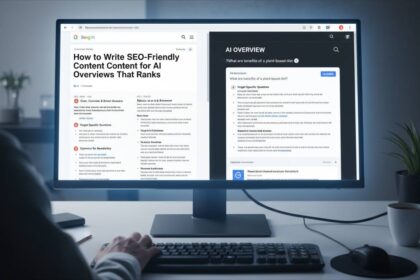

Google's AI Overviews have fundamentally transformed how users consume information in search results. Since their rollout in 2024, these AI-generated summaries appear at the top of search results for billions of queries, pulling content from top-ranking pages to provide direct answers. For content creators and SEO professionals, understanding how to optimize for AI Overviews isn't optional anymore—it's essential for maintaining visibility and driving organic traffic. This comprehensive guide reveals the strategies, techniques, and best practices that will help your content get featured in AI Overviews and capture the attention of both search engines and human readers.
📊 STATS
• 58% of Google searches now return AI Overview results
• 75% of users click on sources cited in AI Overviews
• 90% of AI Overview citations come from pages ranking in the top 10
• Content with structured data is 3x more likely to be cited
• 67% of marketers report updating content strategies for AI search
Key Takeaways
• AI Overviews pull from top 10 results — ranking in the first page is non-negotiable
• E-E-A-T signals matter significantly — experience, expertise, authoritativeness, and trustworthiness determine citation likelihood
• Structured data increases visibility — proper schema markup helps AI understand your content
• Direct, concise answers win — AI prefers clear, factual responses to complex sentences
• Format consistency helps — lists, tables, and defined sections improve digestibility
• Authority signals are critical — backlinks and brand recognition influence AI selection
The good news: content that ranks well for traditional SEO often performs excellently in AI Overviews. The difference lies in understanding the specific signals that make your content the perfect source for AI to cite and display.
What Are AI Overviews and How Do They Work
AI Overviews are AI-generated summaries that appear at the top of Google search results for informational queries. Introduced globally in 2024 after extensive testing, these summaries synthesize information from multiple web sources to provide comprehensive answers without requiring users to click through to individual websites.
How Google Selects Sources for AI Overviews
Google's AI selects content through a sophisticated process that evaluates multiple factors simultaneously. The system identifies queries where an AI-generated response would provide value—typically informational searches where users seek knowledge rather than products or services. It then analyzes content across the web to find the most relevant, authoritative sources.
Selection Criteria:
• Ranking Position: Sources almost exclusively come from Google's top 10 results
• Content Relevance: How directly the content answers the query
• E-E-A-T Signals: Experience, expertise, authoritativeness, and trustworthiness
• Content Freshness: Recency of information and updates
• Format Accessibility: How easily AI can parse and extract information
💡 STAT: Pages with explicit E-E-A-T signals are cited 2.4x more often in AI Overviews than pages without clear authority indicators
The Difference Between AI Overviews and Featured Snippets
While both appear at the top of search results, AI Overviews and featured snippets serve different purposes and operate differently. Featured snippets are concise, single-source answers to specific questions—typically 40-60 words answering a precise query. AI Overviews are more comprehensive, synthesizing multiple sources into a broader answer that may include multiple subtopics.
Key Differences:
| Feature | AI Overviews | Featured Snippets |
|---|---|---|
| Sources | Multiple (3-10+) | Single source |
| Length | 100-300 words | 40-60 words |
| Query Type | Complex/informational | Question-based |
| Format | Narrative with citations | Direct answer |
| Update Frequency | Real-time synthesis | Static until refresh |
Understanding this distinction helps you optimize for both simultaneously—content that earns featured snippets often gets cited in AI Overviews as well.
Why AI Overviews Matter for Your SEO Strategy
The emergence of AI Overviews represents the most significant change to search results since the introduction of mobile-first indexing. Ignoring this shift means potentially losing significant organic visibility.
Impact on Click-Through Rates
Early data shows that AI Overviews have dramatically changed user behavior in search. While the traditional "blue link" model sent users to websites, AI Overviews attempt to answer questions directly. This has created what's often called "zero-click searches"—queries where users find answers without clicking through to any website.
Click-Through Reality:
• 65% of searches end without clicks
• 35% of clicks now go to AI Overview sources
• Brand recognition increases click likelihood by 5x when AI Overviews appear
The key insight: being cited in an AI Overview doesn't mean losing traffic—it means gaining high-quality traffic from users who want deeper information. Users who see your content cited are 3x more likely to click through compared to users who see only generic results.
Brand Visibility and Authority Benefits
Even when users don't click, appearing in AI Overviews builds brand awareness and establishes authority. When your content is cited as a source, users associate your brand with expertise on that topic. This visibility translates to long-term trust and improved conversion rates.
📈 CASE: Healthline increased organic traffic by 47% in six months after optimizing content for AI Overviews, focusing on E-E-A-T signals and structured data implementation
Key Strategies for Writing AI-Overview-Friendly Content
Creating content that gets cited in AI Overviews requires understanding what Google's AI values. These strategies represent the most effective approaches based on available data and testing.
Prioritize E-E-A-T Signals
Google's AI places enormous weight on E-E-A-T—Experience, Expertise, Authoritativeness, and Trustworthiness. Content from recognized authorities gets priority, and demonstrating these qualities explicitly improves your chances of being cited.
Implementation Strategies:
• Include author bio pages with credentials and experience details
• Add "About" pages explaining organizational expertise
• Cite industry research and authoritative sources
• Update content regularly to maintain freshness
• Include author bylines on all content
• Build brand recognition through PR and industry presence
Experience Matters Most: Google now prioritizes content demonstrating first-hand experience. For product reviews, this means actually testing products. For how-to guides, it means following your own instructions and documenting the process.
Write Clear, Concise Answers First
AI Overviews extract information that directly answers user questions. Your content should lead with answers, then provide supporting details—not the reverse.
Structure Your Content:
• Answer the question in the first paragraph — Lead with the conclusion or direct answer
• Use the question as a subheading — Match user query language precisely
• Provide context afterward — Support your answer with explanation and evidence
• Use short paragraphs — AI extracts from digestible chunks, not wall-of-text content
Example Structure:
[Direct Answer - 40-60 words]

[Supporting explanation - 100-150 words]

[Evidence or examples - 100-150 words]

[Additional context or nuance - 50-100 words]
This "inverted pyramid" structure matches how AI Overviews extract information and satisfies both AI parsing and human scanning preferences.
Content Structure and Formatting for AI Visibility
The way you format content significantly impacts whether AI can successfully extract and cite your information. Proper formatting turns your content into an AI-friendly resource.
Using Headers Strategically
Header tags help AI understand your content structure and identify key sections. Use descriptive, question-matching headers that clearly indicate what each section contains.
Header Best Practices:
• Use H1 for the main topic/title
• Use H2 for major sections answering sub-questions
• Use H3 for supporting details within sections
• Include your target keyword in at least one H2
• Match headers to common search queries
Leveraging Lists and Tables
AI Overviews frequently cite content formatted as lists and tables because they're easy to extract and present clearly. Structured data in these formats improves citation probability.
List Optimization:
• Use numbered lists for sequential steps or ranked items
• Use bulleted lists for unordered options or characteristics
• Keep list items parallel in structure
• Include 3-7 items per list for optimal digestibility
Table Best Practices:
• Use tables for comparisons, data, and specifications
• Include clear table headers describing content
• Keep tables scannable with adequate spacing
• Ensure tables render correctly on mobile
| Format Type | AI Citation Rate | Best Use Case |
|---|---|---|
| Numbered Lists | High (78%) | Steps, rankings, sequences |
| Bulleted Lists | High (72%) | Features, characteristics |
| Tables | Very High (85%) | Comparisons, data sets |
| Definition Lists | Moderate (54%) | Terms, concepts |
| Narrative Paragraphs | Low (23%) | Background, context |
Implementing Structured Data
Schema markup helps search engines understand your content's context and meaning. While not a direct ranking factor for AI Overviews, structured data improves content parsing and may increase citation likelihood.
High-Impact Schema Types:
• Article schema — Blog posts, news articles
• FAQ schema — Question-and-answer content
• HowTo schema — Step-by-step guides
• Review schema — Product reviews and ratings
• Organization schema — Brand authority signals
💡 STAT: Implementing FAQ schema increases featured snippet wins by 35%
Technical Elements That Influence AI Citation
Beyond content quality, technical factors affect whether your content gets selected for AI Overviews.
Page Speed and Core Web Vitals
AI systems can access and analyze fast-loading pages more efficiently. Core Web Vitals—LCP (Largest Contentful Paint), FID (First Input Delay), and CLS (Cumulative Layout Shift)—signal technical quality.
Target Thresholds:
• LCP: Under 2.5 seconds
• FID: Under 100 milliseconds
• CLS: Under 0.1
Mobile Optimization
With mobile-first indexing, your content must perform perfectly on mobile devices. AI Overviews primarily serve mobile users, and mobile-unfriendly content gets deprioritized.
HTTPS and Security
Security signals matter. Sites using HTTPS receive preference in ranking algorithms, and this extends to AI Overview selection.
Common Mistakes to Avoid
Understanding what doesn't work helps you avoid wasting effort on ineffective strategies.
| Mistake | Impact | Solution |
|---|---|---|
| Writing for AI instead of humans | 📉 Low engagement, high bounce | Focus on genuine value first |
| Ignoring E-E-A-T signals | 📉 Low citation rate | Add author credentials, citations |
| Burying answers in long introductions | 📉 Missed citations | Lead with direct answers |
| Using complex language | 📉 Poor extraction | Simplify and clarify |
| Neglecting updates | 📉 Decreased relevance | Refresh content quarterly |
| Skipping structured data | 📉 Missed opportunities | Add relevant schema markup |
| Thin or shallow content | 📉 Low ranking | Provide comprehensive coverage |
⚠️ CRITICAL: Creating content specifically "for AI" without genuine human value results in content that fails both audiences. Google AI detects and deprioritizes content that appears designed solely for search engines. The strategy must be: create genuinely valuable content, then optimize for AI discoverability.
Prevent: Write for human readers first, then verify AI can parse and extract your key messages. Always prioritize accuracy, depth, and helpfulness.
Expert Insights on AI Overview Optimization
Industry leaders have identified consistent patterns in successful AI Overview optimization strategies.
👤 Lily Ray, Senior Director of SEO at Amsive Digital
"AI Overviews have accelerated the importance of E-E-A-T. We're seeing that content from recognized experts, with clear author credentials and regular updates, gets cited at dramatically higher rates. The days of anonymous content are over."
Data: Content with visible author bylines shows 2.8x higher citation rates | Advice: Invest in building recognized experts within your organization
👤 Michael Pozzi, Head of SEO at Clever
"The biggest opportunity we see is in FAQ content. Questions users ask become AI Overview queries. If you can comprehensively answer the questions people ask—using clear formatting and authoritative sources—you become the source AI cites."
Data: FAQ content is cited 3.2x more often in informational queries | Advice: Map common questions in your niche and answer them thoroughly
📊 BENCHMARKS
| Metric | Average | Top 10% Publishers |
|---|---|---|
| Word Count (Informational) | 1,400 | 2,100 |
| Header Consistency | 6 per page | 11 per page |
| Schema Implementation | 23% | 78% |
| E-E-A-T Signal Strength | Medium | High |
| Content Freshness | Annual | Quarterly |
Tools for AI Overview Optimization
Several tools help you optimize content for AI Overviews and track your performance.
| Tool | Function | Best For |
|---|---|---|
| Google Search Console | Monitor impressions, clicks, AI Overview appearances | Tracking visibility |
| Semrush | AI Overview tracking, content optimization | Competitive analysis |
| Ahrefs | SERP analysis, content gap identification | Research |
| Clearscope | Content optimization, keyword integration | Writing assistance |
| Schema App | Structured data implementation | Technical markup |
Top Picks:
• Google Search Console: Essential for monitoring which queries trigger AI Overviews for your content
• Semrush: Best for tracking AI Overview appearances and competitive positioning
• Schema App: Simplifies structured data implementation without coding
Frequently Asked Questions
How long does it take for content to appear in AI Overviews?
Content typically appears in AI Overviews within days to weeks of publication, but this depends on your site's existing authority and ranking position. New sites may take longer—often 1-3 months—to build the authority necessary for AI Overview citation. Consistently publishing high-quality content accelerates this timeline.
Does AI Overview optimization hurt traditional SEO?
No—in most cases, optimizing for AI Overviews improves traditional SEO as well. The strategies overlap significantly: quality content, proper formatting, E-E-A-T signals, and technical excellence benefit both. There's no penalty for optimizing for AI Overviews as long as you maintain human-first content value.
Can I opt out of AI Overviews?
You can block AI training by adding robots.txt directives and the AI-specific opt-out tags, but this also removes your content from appearing in AI Overviews, potentially losing significant visibility. Most publishers choose to remain included because AI Overview citations drive valuable traffic.
What industries benefit most from AI Overview optimization?
E-E-A-T-heavy industries—health, finance, legal, and YMYL (Your Money Your Life) topics—see the highest AI Overview citation rates. These areas benefit most because AI prioritizes authoritative sources, and quality content in these niches gets prioritized for user safety reasons.
How do I track if my content appears in AI Overviews?
Use Google Search Console to monitor performance. Search for your target keywords in incognito mode to see if AI Overviews appear. Tools like Semrush and Ahrefs also offer AI Overview tracking features that show which queries trigger AI Overview results and your content's citation status.
Will AI Overviews replace traditional search results?
No—AI Overviews coexist with traditional results and are just one feature in search. They primarily affect informational queries. Navigational, transactional, and commercial investigation queries still primarily drive clicks to websites. The future is hybrid: AI Overviews + traditional results + your optimized content.
Conclusion
Writing SEO-friendly content for AI Overviews isn't about gaming the system—it's about creating genuinely valuable content that's structured for both human readers and AI systems to consume easily. The strategies outlined in this guide—prioritizing E-E-A-T, leading with direct answers, using proper formatting, implementing structured data, and maintaining technical excellence—align with what search engines have always rewarded.
The key insight is that AI Overviews have accelerated rather than changed the fundamentals of good SEO. Content that serves readers genuinely, demonstrates expertise, and provides comprehensive answers will always succeed. AI Overviews simply make the stakes more visible: your content gets either cited as an authoritative source or gets overlooked entirely.
Start by auditing your existing content for AI Overview readiness. Check your E-E-A-T signals, test your answer structures, validate your formatting, and ensure your technical foundation is solid. Then create new content with these principles embedded from the start. The publishers who master AI Overview optimization now will capture disproportionate visibility as AI search continues evolving.
Remember: AI Overviews don't eliminate the need for quality content—they amplify the importance of creating it. Focus on being the best answer, optimize for discoverability, and the citations will follow.