

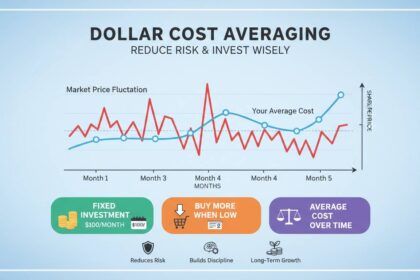

In an era of market volatility and economic uncertainty, investors are constantly seeking strategies that can help them build wealth while minimizing risk. Dollar cost averaging has emerged as one of the most popular and accessible investment approaches for both novice and experienced investors. This strategy offers a systematic way to navigate market fluctuations without the stress of trying to time perfect entry points. Understanding how dollar cost averaging works and its potential benefits can help you make more informed decisions about your financial future.
Understanding Dollar Cost Averaging
Dollar cost averaging is an investment strategy where an individual invests a fixed amount of money at regular intervals, regardless of market conditions or asset prices. Rather than attempting to predict market highs and lows, investors commit to purchasing shares of a particular investment—such as a mutual fund, exchange-traded fund (ETF), or individual stocks—on a consistent schedule, whether weekly, monthly, or quarterly.
The fundamental principle behind this approach is simple: when prices are high, your fixed investment buys fewer shares, and when prices are low, the same amount purchases more shares. Over time, this process averages out the cost per share, potentially reducing the impact of volatility on your overall portfolio. The strategy removes emotional decision-making from the investment process, helping investors stay committed to their long-term financial goals regardless of short-term market turbulence.
This method differs dramatically from lump sum investing, where investors deploy a large amount of capital all at once. While lump sum investing can be advantageous in certain market conditions, it also carries significantly higher timing risk—the possibility that markets may decline immediately after investing.
How Dollar Cost Averaging Works in Practice
Implementing a dollar cost averaging strategy involves establishing a regular investment schedule and sticking to it regardless of market circumstances. For example, an investor might decide to invest $500 monthly into a diversified index fund such as one that tracks the S&P 500. During months when the market is performing well and share prices are higher, that $500 purchases fewer shares. When markets decline and share prices drop, the same $500 buys more shares.
Consider a practical illustration: imagine investing $300 monthly into a fund with the following share prices over six months—$50, $45, $40, $45, $50, and $55. In month one at $50 per share, you acquire six shares. In month two at $45, you purchase approximately 6.67 shares. Month three at $40 yields 7.5 shares. By month six at $55, you acquire only about 5.45 shares. Across these six months, you would have invested $1,800 and accumulated approximately 37.27 shares, bringing your average cost per share to roughly $48.30—not the arithmetic average of $47.50, but a weighted average that accounts for the varying share quantities purchased at each price point.
Most major brokerage platforms now offer automated investment features that make dollar cost averaging effortless. Investors can set up recurring transfers from their bank accounts directly into their investment portfolios, allowing the strategy to execute automatically without requiring ongoing attention or manual intervention.
Key Benefits of Dollar Cost Averaging
The advantages of implementing a dollar cost averaging strategy extend far beyond simple convenience. Understanding these benefits can help investors appreciate why this approach has remained popular across decades of market cycles.
Mitigates Timing Risk: One of the most significant advantages is the elimination of the need to predict market movements. Attempting to time the market—buying at the absolute bottom and selling at the absolute peak—has proven virtually impossible even for professional investors. Dollar cost averaging removes this pressure by ensuring you participate in market gains during favorable periods while accumulating more shares during downturns.
Encourages Consistent Investing: The systematic nature of the strategy helps investors develop disciplined saving and investing habits. Rather than making sporadic investment decisions based on market news or emotions, investors commit to regular contributions that compound over time. This consistency often proves more valuable than attempting to find the perfect investment moment.
Reduces Emotional Decision-Making: Market volatility can trigger fear and greed, leading to poor investment decisions such as panic selling during downturns or buying enthusiastically at market peaks. Dollar cost averaging provides a predetermined framework that keeps investors on course during turbulent periods, preventing reactive decisions that can harm long-term returns.
Makes Investing More Accessible: Investors do not need large sums of money to begin building wealth through dollar cost averaging. Many platforms allow minimum investments of just $1 or $5 per month, making it possible for individuals to start investing regardless of their current financial situation. This accessibility democratizes wealth-building opportunities that were once reserved for those with substantial capital.
Dollar Cost Averaging vs. Lump Sum Investing
The debate between dollar cost averaging and lump sum investing continues among financial professionals, with valid arguments on both sides. Understanding the trade-offs between these approaches is essential for developing an investment strategy aligned with your goals and risk tolerance.
Lump sum investing involves investing a significant amount of money immediately rather than spreading it out over time. Historical data suggests that lump sum investing often outperforms dollar cost averaging in bull markets because more capital gets invested earlier, allowing it more time to grow. When markets trend upward consistently, getting money invested quickly generally produces better results than waiting.
However, lump sum investing carries substantial timing risk. If markets decline shortly after you invest a large sum, you may experience significant losses before your investment has any opportunity to recover. This psychological impact can be devastating, causing investors to abandon their strategies during difficult periods.
Financial advisors often recommend a hybrid approach for investors with significant liquid assets. Rather than investing everything immediately or waiting years to deploy capital gradually, many opt to invest lump sums over periods of six to twelve months—a strategy sometimes called "phased" or "stepped" dollar cost averaging. This approach provides some protection against immediate market declines while still getting the majority of capital invested relatively quickly.
Common Misconceptions About Dollar Cost Averaging
Despite its widespread adoption, several misconceptions about dollar cost averaging persist that may prevent investors from fully appreciating its value or implementing it correctly.
Misconception 1: It Guarantees Profits. Dollar cost averaging does not guarantee positive returns or protect against market losses. While it can reduce the average cost per share during declining markets, your investments can still lose value if markets continue to fall over extended periods. The strategy is designed to manage timing risk, not eliminate investment risk entirely.
Misconception 2: It Always Outperforms Lump Sum Investing. As noted previously, dollar cost averaging frequently underperforms lump sum investing in strong bull markets. The strategy's primary value lies in risk management and behavioral discipline rather than maximizing returns in all market conditions.
Misconception 3: It Requires Constant Monitoring. Once you establish a dollar cost averaging plan, it requires minimal ongoing attention. The automated nature of most modern investment platforms allows the strategy to execute without requiring regular intervention or adjustments.
Misconception 4: It Only Works in Volatile Markets. While dollar cost averaging demonstrates particular value during volatile periods by accumulating more shares during price declines, it also provides benefits in trending markets. Even in consistently rising markets, the strategy helps investors avoid the paralysis that often accompanies attempts to time perfect entry points.
Implementing an Effective Dollar Cost Averaging Strategy
Successful implementation of a dollar cost averaging strategy requires careful planning and commitment. Investors should consider several factors when establishing their approach.
First, determine an appropriate investment amount that fits comfortably within your budget while maximizing the strategy's effectiveness. Financial experts typically recommend investing money you won't need for at least three to five years, allowing sufficient time for market fluctuations to average out and for your investments to potentially grow.
Second, select appropriate investments for your strategy. Diversified index funds and ETFs offer excellent choices for most investors due to their low costs, broad market exposure, and instant diversification. Individual stocks can also work but require more research and monitoring to build appropriately diversified portfolios.
Third, choose an interval that matches your cash flow and preferences. Monthly investments represent the most common approach, though some investors prefer weekly or quarterly schedules. The key is consistency rather than frequency—regular intervals matter more than optimizing the exact timing.
Finally, maintain a long-term perspective. Dollar cost averaging rewards patience and discipline. Market downturns, while uncomfortable, represent opportunities to accumulate more shares at discounted prices. Investors who stay committed to their strategies through complete market cycles typically achieve more favorable outcomes than those who abandon their plans during temporary setbacks.
The Role of Dollar Cost Averaging in Modern Portfolio Theory
Modern portfolio theory emphasizes diversification across asset classes, time horizons, and investment strategies. Dollar cost averaging fits naturally within this framework as a method for managing one of the most persistent risks investors face: timing uncertainty.
By systematically investing over time, dollar cost averaging helps investors implement one of the most challenging aspects of sound investment management—remaining invested during market volatility. This behavioral advantage often proves more valuable than any theoretical return optimization, as investor behavior frequently determines actual investment outcomes more than strategy selection alone.
Financial advisors frequently recommend dollar cost averaging for investors building retirement accounts such as 401(k) plans and Individual Retirement Accounts (IRAs). The automatic nature of contributions through employer-sponsored plans aligns perfectly with the dollar cost averaging philosophy, allowing consistent investing to occur without requiring conscious effort from participants.
Conclusion
Dollar cost averaging represents a time-tested investment approach that offers meaningful benefits for investors seeking to build wealth systematically while managing market risk. By investing fixed amounts at regular intervals regardless of market conditions, investors can reduce the impact of volatility, eliminate emotional decision-making, and develop disciplined saving habits. While the strategy may not always produce the highest possible returns in bull markets, its ability to help investors stay committed to their long-term goals makes it an invaluable tool for wealth building.
Whether you are just beginning your investment journey or looking to refine an existing portfolio, dollar cost averaging provides a straightforward framework that can help you achieve your financial objectives. The key lies in choosing appropriate investments, establishing a sustainable contribution schedule, and maintaining the discipline to continue through market fluctuations. With patience and consistency, this approach can help you build substantial wealth over time while reducing the stress often associated with investing.
Frequently Asked Questions
What is dollar cost averaging in investing?
Dollar cost averaging is an investment strategy where you invest a fixed amount of money at regular intervals (such as monthly) into a particular investment, regardless of its price. This approach helps reduce the impact of market volatility by spreading your purchases over time, potentially lowering your average cost per share.
How much money do I need to start dollar cost averaging?
You can start with very small amounts. Many brokerage platforms allow recurring investments starting at $1 or $5 per month, making this strategy accessible to almost anyone. The key is consistency rather than the initial amount.
Does dollar cost averaging guarantee profits?
No, dollar cost averaging does not guarantee profits or protect against losses. While it can reduce average costs during market declines, your investments can still lose value if markets fall consistently. The strategy manages timing risk but doesn't eliminate investment risk.
Should I use dollar cost averaging or lump sum investing?
The choice depends on your specific situation. Lump sum investing often performs better in rising markets, while dollar cost averaging provides protection against market timing risk and reduces emotional decision-making. Many investors use a hybrid approach, gradually investing large sums over several months.
How long should I continue dollar cost averaging?
There is no mandatory duration, but financial experts generally recommend continuing for at least three to five years to realize the strategy's benefits. Many investors maintain dollar cost averaging indefinitely as part of their ongoing wealth-building approach.
Can dollar cost averaging work with any investment?
While dollar cost averaging can work with various investments, it is most commonly used with diversified index funds and ETFs. These investments provide broad market exposure and low costs, making them ideal for long-term systematic investing strategies.