

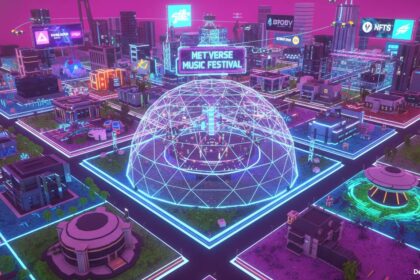

Non-fungible tokens (NFTs) have evolved far beyond their origins as digital collectibles. While the initial 2021 boom focused heavily on JPEG artwork and profile pictures, the underlying technology has spawned practical applications across industries. NFT utility refers to the functional value that these unique digital tokens provide beyond mere ownership—access rights, verifiable credentials, asset fractionalization, and programmable incentives are transforming how we think about digital and physical assets.
QUICK ANSWER: NFT utility is the practical functionality that non-fungible tokens provide beyond ownership verification. Unlike cryptocurrencies where each unit is identical, NFTs represent unique assets that can grant access to exclusive content, verify identity, tokenize real-world assets, enable gaming rewards, and facilitate programmable ownership. The utility spans across gaming, membership programs, intellectual property, real estate, finance, and identity verification.
AT-A-GLANCE:
| Use Case Category | Primary Function | Notable Examples |
|---|---|---|
| Digital Collectibles | Ownership & provenance | Bored Ape Yacht Club, CryptoPunks |
| Gaming Assets | In-game items with true ownership | Axie Infinity, Gods Unchained |
| Membership/Access | Gated content & experiences | Gary Vaynerchuk's VeeCon |
| IP/Licensing | Royalty enforcement & copyright | NBA Top Shot, music rights |
| Real-World Assets | Property tokenization | RealT, Tangible |
| Identity/Credentials | Verifiable certificates | University diplomas, IDs |
| DeFi Applications | Collateral, derivatives | NFTfi, JPEG'd |
KEY TAKEAWAYS:
- ✅ NFT utility has expanded from art collectibles to functional applications across 8+ industries
- ✅ Gaming represents the largest utility segment, with in-game assets worth billions in secondary markets
- ✅ Real-world asset tokenization is bridging crypto with traditional finance—over $500M in real estate has been tokenized
- ❌ Most NFT "utility" claims remain marketing gimmicks—verify actual functionality before purchasing
- 💡 "TheNFT space is moving from speculation to utility. The projects that survive will solve real problems." — Daniel Maegaard, crypto analyst (2023)
KEY ENTITIES:
- Projects/Platforms: OpenSea, Axie Infinity, NBA Top Shot, RealT, Polygon, Solana
- Standards: ERC-721, ERC-1155, SPL tokens
- Industries: Gaming, Real Estate, Finance, Education, Entertainment
- Organizations: Ethereum Foundation, W3C, various universities piloting credentials
LAST UPDATED: January 2025
What Makes NFTs Different From Regular Digital Files?
The critical distinction between an NFT and a regular digital file is verifiability and programmability. A screenshot you take can be copied infinitely—a JPEG of the Mona Lisa exists in millions of copies. An NFT, however, lives on a blockchain, creating a publicly verifiable record of authenticity, ownership history, and transferability.
This seemingly simple concept unlocks profound possibilities. When you buy an NFT, you're not purchasing the right to view an image—you're acquiring a cryptographic proof of ownership recorded on an immutable ledger. This proof can be programmed to include automated royalty payments, grant access to external systems, or represent fractional shares of assets.
The technical foundation matters here. Most NFTs operate on Ethereum using the ERC-721 standard, which establishes a uniform interface for unique tokens. Alternative standards like ERC-1155 allow for semi-fungible tokens—useful for event tickets with multiple quantities of the same type. Solana, Polygon, and other blockchains offer compatible standards with different cost and speed tradeoffs.
Understanding this distinction is essential because the word "utility" gets thrown around carelessly in NFT marketing. True utility requires the underlying token to actually perform a function—granting access, verifying identity, or representing ownership of something with value outside the blockchain.
Gaming and Virtual World Applications
Gaming represents perhaps the most developed and economically significant NFT utility sector. In traditional gaming, players spend hundreds or thousands of hours acquiring in-game items, only to have those items remain locked within the game's ecosystem. If the game shuts down or the player's account is banned, the value evaporates.
NFTs introduce true ownership. Players can trade, sell, or transfer gaming assets freely on open marketplaces, with ownership permanently recorded on the blockchain. This fundamentally changes the economics of gaming.
Axie Infinity, developed by Vietnam-based Sky Mavis, pioneered this model. Players collect and breed digital creatures called Axies, each represented as an NFT. These Axies can be battled, trained, and traded—generating real income for players in countries like the Philippines where Axie became a primary income source during COVID-19 lockdowns. At its peak, the game processed over $1 billion in weekly trading volume.
Beyond Axie, the ecosystem has expanded dramatically. Gods Unchained offers trading card gameplay where cards are true NFTs. The Sandbox and Decentraland create virtual real estate—land parcels sold as NFTs that users can develop, rent, or sell. Virtual clothing and accessories for metaverse avatars represent another growing category, with brands like Adidas, Nike, and Gucci launching NFT wearables.
The economic implications are substantial. According to market research from DappRadar, NFT gaming transactions exceeded $4.5 billion in 2023, representing roughly 40% of all NFT trading volume. This isn't speculation—it's actual utility being used by millions of active players.
Membership, Access, and Exclusive Experiences
One of the most straightforward NFT utility applications is using tokens as membership passes or access keys. Instead of traditional membership cards or ticket systems, organizations issue NFTs that grant holders exclusive benefits.
The Bored Ape Yacht Clubfamously pioneered this model. Purchasing a Bored Ape NFT ($350,000+ average at peak) doesn't just provide an artwork—it grants lifetime membership to an exclusive club. Benefits have included access to exclusive events, free NFT airdrops, commercial licensing rights to your Ape's image, and direct communication channels with celebrities and founders.
VeeCon, the annual conference founded by entrepreneur Gary Vaynerchuk, takes a similar approach. VeeCon tickets are issued as NFTs, granting holders access to the multi-day event plus ongoing community benefits. The NFT-based approach allows for easy verification, prevents ticket counterfeiting, and enables holders to resell their tickets (with the original seller potentially receiving royalties on secondary sales).
This utility model works across industries:
- Sports teams issue NFT season tickets that fans can collect, trade, or potentially use for exclusive meet-and-greets
- Musicians release NFT albums that grant access to backstage content or exclusive concert tickets
- Online communities use NFTs as verification for paid Discord channels, private forums, or subscriber benefits
The advantage over traditional systems is programmability. NFT-based memberships can be programmed to automatically grant new benefits to existing holders, revoke access under certain conditions, or distribute royalty payments when tokens change hands.
Intellectual Property and Digital Licensing
NFTs provide a natural framework for intellectual property management because they can encode licensing terms directly into the token. This creates verifiable, programmable copyright—potentially revolutionizing how creators monetize and control their work.
The music industry has shown particular interest. When musicians release songs as NFTs, they can program automatic royalty payments every time the token resells. A musician could release a song NFT and receive 10% of any future sale price in perpetuity—something impossible with traditional licensing structures.
Royalty enforcement has been a persistent problem in digital media. Streaming services pay fractions of cents per play, and artists often lose control of their work once distributed. NFT licensing attempts to solve this by making the token itself the license. Possession of the NFT represents possession of the licensing rights, with terms encoded in smart contracts.
NBA Top Shot, which sells NFT highlights of NBA moments, demonstrates this application at scale. The NBA maintains control over which moments get minted, ensures official licensing, and receives ongoing revenue from secondary market transactions. Fans get verified, collectible moments with actual scarcity (only so many LeBron dunk highlights exist) rather than infinite digital copies.
Visual artists similarly benefit. When digital artist Beeple sold a piece for $69 million at Christie's in 2021, the sale made headlines. More practically, artists like Pak and digital art collective Forkast have explored NFT licensing models that maintain creator attribution and ongoing royalties across resales.
Real-World Asset Tokenization
Perhaps the most financially significant NFT utility application involves tokenizing real-world assets—real estate, artwork, commodities, and other tangible property. This process converts ownership of physical assets into blockchain tokens, enabling fractional ownership, automated dividends, and 24/7 trading.
Real estate represents the largest试点. Platforms like RealT allow investors to purchase tokenized shares of rental properties. Each property is fractionally owned via NFTs, with rental income distributed automatically to token holders via smart contracts. Investors can buy fractions starting at small dollar amounts, dramatically lowering real estate investment barriers.
The global real estate tokenization market is projected to grow from $2.6 billion in 2023 to over $16 billion by 2030, according to various industry analyses. This growth reflects genuine utility: easier property access for investors, faster settlement times, transparent ownership records, and potential for global investment in previously localized markets.
Beyond real estate, other asset classes are being tokenized:
- Fine art: Fractional ownership platforms like Masterworks allow investors to buy shares in valuable paintings
- Commodities: Tokenized gold and silver backed by physical reserves
- Private equity: Traditional investment funds exploring blockchain representation of fund shares
This utility directly addresses limitations of traditional ownership. Real estate transactions typically take 30-60 days, involve extensive paperwork, and require significant capital. Tokenized assets can be transferred in minutes with near-zero administrative overhead.
Identity, Credentials, and Verification
NFTs can represent verifiable credentials—diplomas, certifications, IDs, and other credentials that require authentication. This application leverages blockchain's immutability to create tamper-proof records.
Universities have begun experimenting with NFT diplomas. The University of Melbourne, MIT, and several other institutions have issued blockchain-based credentials that graduates can present to employers. Unlike paper diplomas that can be forged, NFT credentials can be instantly verified through a simple wallet check.
This extends to professional certifications, workforce credentials, and skill certifications. Organizations can issue NFT badges representing completed training, achieved skills, or passed examinations. Because the blockchain maintains a permanent, verifiable record, employers can trust credentials without contacting issuing institutions.
Polygon, a Layer-2 scaling solution for Ethereum, has partnered with multiple governments to explore NFT-based identity documents. The goal isn't necessarily to replace physical IDs, but to create verifiable digital copies for online interactions.
The World Wide Web Consortium (W3C), the standards organization for the web, has been developing verifiable credentials standards that can work with blockchain technology. This suggests institutional acceptance of blockchain-based verification is growing.
DeFi and Financial Applications
Decentralized finance (DeFi) has developed innovative uses for NFTs as financial instruments. While most NFTs are unique, certain applications treat them as collateral or derive financial products from them.
NFTfi, a peer-to-peer lending platform, allows users to use their NFTs as collateral for loans. A collector holding valuable CryptoPunks or Bored Apes can borrow against that asset without selling—preserving their collection while accessing liquidity. If the borrower defaults, the NFT transfers to the lender.
This represents a significant development. Previously, illiquid assets like digital art had no financial utility beyond potential appreciation or resale. NFT-based lending unlocks capital while maintaining ownership.
Other DeFi applications include:
- Fractionalization: Splitting expensive NFTs into smaller tradable tokens
- Derivatives: Prediction markets and other financial products built around NFT price movements
- Staking: Locking NFTs to earn yields or receive rewards
The integration of NFTs with DeFi remains nascent but growing. Total value locked in NFT lending protocols has seen substantial growth, though the space remains highly speculative and carries significant risk—NFT valuations can be extremely volatile.
Frequently Asked Questions
Q: What is the difference between an NFT with utility and one without?
An NFT with utility performs a function—it grants access, represents ownership of something, or enables a specific action. An NFT without utility is essentially a digital collectible whose value depends entirely on market demand for that specific token or collection. When evaluating NFT projects, examine whether the token actually does something or merely represents ownership of an image.
Q: Can NFTs be used for everyday purchases?
Some retailers accept NFT payments, though adoption remains limited. More practical is using NFTs for membership or loyalty programs—retailers can issue NFT-based rewards that unlock exclusive products or discounts. The mainstream "wallet-to-store" NFT purchasing experience hasn't materialized for most consumers yet.
Q: Are NFT transactions environmentally friendly?
This depends on the blockchain. Ethereum's transition to proof-of-stake in 2022 reduced its energy consumption by approximately 99.95%. Polygon and Solana also use more energy-efficient consensus mechanisms compared to older proof-of-work chains. Environmental concerns remain valid for proof-of-work networks but have been substantially addressed by major platforms.
Q: How do I verify an NFT project's utility claims?
Research the project's roadmap, check whether promised features are already functional, and look for third-party audits or security reviews. Many projects promise utility that never materializes. Verified utility typically involves partnerships with established companies, functioning smart contracts you can examine, and actual user adoption statistics.
Q: What happens to my NFT if the company behind it closes?
This depends on how the NFT is structured. If utility depends on a centralized service that shuts down, the NFT may become worthless. If utility is decentralized—meaning it's enforced by smart contracts that continue running without company involvement—the NFT may retain value. Always investigate the technical architecture before purchasing NFTs with promised utility.
Q: Are NFTs only for digital items?
No. While most current NFTs represent digital assets, real-world asset tokenization is growing rapidly. Physical real estate, artwork, vehicles, and other tangible property can be tokenized on blockchains, with NFTs representing ownership fractions. This is still an emerging market with regulatory uncertainty, but the infrastructure is developing.
Conclusion
NFT utility has matured significantly beyond the speculative JPEG trading that dominated early coverage. The technology provides genuine solutions for digital ownership, gaming economies, membership systems, intellectual property management, real-world asset investment, credential verification, and financial applications.
The key distinction for consumers and investors is differentiating genuine utility from marketing claims. True NFT utility involves functional code—smart contracts that actually perform actions, partnerships with established institutions, and working products with real users. The projects that will define the next phase of NFT development are solving verifiable problems rather than merely creating artificial scarcity.
For those exploring NFT applications, the most mature utility sectors are gaming and collectibles, where true ownership has demonstrable value. Membership and access applications offer immediate practical use. Real-world asset tokenization represents enormous potential but carries regulatory and structural risks worth investigating carefully.
The technology continues evolving. Standards are maturing, regulatory frameworks are developing, and institutional adoption is growing. Whether you're an investor, creator, or simply curious, understanding utility—not just speculation—is the key to navigating this space meaningfully.
This article provides educational overview of NFT utility applications and does not constitute financial advice. Specific projects mentioned should be thoroughly researched before engagement.