

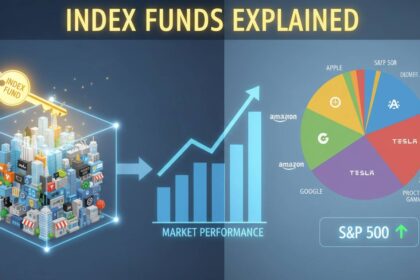

An index fund is a type of investment fund that tracks a specific market index, such as the S&P 500, by holding the same securities in proportion to their index weights. If you're wondering whether you should invest in one, the short answer is: index funds offer a low-cost, diversified way to participate in market growth over time, making them suitable for most individual investors—particularly those seeking passive, long-term wealth building without the complexity of selecting individual stocks.
This comprehensive guide breaks down exactly how index funds work, their advantages and limitations, and how to determine whether they belong in your investment portfolio.
What Exactly Is an Index Fund?
An index fund is a pooled investment vehicle designed to replicate the performance of a specific financial market index. When you purchase shares of an S&P 500 index fund, you're essentially buying a small slice of ownership in all 500 companies tracked by that index—including giants like Apple, Microsoft, Amazon, and Berkshire Hathaway.
The mechanism is straightforward: fund managers purchase securities in quantities that mirror the index's composition. If Apple represents 7% of the S&P 500's market capitalization, approximately 7% of the fund's assets go toward Apple shares. This passive management approach eliminates the need for ongoing buy-sell decisions based on market timing or individual company analysis.
Key characteristics of index funds:
- Passive management: Fund managers automatically adjust holdings when the underlying index changes, requiring minimal active decision-making
- Broad diversification: A single fund can provide exposure to hundreds or thousands of companies across industries and geographies
- Low expense ratios: Because there's no research team picking stocks, operational costs remain substantially lower than actively managed alternatives
- Transparency: You always know exactly what securities the fund holds because it simply mirrors a public index
Index funds differ from exchange-traded funds (ETFs), though the terms are often used interchangeably. While both can track indexes, ETFs trade like individual stocks throughout the day, whereas traditional index mutual funds execute transactions at the end-of-day net asset value.
How Index Funds Work
Understanding the mechanics behind index fund investing helps you appreciate why these vehicles have become the backbone of retirement portfolios for millions of Americans.
The Tracking Process
When you invest money into an index fund, your capital combines with other investors' money to create a pool of assets. The fund manager then uses this pool to purchase securities that match the target index. For example, a Total Stock Market index fund would purchase shares in thousands of U.S. companies, with larger companies receiving proportionally more investment based on their market capitalization.
The index itself serves as the blueprint. Major indices like the S&P 500, Nasdaq-100, or Wilshire 5000 use specific criteria to determine which companies to include and how to weight them. Some indices weight by market capitalization (largest companies have the biggest impact), while others use equal weighting or fundamental metrics like earnings or book value.
The Role of Fund Managers
Despite the "passive" label, index fund managers perform essential functions:
- Rebalancing: When companies are added to or removed from an index, the fund must adjust its holdings accordingly
- Cash management: Handling incoming investor capital and dividend reinvestment requires ongoing portfolio adjustments
- Tracking error minimization: Skilled managers employ techniques to ensure the fund's performance closely matches the index, accounting for factors like trading costs and cash drag
Cost Structure
The primary cost metric is the expense ratio, expressed as an annual percentage of your invested assets. This fee covers management expenses, administrative costs, and trading commissions. For context, actively managed stock mutual funds often charge expense ratios of 0.75% to 1.5% or higher, while many index funds charge 0.03% to 0.25%.
If you invest $50,000 in an index fund with a 0.05% expense ratio, you'll pay approximately $25 annually in fees. The same investment in an actively managed fund charging 1% would cost $500 per year—a difference that compounds significantly over decades.
Key Advantages of Index Fund Investing
The case for index funds rests on several compelling advantages that have convinced both individual investors and institutional money managers to allocate substantial portfolios to these vehicles.
Proven Long-Term Performance
Research consistently demonstrates that index funds outperform the majority of actively managed funds over extended periods. According to SPIVA (S&P Indices Versus Active) data, over the 10-year period ending December 2023, approximately 89% of large-cap active fund managers failed to beat the S&P 500. The odds improve only slightly over longer time horizons, with persistent challenges from high fees and underperformance cycles.
This isn't because active managers lack skill—it's primarily a math problem. After fees, transaction costs, and the challenge of timing markets consistently, the average active fund inherently underperforms its benchmark by the amount of its expenses.
Instant Diversification
Rather than researching and purchasing dozens or hundreds of individual stocks, an index fund provides immediate diversification across an entire market segment. This approach dramatically reduces company-specific risk—the danger that any single company's poor performance significantly damages your portfolio.
Historical data from the Great Recession (2008-2009) illustrates this protection. While some individual companies lost 80% or more of their value, diversified index funds declined roughly 50% at the market bottom and recovered substantially faster as the broader economy improved.
Time Efficiency
Active investing requires continuous research, monitoring, and decision-making. Index fund investors can build a portfolio with minimal ongoing attention, making this approach ideal for busy professionals, those new to investing, or anyone preferring a "set it and forget it" strategy.
Tax Efficiency
Because index funds typically have lower turnover—the frequency of buying and selling securities—they generate fewer taxable capital gains distributions than actively managed funds. This tax efficiency advantage becomes particularly valuable in taxable brokerage accounts where you bear full responsibility for capital gains taxes.
Index Funds vs. Actively Managed Funds
Understanding the fundamental differences between these two approaches helps you make informed allocation decisions.
| Factor | Index Funds | Actively Managed Funds |
|---|---|---|
| Management Style | Passive, tracks index | Active stock selection |
| Typical Expense Ratio | 0.03% - 0.25% | 0.75% - 2.0%+ |
| Goal | Match market returns | Beat market returns |
| Tax Efficiency | Higher (lower turnover) | Lower (higher turnover) |
| Effort Required | Minimal | Substantial |
| Historical Performance | Consistent with benchmark | Mixed, often below benchmark |
The active vs. passive debate isn't absolute. Some actively managed funds do outperform their benchmarks consistently, and certain market conditions—such as during major dislocations or in less-efficient market segments like small-cap value—have historically favored active management. However, identifying which managers will outperform in advance remains notoriously difficult.
Most financial experts recommend a core allocation to index funds supplemented by satellite positions in actively managed funds or individual stocks where you have specific expertise or conviction.
Types of Index Funds to Consider
The index fund universe has expanded far beyond the basic S&P 500 tracking fund. Understanding the major categories helps you build an appropriate portfolio.
U.S. Stock Index Funds
- Total Stock Market funds: Cover the entire U.S. equity market (3,000+ stocks), providing the broadest domestic exposure
- S&P 500 funds: Track the 500 largest U.S. companies, representing approximately 80% of U.S. market capitalization
- Large-cap, Mid-cap, Small-cap: Target specific company size segments
- Growth and Value: Focus on companies with growth-oriented characteristics or those trading at discounts to intrinsic value
International Index Funds
- Developed Markets: Cover countries like Japan, the United Kingdom, Germany, and Canada
- Emerging Markets: Include faster-growing economies like China, India, Brazil, and South Korea
- Global Funds: Combine U.S. and international exposure in a single fund
Bond Index Funds
- U.S. Treasury funds: Government debt securities, generally lower risk
- Corporate Bond funds: Higher yields but increased credit risk
- Municipal Bond funds: Tax-advantaged income for investors in higher tax brackets
- Total Bond Market: Broad exposure across government and corporate debt
Specialty Index Funds
- Real Estate Investment Trusts (REITs): Track real estate ownership and mortgage investments
- Commodity funds: Provide exposure to physical goods like gold, oil, or agricultural products
- Sector funds: Focus on specific industries such as healthcare, technology, or energy
Potential Drawbacks and Risks
Despite their widespread recommendation, index funds aren't universally superior. Understanding limitations prevents disappointment and helps you set realistic expectations.
No Downside Protection
Index funds fully participate in market declines. During bear markets, your portfolio value drops proportionally with the index. While this is true of any market-weighted investment, active managers theoretically can hold cash or shift to defensive positions—though as noted, they rarely successfully time these decisions.
Tracking Error
No index fund perfectly replicates its benchmark. Small discrepancies arise from cash holdings, trading costs, and timing differences between index changes and fund adjustments. While typically minimal (fractions of a percentage point), tracking error matters for precision-focused investors.
Concentration in Largest Companies
Market-capitalization-weighted indices naturally concentrate in the largest companies. In the S&P 500, the top 10 holdings represent approximately 30% of the index. If these mega-cap stocks significantly underperform, your portfolio feels disproportionate impact.
Limited Upside Potential
By definition, index funds never "beat the market"—they match it. While this is mathematically advantageous after fees, investors seeking exceptional returns must look beyond index funds to individual stock selection or alternative investments.
Market Segment Risk
Index funds focused on specific segments—like emerging markets or technology sectors—can experience prolonged underperformance. Geographic or sector concentration contradicts the diversification benefit that makes broad market index funds attractive.
How to Start Investing in Index Funds
Building an index fund portfolio involves several practical steps, from selecting accounts to choosing specific funds.
Step 1: Select an Account Type
- 401(k): Employer-sponsored retirement accounts often include index fund options with low expenses
- IRA or Roth IRA: Individual retirement accounts provide tax advantages and typically offer index fund selections
- Taxable Brokerage: For money you'll need before retirement, standard investment accounts offer flexibility
Step 2: Choose Your Allocation
A common starting framework follows the "three-fund portfolio" approach:
- U.S. Total Stock Market Index Fund: 50-70% of equity allocation
- International Stock Index Fund: 20-40% of equity allocation
- U.S. Bond Index Fund: Remaining percentage based on risk tolerance and time horizon
Younger investors with longer time horizons typically allocate more heavily to stocks, while those approaching retirement shift toward bonds and cash equivalents.
Step 3: Select Specific Funds
Look for funds with:
- Low expense ratios: Under 0.20% for U.S. stock funds
- Large asset base: Indicates investor trust and provides trading liquidity
- Fund age: Established funds with track records offer more predictability
- Tax-efficiency: Check the fund's tax cost ratio if investing in taxable accounts
Step 4: Implement Regular Contributions
Dollar-cost averaging—investing fixed amounts at regular intervals—reduces timing risk and builds wealth systematically. Many employers facilitate this through automatic 401(k) contributions, and brokerages offer automatic investment plans for IRA and taxable accounts.
Is an Index Fund Right for You?
Index funds serve most investors well, but certain profiles benefit particularly from this approach.
Index funds are ideal if you:
- Want to invest for long-term goals like retirement
- Prefer minimal ongoing portfolio management
- Believe in efficient market theory (that stock prices already reflect available information)
- Are building wealth gradually through regular contributions
- Seek broad diversification without extensive research
You might consider alternatives if you:
- Have specialized knowledge in specific industries or companies
- Want to actively trade based on market timing or momentum
- Require income generation beyond market returns
- Have very short investment time horizons
- Prefer investing based on fundamental analysis of individual businesses
The evidence overwhelmingly supports index funds as a default choice for most investors. Even legendary investors like Warren Buffett have recommended index funds for the majority of individuals, stating that low-cost S&P 500 index funds are the best choice for most people building long-term wealth.
Frequently Asked Questions
What is the minimum amount needed to invest in an index fund?
Most index funds allow you to start with very small amounts—some have no minimum initial investment beyond the cost of a single share, which can be under $50. Many brokerages now offer fractional shares, allowing you to invest even single dollars into any fund. Target-date retirement funds through 401(k) plans often accept contributions of 1% of your salary.
Are index funds safe during a recession?
Index funds decline during recessions because they own stocks that lose value. However, they typically recover faster than the average actively managed fund due to lower costs and broader diversification. No investment is completely safe from market downturns, but index funds provide built-in recovery potential through exposure to the entire market.
How many index funds should I own?
Three to four funds typically provide sufficient diversification for most investors. A common three-fund portfolio includes U.S. stocks, international stocks, and bonds. Adding more funds provides diminishing returns while increasing complexity. Owning dozens of index funds often indicates overlapping exposure rather than improved diversification.
Can you lose money in index funds?
Yes, index funds can lose value when the underlying market declines. If you invest in an S&P 500 index fund during a market crash, your investment will decrease in value. However, historically, U.S. markets have recovered from every recession and reached new highs over time. Short-term volatility differs from permanent loss, which occurs when companies go bankrupt—risk mitigated through broad diversification.
Do index funds pay dividends?
Many index funds pay dividends received from the underlying securities. Dividend distribution frequency varies by fund—some pay monthly, others quarterly or annually. You can choose between funds that reinvest dividends automatically (accumulation shares) or distribute them as cash (income shares). Dividend yields on stock index funds typically range from 1.5% to 2% annually.
When should I sell an index fund?
Buy-and-hold index fund investors rarely need to sell unless their investment goals change. You might consider selling if you need the money for a major expense, you're rebalancing your allocation to maintain your target risk level, or you're moving to a different investment strategy. Timing the market by selling during downturns generally hurts long-term returns.
Conclusion
Index funds represent one of the most powerful wealth-building tools available to individual investors. By providing broad diversification, rock-bottom costs, and proven long-term performance, they eliminate the need to outsmart markets—a goal that defeats even professional investors most of the time.
For most people building retirement savings or working toward other long-term financial goals, a diversified portfolio of low-cost index funds offers the most reliable path to financial growth. The simplicity of this approach frees mental energy for other aspects of your life while letting compound interest work its magic over decades.
Start with a simple three-fund portfolio, contribute consistently regardless of market conditions, and resist the temptation to tinker. Your future self will thank you.