

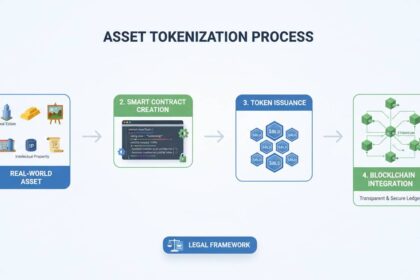

Tokenization in blockchain represents one of the most transformative concepts in modern finance and digital asset management. At its core, tokenization converts real-world assets, rights, or utilities into digital tokens that exist on a blockchain network, enabling fractional ownership, seamless transferability, and unprecedented transparency. This process fundamentally changes how individuals and institutions interact with assets ranging from real estate and art to company equity and voting rights.
Understanding tokenization matters because it democratizes access to traditionally illiquid, high-barrier assets while introducing cryptographic security mechanisms that have never existed before. Whether you're an investor seeking new opportunities, a business owner exploring fundraising options, or simply a curious learner, grasping tokenization concepts positions you at the forefront of a financial revolution reshaping multiple industries.
Key Insights
- The global tokenization market is projected to reach $5.6 trillion by 2030 (Bain & Company, 2024)
- Tokenization reduces asset transfer times from days to seconds while cutting costs by up to 90%
- Over 500 blockchain platforms currently support token creation, with Ethereum dominating at 60% market share
- Major financial institutions including BlackRock, Fidelity, and Goldman Sachs have launched tokenized asset products
This guide walks you through every essential aspect of blockchain tokenization, from foundational definitions to practical implementation considerations.
Understanding Tokenization: Definition and Core Concepts
Tokenization in blockchain refers to the process of creating a digital representation of an asset or utility on a distributed ledger. Each token serves as a cryptographic record that encapsulates specific attributes—ownership rights, value, access privileges, or voting power—and exists within a decentralized network that verifies and maintains these records without requiring traditional intermediaries like banks or brokers.
The concept emerged from blockchain technology's ability to establish trustless consensus. When an asset gets tokenized, its digital representation becomes immutable, transparent, and programmable through smart contracts. This means parties can transact directly with each other, relying on code rather than institutions to enforce agreements.
Key Components of Tokenization:
The tokenization ecosystem comprises several interconnected elements that work together to create functional digital assets. Understanding these building blocks clarifies how the entire process operates.
First, the underlying asset represents whatever is being tokenized—could be a painting, a share of real estate, a company's stock, or even a service credit. The asset doesn't move; instead, its ownership or value gets mapped onto the blockchain through a token.
Second, the smart contract serves as the programmable backbone of tokenization. These self-executing contracts contain the rules governing the token: transfer conditions, supply limits, distribution schedules, and compliance requirements. When predetermined conditions meet, the smart contract automatically executes without human intervention.
Third, the blockchain infrastructure provides the decentralized ledger where tokens live. This distributed network ensures that token records remain secure, transparent, and resistant to tampering. Different blockchains offer varying levels of customization, speed, and cost structures.
Fourth, the token standard defines the technical rules for how tokens operate within a specific blockchain ecosystem. On Ethereum, for example, ERC-20 governs fungible tokens while ERC-721 handles non-fungible tokens (NFTs). These standards ensure interoperability—when you buy a tokenized asset, you know it will work within the broader ecosystem.
The distinction between tokenization and traditional digital representation proves crucial. Simply digitizing an asset—creating a PDF of a title deed, for instance—doesn't constitute tokenization. True tokenization embeds the asset's essential characteristics into cryptographic code, enabling programmable behavior, instant verification, and decentralized custody.
Types of Blockchain Tokens: A Comprehensive Comparison
Not all tokens serve identical purposes. The blockchain ecosystem recognizes several distinct token categories, each designed for specific use cases and regulatory treatments. Understanding these differences helps you navigate the tokenized asset landscape more effectively.
Fungible vs. Non-Fungible Tokens
Fungible tokens represent interchangeable units of value—similar to how one dollar equals another dollar. If you swap one Bitcoin for another Bitcoin, you haven't lost or gained anything because each unit carries identical value and characteristics. This fungibility makes fungible tokens ideal for currencies, shares, and divisible assets.
Non-fungible tokens (NFTs) possess unique identifiers that distinguish each token from every other token. Like distinct concert tickets with different seat numbers, NFTs cannot be exchanged on a one-to-one basis because each represents something singular—a digital artwork, a domain name, a game item, or a specific real estate property. The NFT market exploded in 2021, reaching $25 billion in trading volume , though it has since stabilized.
| Token Type | Fungibility | Best Use Cases | Example Platforms |
|---|---|---|---|
| Fungible (ERC-20) | Interchangeable | Currencies, utility tokens, securities | Ethereum, Solana, Polygon |
| Non-Fungible (ERC-721) | Unique | Digital art, collectibles, property deeds | Ethereum, Flow, Tezos |
| Semi-Fungible | Both | Gaming items, event tickets | Ethereum |
Security Tokens vs. Utility Tokens
The distinction between security tokens and utility tokens carries significant regulatory implications that直接影响 how these tokens can be offered and traded.
Security tokens represent ownership interests in underlying assets—typically companies, real estate, or investment funds. These tokens fall under securities regulations because they derive value from the asset's performance and offer investors profit-sharing potential. The U.S. Securities and Exchange Commission (SEC) applies the Howey Test to determine whether a token qualifies as a security, requiring token issuers to register offerings or qualify for exemptions.
Utility tokens provide access to specific products or services within a blockchain network rather than representing ownership stakes. Think of utility tokens as digital coupons or access passes. Holders might receive discounts, voting rights, or platform usage privileges. While utility tokens avoid securities regulations in many jurisdictions, regulators scrutinize them carefully to ensure they don'tfunction as de facto securities.
The regulatory landscape continues evolving. In 2023, the European Union's MiCA (Markets in Crypto-Assets) regulation established comprehensive frameworks for both categories, providing clearer compliance pathways that many issuers now follow globally.
Stablecoins: The Bridge Between Crypto and Traditional Finance
Stablecoins represent a specialized token category designed to maintain fixed value, typically pegged to fiat currencies like the U.S. dollar. By backing each token with real-world reserves, stablecoins aim to combine blockchain's speed and transparency with traditional money's stability.
Three primary stablecoin models exist: fiat-collateralized (backed by bank-held reserves like Tether and USD Coin), crypto-collateralized (backed by other cryptocurrencies with overcollateralization for protection), and algorithmic (using algorithms to maintain stability without direct reserves, though this approach has shown vulnerabilities).
The stablecoin market reached $150 billion in total value by early 2024 (CoinGecko data), reflecting their critical role in cryptocurrency trading, decentralized finance, and cross-border payments. Major payment platforms including PayPal have launched their own stablecoins, signaling institutional acceptance.
How Tokenization Works: The Technical Process
Understanding the technical mechanics behind tokenization helps you appreciate both its power and its limitations. The process transforms physical or traditional digital assets into blockchain-native tokens through a series of carefully orchestrated steps.
Step 1: Asset Identification and Structuring
The tokenization journey begins when an asset owner or issuer decides to digitize a specific asset. This involves defining what rights the token will represent, determining the total supply (how many tokens will exist), and establishing the token's divisibility—whether buyers can purchase whole tokens or fractional shares.
For real-world assets like real estate, this step also requires legal structuring. Issuers typically create special purpose vehicles (SPVs)—legal entities that own the underlying asset while issuing tokens representing fractional ownership. This separation provides legal clarity and investor protection.
Step 2: Smart Contract Development
Developers then write the smart contract that will govern the token. This code defines critical parameters: the total supply, transfer restrictions, compliance mechanisms, and any automated functions like dividend distributions.
Security auditing becomes essential at this stage. Vulnerabilities in smart contract code have led to exploits costing hundreds of millions of dollars. Reputable issuers engage multiple independent audit firms to review code before deployment. The CertiK blockchain security firm reports that smart contract vulnerabilities accounted for $4.3 billion in losses through 2023, underscoring the importance of thorough auditing.
Step 3: Token Deployment
Once tested and audited, the token gets deployed onto the chosen blockchain network. This deployment creates a permanent, immutable record of the token on the distributed ledger. The deployment transaction includes the compiled smart contract code and initial parameters, establishing the token's permanent presence.
After deployment, the token becomes tradable on supported exchanges or through over-the-counter (OTC) markets. For regulated securities tokens, secondary trading often requires operating within compliant trading platforms.
Step 4: Custody and Management
Post-deployment, token holders need secure storage solutions. Custody refers to how tokens get stored and protected. Individual holders use software wallets (applications) or hardware wallets (physical devices), while institutional investors typically engage specialized custodians offering insured, regulated storage solutions.
The custody question significantly impacts institutional adoption. Fidelity Digital Assets and Coinbase Custody have built billion-dollar businesses providing institutional-grade token custody, addressing concerns about security and regulatory compliance that previously prevented large investors from entering the space.
Benefits and Advantages of Asset Tokenization
The tokenization revolution isn't happening by accident—specific advantages drive adoption across industries. Understanding these benefits helps you evaluate whether tokenized assets make sense for your investment or business strategy.
Liquidity Transformation
Perhaps the most transformative benefit involves liquidity—how easily an asset converts to cash without significantly affecting its price. Traditional assets like real estate, private company equity, and fine art are notoriously illiquid. Selling a commercial property might take 12-18 months; unwinding a private equity position could take 5-7 years.
Tokenization solves this through fractional ownership. When a $10 million building gets divided into 10,000 tokens, each worth $1,000, investors can sell portions of their holdings in minutes rather than months. This democratization benefits both sellers (who access broader markets) and buyers (who enter previously inaccessible asset classes).
The secondary market potential dramatically changes asset dynamics. Tokenized securities can trade 24/7 globally, compared to traditional markets with limited hours and geographic restrictions.
Fractional Ownership and Accessibility
Tokenization enables what was previously impossible: owning meaningful fractions of expensive assets. A retail investor with $500 could theoretically own 0.01% of a Manhattan office building—a level of access that previously required million-dollar minimums.
This democratization extends beyond individual investors. Small institutional allocators can now access private market strategies previously available only to the largest pension funds and endowments. The minimum investment barriers that concentrated wealth in exclusive opportunities are dissolving.
Operational Efficiency and Cost Reduction
Traditional asset transfers involve multiple intermediaries—brokers, custodians, transfer agents, lawyers—each adding time and expense. A securities transfer might take 2-5 business days and cost $500-2,000 in fees.
Blockchain tokenization eliminates many intermediaries through programmable, automated processes. Smart contracts handle transfer verification, ownership recording, and compliance checking simultaneously. The World Economic Forum estimates that blockchain adoption could reduce banking infrastructure costs by $20 billion annually by 2030, largely through eliminating redundant verification processes.
Transparency and Anti-Fraud Protection
Every token transaction gets recorded on the public blockchain, creating an auditable history visible to all participants. This transparency reduces fraud opportunities that plague traditional markets—fake share certificates, duplicate ownership claims, and opaque transfer histories become virtually impossible.
For regulated securities, this transparency also simplifies compliance monitoring. Regulators can observe market activity in real-time rather than relying on periodic, often delayed, reporting from multiple intermediaries.
Real-World Applications and Use Cases
Tokenization isn't theoretical—thousands of projects have already launched, demonstrating practical implementations across diverse sectors. Examining these real-world applications clarifies where tokenization delivers immediate value.
Real Estate
The real estate sector represents one of tokenization's most promising applications. In 2022, Brookfield Properties tokenized a $450 million portfolio of commercial properties, enabling faster investor onboarding and more efficient secondary trading. Other notable projects include:
- RealT: A platform that has tokenized over $50 million in U.S. rental properties, allowing international investors to own fractional shares of rental homes
- Section 4: Tokenized a $100 million portfolio of commercial properties across 17 states
- Lintblock: Focused on European real estate, enabling property fractionalization compliant with local regulations
Real estate tokenization addresses specific pain points: the illiquidity of property investments, the high minimums that exclude most investors, and the administrative complexity of managing multiple co-owners.
Financial Securities
The traditional securities industry has begun exploring tokenization to modernize infrastructure. In 2023, BlackRock and Goldman Sachs executed blockchain-based transactions for tokenized U.S. Treasury funds, demonstrating that institutional-grade assets can successfully migrate to blockchain rails.
Germany's Stuttgart Exchange launched a regulated trading platform for security tokens, while Singapore's Monetary Authority has approved several tokenized securities frameworks. These developments suggest traditional finance increasingly accepts blockchain-based securities infrastructure.
Art and Collectibles
The art world has embraced tokenization, primarily through NFTs but increasingly through fractional ownership platforms. Masterworks, a fractional art investing platform, has tokenized over $500 million in contemporary art, allowing investors to buy shares in paintings by artists like Banksy, Basquiat, and KAWS.
This application addresses art's notorious illiquidity and lack of accessibility. A $10 million painting previously required ultra-high-net-worth collectors—now 5,000 investors can each own $2,000 worth.
Supply Chain and Identity
Beyond financial assets, tokenization addresses supply chain verification and digital identity. Companies tokenize certificates of authenticity, enabling consumers to verify product origins. Documents like passports, degrees, and licenses can exist as verifiable tokens, reducing fraud and administrative burden.
The World Economic Forum has highlighted blockchain-based digital identity as essential infrastructure, with tokenized credentials offering secure, portable proof of qualifications and status.
How to Create Tokens: Practical Implementation
If you're considering creating tokens—whether for fundraising, community building, or asset digitization—understanding the implementation pathway helps you plan effectively.
Choosing the Blockchain Platform
The first technical decision involves selecting which blockchain will host your token. Each platform offers distinct trade-offs:
Ethereum remains the dominant choice, hosting over 60% of tokens by market capitalization. Its mature ecosystem, extensive developer tools, and established infrastructure provide reliability, though transaction costs (gas fees) can spike during network congestion.
Solana offers dramatically faster transaction speeds and lower fees, attracting projects prioritizing user experience. Its growing DeFi ecosystem provides comparable functionality to Ethereum.
Polygon operates as an Ethereum scaling solution, offering faster, cheaper transactions while maintaining Ethereum's security. Many projects launch on Polygon to avoid high gas costs during early stages.
Algorand focuses on institutional adoption, with built-in compliance features and carbon-negative operations. It's attracted several regulated security token projects.
Token Standards and Technical Requirements
Once you've chosen a blockchain, selecting the appropriate token standard shapes your project's technical foundation. On Ethereum, most fungible tokens use the ERC-20 standard, which defines basic functions like balance queries and transfer mechanisms.
For NFTs, ERC-721 and the newer ERC-6551 (which attaches expanded data to NFTs) provide the technical framework. Gaming and multi-token applications often use ERC-1155, which allows single contracts to manage both fungible and non-fungible tokens.
The technical implementation typically requires Solidity programming knowledge (for Ethereum-compatible chains), smart contract deployment experience, and integration work connecting your token to wallets, exchanges, and indexers.
Legal and Regulatory Compliance
Technical implementation must align with legal requirements that vary by jurisdiction and token type. U.S.-based issuers typically require securities law compliance through SEC registration or exemption qualification, commonly using Regulation D (accredited investors), Regulation S (offshore offerings), or Regulation CF (crowdfunding).
Working with specialized crypto attorneys and compliance consultants helps navigate these requirements. The costs—typically $50,000-200,000 for a properly structured tokenized offering—represent significant investment but protect against regulatory action that could terminate projects.
Common Mistakes to Avoid
As tokenization attracts attention, several recurring errors trip up issuers and investors alike. Learning from these mistakes helps you navigate the space more successfully.
Ignoring Regulatory Requirements
Many token issuers treat regulatory compliance as an afterthought, assuming crypto operates outside legal frameworks. This approach has repeatedly failed—SEC enforcement actions have resulted in billions in fines and project shutdowns. Before launching any tokenized offering, obtain clear legal guidance specific to your jurisdiction and token type.
Poor Smart Contract Security
The immutable nature of blockchain means smart contract bugs become permanent vulnerabilities. The DAO hack (2016) exploited a code vulnerability to steal $60 million in Ether; more recently, countless projects have lost funds to similar issues. Never deploy tokens without multiple independent security audits and extensive testnet testing.
Choosing Inappropriate Token Standards
Selecting the wrong token standard creates unnecessary complications. Using NFTs for a currency-like application wastes resources and confuses users. Understanding the technical differences between standards—and consulting with experienced developers—prevents foundational mistakes.
Overlooking Custody Solutions
New token holders often underestimate storage complexity. Losing access to wallet keys means permanent asset loss (unlike banks, blockchains offer no password recovery). Conversely, keeping tokens in hot wallets creates security vulnerabilities. Plan your custody strategy thoughtfully, considering both security and accessibility needs.
Misrepresenting Token Economics
Projects sometimes create token structures that fail over time—excessive supply causing price collapse, unsustainable reward mechanisms, or unclear utility leading to speculation-driven dynamics. Thoughtful token economics design, ideally validated through economic modeling, prevents these failure modes.
The Future of Tokenization: Trends and Predictions
The tokenization industry stands at an inflection point. While early implementations demonstrated technical feasibility, the coming years will likely see mainstream adoption driven by regulatory clarity, infrastructure maturation, and expanding use cases.
Institutional adoption is accelerating. Major banks including J.P. Morgan, Goldman Sachs, and Citi have established blockchain divisions focused on tokenized assets. The launch of spot Bitcoin ETFs in 2024—approved by the SEC after years of rejection—signals regulatory willingness to accommodate digital assets within traditional frameworks.
Regulatory frameworks are consolidating. The EU's MiCA regulation provides a comprehensive model that other jurisdictions are studying. In the U.S., proposed legislation like the Financial Innovation and Technology for the 21st Century Act aims to provide clearer boundaries for digital asset regulation.
Real-world asset tokenization is expanding beyond early-adopter sectors. Mastercard's blockchain-based supply chain tracking, IBM's food provenance initiatives, and central bank digital currency (CBDC) experiments all represent tokenization concepts applied at scale.
The convergence of tokenization with artificial intelligence and Internet of Things technologies promises new possibilities. Smart contracts could automatically manage complex asset relationships, while IoT sensors could trigger token transfers based on physical world events—creating entirely new asset categories that bridge digital and physical realms.
Frequently Asked Questions
What is tokenization in blockchain in simple terms?
Tokenization in blockchain converts real-world assets or rights into digital tokens stored on a blockchain. These tokens represent ownership or value and can be bought, sold, or transferred like cryptocurrencies, but they represent underlying assets like real estate, company stock, or art rather than functioning as currencies themselves.
What are the main types of tokens in blockchain?
The primary token categories include utility tokens (which provide access to services), security tokens (which represent ownership stakes and are regulated as securities), stablecoins (which maintain fixed value tied to assets like the U.S. dollar), and NFTs (non-fungible tokens representing unique items). Each serves distinct purposes and carries different regulatory requirements.
Is tokenization the same as cryptocurrency?
No, while both exist on blockchains, they differ fundamentally. Cryptocurrencies like Bitcoin function as currencies themselves—digital money used for payments and store of value. Tokenization instead represents ownership or rights to external assets; the token is a digital wrapper around something else that has independent value.
What are the benefits of tokenizing assets?
Tokenization offers several advantages: it enables fractional ownership (allowing investors to buy portions of expensive assets), increases liquidity (tokens can trade 24/7 versus traditional markets' limited hours), reduces transaction costs by eliminating intermediaries, and provides transparent, immutable transaction records that reduce fraud risk.
Can tokenized assets be legally owned?
Yes, when properly structured, tokenized assets carry legally enforceable ownership rights. This typically requires creating a legal entity (like an LLC) that owns the underlying asset, with tokens representing fractional ownership in that entity. Working with legal professionals ensures tokenized offerings comply with securities regulations in relevant jurisdictions.
How do I start investing in tokenized assets?
You can enter the tokenized asset market through several pathways: regulated tokenized security platforms (like tZERO, Securitize, or Archax), fractional ownership platforms for real estate (like RealT or Masterworks), or cryptocurrency exchanges listing tokenized securities. Start by researching platforms' regulatory compliance, custody solutions, and available asset classes before committing capital.
Conclusion
Tokenization in blockchain represents a fundamental shift in how assets get created, transferred, and managed. By converting real-world value into programmable, verifiable digital tokens, this technology addresses longstanding limitations in traditional finance—illiquidity, high barriers to entry, opaque processes, and slow settlement.
The implications extend beyond financial opportunities. Tokenization enables new organizational structures, community ownership models, and global access to assets previously reserved for elites. Whether you're an investor exploring new opportunities, an entrepreneur building tokenized platforms, or simply someone interested in financial technology's evolution, understanding tokenization positions you to participate in this transformation.
The field continues maturing rapidly. Regulatory frameworks are clarifying, institutional infrastructure is expanding, and real-world applications are demonstrating practical value. While challenges remain—including regulatory uncertainty in some jurisdictions and technical complexity in implementation—the direction of travel seems clear. The question is no longer whether tokenization will transform asset ownership, but how quickly and in what forms.
Consider your own relationship to this technology. Perhaps it starts with education, as this guide provides. Perhaps it involves researching tokenized investment opportunities. Perhaps it means exploring how your own assets might benefit from tokenization. Whatever your entry point, the tokenization revolution offers unprecedented opportunities for those prepared to engage with it thoughtfully.