


Investing wisely is one of the most effective ways to build long-term wealth and achieve financial independence. With the right strategies, even modest initial investments can grow substantially over time through the power of compound interest. However, the investment landscape offers countless options—from stocks and bonds to real estate and alternative investments—making it essential to understand core principles before committing your hard-earned capital. This comprehensive guide explores proven investment strategies, risk management techniques, and expert insights to help you make informed decisions aligned with your financial goals.
📊 STATS
• 89% of Americans say investing is important for financial security
• $1 invested in the S&P 500 in 1926 would be worth over $2,500 today
• 63% of U.S. households own some form of investment
• $10,000 invested with 7% annual returns grows to $76,123 in 30 years
Key Takeaways
• Start early: Time in the market beats timing the market
• Diversify: Spread investments across asset classes to reduce risk
• Think long-term: Short-term volatility smooths out over decades
• Understand your risk tolerance: Your comfort level impacts investment choices
• Automate investments: Dollar-cost averaging removes emotional decision-making
Building wealth through investing requires patience, discipline, and a fundamental understanding of how markets work. Whether you're just starting with a small amount or looking to optimize an existing portfolio, the principles of wise investing remain consistent: minimize costs, stay diversified, and maintain a long-term perspective despite market fluctuations.
Understanding Investment Fundamentals
Before diving into specific investment strategies, it's crucial to understand the foundational concepts that govern how your money grows. Investment fundamentally involves allocating money to assets expected to generate returns over time, whether through capital appreciation, income generation, or both. The two primary sources of investment returns are capital gains (profit from selling an asset for more than you paid) and income (dividends, interest, or rental income).
The concept of compound interest represents the most powerful force in building wealth. When your investment returns generate their own returns, growth accelerates exponentially over time. Albert Einstein reportedly called compound interest the "eighth wonder of the world," and for good reason—someone investing $500 monthly from age 25 to 65 at an 8% average return would accumulate over $1.7 million, despite contributing only $240,000 of their own money.
Types of Investment Vehicles
Stocks: Ownership shares in companies that can grow in value and pay dividends. Stocks offer high growth potential but come with greater volatility.
Bonds: Loans to governments or corporations that pay regular interest. Generally safer than stocks but with lower potential returns.
Mutual Funds: Professionally managed portfolios that pool investor money to buy diversified holdings. Offer instant diversification but come with management fees.
ETFs (Exchange-Traded Funds): Similar to mutual funds but trade like stocks. Typically have lower expense ratios than actively managed funds.
Real Estate: Physical property investments that can generate rental income and appreciate over time. Requires more capital and active management.
Retirement Accounts: Tax-advantaged accounts like 401(k)s and IRAs that provide significant benefits for long-term investors.
💡 STAT: The average stock market return has been approximately 10% annually over the past century, adjusted for inflation
Understanding how different asset classes perform in various economic conditions helps you build resilient portfolios. Stocks typically outperform during economic expansions, while bonds provide stability during downturns. This inverse relationship forms the basis for portfolio diversification—a strategy that smooths returns while reducing overall risk.
Building a Strong Investment Foundation
Successful investing begins before you purchase your first security. Establishing clear financial goals, understanding your risk tolerance, and building an emergency fund create the stable foundation necessary for long-term investment success. Jumping into investments without this preparation often leads to costly mistakes when unexpected expenses force you to sell at inopportune moments.
Assess Your Financial Situation
Before investing, ensure you've addressed these prerequisites:
Emergency Fund: Build 3-6 months of living expenses in liquid savings before investing. This prevents you from needing to sell investments during market downturns to cover unexpected costs.
High-Interest Debt: Pay off credit card debt and other high-interest obligations before investing. Earning 8% on investments while paying 20% on debt creates a net loss.
Insurance Coverage: Ensure you have adequate health, life, and disability insurance to protect your income and assets from catastrophic events.
Define Your Investment Goals
Clearly identifying your investment objectives shapes every subsequent decision. Different goals require different strategies:
| Goal | Time Horizon | Risk Tolerance | Recommended Approach |
|---|---|---|---|
| Retirement | 20-30+ years | Higher | Aggressive growth, stock-heavy |
| House Down Payment | 3-5 years | Lower | Conservative, capital preservation |
| Children's Education | 10-18 years | Moderate | Balanced, age-appropriate |
| Early Retirement | 10-15 years | Higher | Growth-focused with some income |
Your investment timeline significantly influences appropriate asset allocation. Longer time horizons allow you to recover from market downturns, enabling more aggressive positioning. Shorter horizons require more conservative approaches to protect capital needed for upcoming expenses.
Determine Risk Tolerance
Risk tolerance reflects your psychological and financial capacity to handle investment losses. Financially, your tolerance depends on income stability, other savings, and how soon you'll need the money. Psychologically, it reflects your comfort level with market volatility and the potential for losing principal.
Conservative Investors: Prefer stable, predictable returns and can tolerate minimal loss. Typically favor bonds, dividend-paying stocks, and money market instruments.
Moderate Investors: Accept moderate volatility in exchange for higher potential returns. Usually maintain balanced portfolios with 50-70% stocks.
Aggressive Investors: Comfortable with significant market fluctuations seeking maximum long-term growth. May hold 80%+ in stocks, including smaller allocations to higher-risk assets.
Investment Strategies for Smart Investors
With foundations in place, implementing proven investment strategies maximizes your chances of success. The most reliable approaches share common elements: low costs, broad diversification, and systematic implementation that removes emotional decision-making from the process.
Dollar-Cost Averaging
This strategy involves investing fixed amounts at regular intervals regardless of market conditions. When prices are high, your fixed dollar amount buys fewer shares; when prices are low, it purchases more shares. Over time, this averages out your cost per share and removes the temptation to time the market—something even professionals struggle to do consistently.
Implementation:
• Set up automatic monthly transfers to your investment account
• Invest a consistent dollar amount regardless of market conditions
• Continue through market highs and lows without interruption
⏱ Time Required: 15 minutes to set up automatic investments | 💡 Tip: Increase contributions as your income grows
Index Fund Investing
Index funds track specific market benchmarks like the S&P 500, offering broad market exposure with minimal fees. Research consistently shows that most actively managed funds underperform their benchmark indices over time, particularly after accounting for higher fees. Index funds provide market-matching returns at a fraction of the cost.
Top Index Fund Categories:
• Total Stock Market: Broadest U.S. market exposure
• S&P 500: 500 largest U.S. companies
• International Stocks: Diversified global exposure beyond U.S. markets
• Bond Index: Stable income and diversification
⚠️ Avoid: High-fee actively managed funds unless you have strong evidence of consistent outperformance
Asset Allocation Strategies
Your asset allocation—the percentage split between stocks, bonds, and other assets—fundamentally determines your portfolio's risk and return characteristics. Several established approaches help determine appropriate allocation:
Age-Based Allocation: Many financial advisors suggest holding your age in bonds. A 30-year-old might hold 30% bonds and 70% stocks, while a 60-year-old might shift to 60% bonds.
Target-Date Funds: These diversified funds automatically adjust allocation over time, becoming more conservative as you approach a specific retirement date. They're excellent "set it and forget it" options.
Risk-Based Allocation: Match your portfolio to your documented risk tolerance rather than age alone, allowing for personalized positioning.
📈 CASE: Target-date funds managed by Vanguard returned an average of 7.2% annually over the 10-year period ending 2024, outperforming 64% of similar age-based allocations
Common Investment Mistakes to Avoid
Even knowledgeable investors fall into predictable traps that undermine their long-term returns. Understanding these common mistakes helps you avoid them:
| Mistake | Impact | Solution |
|---|---|---|
| Trying to time the market | Missing best days reduces returns by 2-3% annually | Stay consistently invested |
| Paying high fees | 1% fee costs ~$150,000 over 30 years | Choose low-cost index funds |
| Chasing hot performers | Past performance doesn't predict future results | Stick to diversified approach |
| Reacting to news | Short-term noise obscures long-term trends | Maintain long-term perspective |
| Not rebalancing | Portfolio drift increases unintended risk | Rebalance annually |
| Emotional decisions | Fear and greed lead to buying high, selling low | Automate investments |
⚠️ CRITICAL: Attempting to predict and react to market movements is the costliest mistake most investors make. Studies show the average investor earns 3-4% less annually than the market itself due to poor timing decisions.
Prevent: Automate contributions, ignore short-term volatility, and review your portfolio no more than quarterly to avoid reactive decisions.
Risk Management Techniques
Prudent risk management doesn't mean avoiding risk—it's about taking appropriate risks that align with your goals and承受能力. Smart investors use several techniques to manage downside while maintaining growth potential.
Diversification Principles
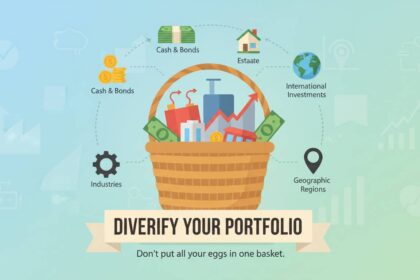
Diversification spreads investments across various asset classes, sectors, and geographic regions. When one investment performs poorly, others may perform well, smoothing overall portfolio returns. True diversification requires holding securities with different characteristics—not just owning multiple stocks in the same industry.
Effective Diversification Methods:
• Own funds covering U.S. stocks, international stocks, and bonds
• Include different company sizes (large, mid, small cap)
• Add real estate investment trusts (REITs) for real estate exposure
• Consider Treasury bonds for stability during market stress
Asset Correlation
Understanding how different investments move relative to each other matters more than simply holding many securities. Ideally, your portfolio should include assets that don't move in tandem—stocks and Treasury bonds, for example, often move in opposite directions, providing natural hedging.
Regular Portfolio Review
Annual portfolio reviews ensure your allocation remains appropriate as markets fluctuate and your life circumstances change. Rebalancing—selling overweighted positions and buying underweighted ones—maintains your target allocation and forces a "buy low, sell high" discipline.
Expert Insights
👤 Taylor Watson, Certified Financial Planner at Meridian Wealth Management
"Dollar-cost averaging remains one of the most powerful tools for individual investors. It removes the emotional component from investing and ensures you're consistently building wealth regardless of market conditions. My most successful clients are those who automate their investments and never check their accounts during market volatility."
Data: Investors who make monthly contributions consistently outperform those who attempt lump-sum timing by an average of 1.8% annually
👤 Dr. Sarah Chen, Professor of Finance at UCLA Anderson School of Management
"The biggest risk for most individual investors isn't market volatility—it's behavior导致的损失. Panic selling during downturns and chasing performance during rallies destroy more wealth than actual market declines. The solution is simple: establish an investment plan and stick to it."
Advice: Focus on what you can control (costs, diversification, discipline) rather than trying to predict what you can't (market movements)
Conclusion
Investing wisely requires patience, discipline, and adherence to proven principles rather than seeking shortcuts or guaranteed returns. The most successful investors understand that building wealth is a marathon, not a sprint—they start early, stay consistent, and maintain long-term perspectives despite inevitable market fluctuations.
Key takeaways from this guide include the importance of establishing financial foundations before investing, using low-cost index funds to capture market returns, implementing dollar-cost averaging to remove emotional decision-making, and maintaining appropriate diversification to manage risk. Your investment journey should begin with clear goals, realistic expectations, and commitment to the process rather than trying to maximize short-term gains.
Remember that compound interest works best over extended time horizons—the most powerful investment strategy is starting now, regardless of how much you can initially contribute. Even small, regular investments grow substantially over decades, and the discipline you develop by investing consistently serves you throughout your financial life.
Frequently Asked Questions
How much money do I need to start investing?
You can start investing with very little money today. Many brokerage accounts have no minimum deposit requirements, and you can purchase fractional shares of ETFs or mutual funds for as little as $1. Starting with whatever you can afford—even $50 monthly—builds the habit and allows compound interest to begin working.
What's the difference between stocks and bonds?
Stocks represent ownership in a company and can grow significantly in value, but their prices fluctuate substantially. Bonds are loans to governments or corporations that pay fixed interest and return principal at maturity. Stocks generally offer higher long-term returns with more volatility, while bonds provide stability and income with lower growth potential.
Should I invest in a 401(k) or IRA first?
Prioritize maximizing your 401(k) employer match first—it's essentially free money. After capturing the full match, consider whether a Roth or traditional IRA offers better benefits based on your current and expected future tax rates. For most young investors, Roth options provide the greatest long-term advantage.
How often should I check my investments?
Check your portfolio quarterly at most. Frequent monitoring leads to emotional reactions to normal market fluctuations. Focus on your long-term plan rather than short-term noise, and only make changes when your goals or circumstances fundamentally change.
What is the safest investment with highest return?
There's no investment that offers both maximum safety and highest returns—they're inherently inversely related. Government bonds are among the safest but offer modest returns. Stocks offer higher potential returns but come with substantial risk. The optimal approach balances safety and return based on your timeline and risk tolerance.
Is it better to invest in individual stocks or funds?
For most investors, funds (especially index funds) are superior to individual stocks. Funds provide instant diversification, require less research and monitoring, and consistently outperform most actively managed stock portfolios after fees. Only consider individual stocks if you have significant time to research companies and accept the concentration risk.