

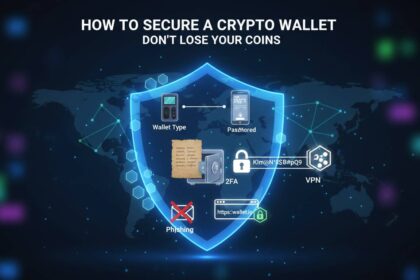

Cryptocurrency theft and fraud exceeded $3.8 billion in 2022 alone, with individual investors losing an average of $4.2 million daily to wallet breaches and scams. If you're holding any amount of crypto, the security of your wallet isn't optional—it's the difference between owning digital assets and watching them vanish. This guide covers every critical layer of protection, from basic hygiene practices to advanced cold storage strategies used by institutions managing billions.
Understanding How Crypto Wallets Actually Work
A crypto wallet doesn't store your coins—it stores your private keys, the cryptographic passwords that prove ownership and authorize transactions on the blockchain. When someone gains access to your private keys, they control your funds completely, and blockchain transactions are irreversible. Unlike a bank account where fraud departments can reverse unauthorized transfers, once crypto leaves your wallet, it's gone forever.
Your public address is like a bank account number—you can share it freely to receive funds. Your private key is like the password combined with the ability to sign checks. The security of everything you own in crypto depends entirely on keeping that private key protected. This fundamental architecture means wallet security isn't about securing a device or app; it's about protecting cryptographic access at every level.
Hot wallets connected to the internet face constant attack vectors, while cold wallets stored offline dramatically reduce exposure. Understanding this distinction matters because many beginners use exchange-hosted wallets (hot storage) for everything, not realizing they're relying on third-party security rather than controlling their own keys. True crypto ownership means taking direct responsibility for key management.
Comparing Wallet Types: Security Trade-offs You Need to Know
Hardware Wallets
Hardware wallets are dedicated physical devices that store private keys offline, requiring physical button confirmation to sign transactions. These devices never expose your keys to any internet-connected computer, making them immune to remote hacking in most scenarios. The top options include Ledger devices (using Secure Element chips), Trezor (open-source firmware), and Coldcard (Bitcoin-focused with advanced features).
The security advantage is significant: even if your computer is compromised with malware, the hardware wallet's isolated environment protects your keys. However, hardware wallets cost $50-$250 and require understanding recovery seed phrases. The primary risk shifts from digital theft to physical theft or loss of the device and recovery phrase.
Software Wallets
Software wallets include desktop applications, mobile apps, and browser extensions. Desktop wallets like Electrum offer robust features but remain vulnerable if the computer is infected with keylogging or clipboard-swapping malware. Mobile wallets provide convenience but introduce risks from device loss, OS vulnerabilities, and app-based attacks. Browser extension wallets like MetaMask interact with websites directly, creating exposure to malicious dApps and phishing sites.
Software wallets are free and user-friendly, making them ideal for small amounts or frequent trading. However, they require rigorous device security practices and should never hold life-changing sums. Many professionals use software wallets for active trading (under $1,000 or similar amounts they'd comfortable carrying as cash) while storing larger holdings in hardware wallets.
Paper Wallets
A paper wallet is a physical document containing your public address and private key, usually generated offline using specialized software. When properly created on an air-gapped computer and never connected to the internet afterward, paper wallets can be extraordinarily secure against digital threats. The complete offline generation process eliminates virtually all remote attack vectors.
The downsides are significant: paper degrades, can be destroyed accidentally, and requires careful handling to prevent anyone from photographing or copying the keys. Transferring funds from paper wallets requires importing keys into software (creating temporary exposure) or carefully sweeping funds to a more convenient wallet. Paper wallets work best for long-term storage of moderate amounts by experienced users who understand the complete process.
Exchange Wallets
When you hold crypto on an exchange like Coinbase, Binance, or Kraken, you're using their wallet infrastructure—they control the private keys, not you. This provides convenience (password recovery is possible, funds aren't lost if you lose your login) but introduces counterparty risk. Exchanges have been hacked repeatedly, with Mt. Gox losing 850,000 BTC in 2014 and FTX collapsing in 2022, leaving customers uncertain about recovering their funds.
For active trading, exchange wallets are practical. For long-term holding, exchange custody means you're trusting a third party with everything. Industry best practices recommend withdrawing funds to personal wallets once trading is complete. The phrase "not your keys, not your crypto" exists because exchange failures have repeatedly demonstrated this vulnerability.
Essential Security Measures: Your Layered Defense System
Enable Every Available Authentication Layer
Two-factor authentication (2FA) is mandatory for any wallet or exchange account. SMS-based 2FA is better than nothing but vulnerable to SIM-swapping attacks where criminals transfer your phone number to their device. Hardware security keys like YubiKey provide the strongest protection, requiring physical device confirmation for login. Authenticator apps (Google Authenticator, Authy) generate time-sensitive codes locally, eliminating SIM-swap vulnerability.
Strong, unique passwords are non-negotiable—never reuse passwords across crypto services. Password managers like 1Password or Bitwarden generate and store complex passwords securely. For exchange accounts holding significant value, some users maintain separate email addresses used only for crypto accounts, reducing exposure to phishing and credential-stuffing attacks.
Create Robust Recovery Seed Phrases Properly
When you set up any legitimate wallet, you'll receive a 12 or 24-word recovery seed phrase. This phrase can regenerate your private keys entirely—if you lose your wallet device, the seed phrase restores everything. The critical security challenge is storing this phrase where it can't be destroyed, lost to fire/water, or stolen.
Never store digital copies of seed phrases. Screenshots, cloud storage, and password-protected documents have repeatedly been compromised. The recommended approach is metal seed storage devices (like Billfodl or Cryptosteel) that survive fire and physical damage, stored in separate secure locations. Writing seed phrases on paper requires laminating them and keeping copies in geographically separate locations—home safe and bank safety deposit box, for example.
Never share your seed phrase with anyone. No legitimate service, support representative, or website will ever ask for it. Every "recovery" scam involves tricking victims into revealing seed phrases. If someone contacts you claiming to be support, hang up and navigate to the official website independently.
Keep Software Updated and Devices Secure
Wallet software updates frequently include critical security patches. Running outdated versions leaves known vulnerabilities exposed. Enable automatic updates where possible, and manually verify update authenticity by checking the developer's official channels before installing.
Device security matters equally: use full-disk encryption on computers, enable screen locks with strong PINs or biometrics, maintain current operating system updates, and run reputable antivirus software. For managing significant holdings, dedicated devices used only for crypto transactions reduce exposure to general malware. Avoid accessing wallets on public Wi-Fi networks, and consider hardware wallets that don't require connecting to compromised devices for transaction signing.
Common Threats and How to Avoid Them
Phishing Attacks
Phishing accounts for the majority of individual crypto thefts. Attackers create fake websites, send emails mimicking legitimate services, or direct messages through social media and Discord servers. They trick users into entering credentials or seed phrases on fraudulent pages. The attackers' sophistication continues increasing, with personalized targeting, convincing interfaces, and even customer support impersonation.
The defense is rigorous verification: always navigate to exchanges and wallet sites by typing URLs directly or using bookmarks, never click links in emails or messages. Double-check domain names carefully—attackers register nearly-identical domains (coinbaese.com, coinease.io). Use browser extensions like Pocket Universe or Wallet Guard that warn about malicious sites. When in doubt, contact support through official channels found on the main website, not through links provided to you.
Malware and Keyloggers
Malware specifically designed for crypto theft includes clipboard-swappers (replacing copied wallet addresses with attacker addresses), keyloggers (recording keystrokes to capture passwords and seed phrases), and remote access tools allowing attackers to take over devices. Crypto-focused malware is increasingly available in underground markets, lowering the bar for attackers.
Prevent malware by avoiding downloading software from unverified sources, never clicking ads for crypto software, using dedicated devices for significant transactions, and considering hardware wallets that prevent malware from accessing private keys even if the computer is compromised. Regular system backups allow recovery from ransomware attacks without paying attackers.
Social Engineering
Scammers increasingly use psychological manipulation rather than technical attacks. They build relationships in crypto communities, gain trust over weeks or months, then present "opportunities" that result in victims transferring funds willingly. Romance scams targeting crypto investors have generated losses exceeding $100 million annually.
The defense is simple in principle: never send crypto to anyone based on unsolicited opportunities, no matter how trustworthy they seem. Legitimate investments don't require urgency. Before any significant transaction, take a 24-hour cooldown period. Discuss major decisions with a trusted person who isn't involved in crypto. If someone claims you've already received funds and need to send crypto to unlock them, that's always a scam—blockchain transactions don't work that way.
Backup and Recovery: Planning for the Unexpected
Multiple Redundancy Strategy
Professional crypto security requires backup redundancy without creating single points of failure. If you hold substantial crypto, create multiple backup copies of your seed phrase using different storage methods in different locations. The standard recommendation is three copies: one in your primary residence, one in a bank safety deposit box, and one with a trusted family member in another location.
For hardware wallets specifically, some users purchase two devices and split seed phrases between them using Shamir Secret Sharing (supported by certain wallets). This way, neither backup alone provides access—you need both to reconstruct the full seed. This protects against any single backup being compromised, lost, or destroyed.
Testing Recovery Procedures
A backup you can't restore is worthless. Before storing meaningful funds, test your entire recovery process: restore your seed phrase to a different device or software wallet, verify the addresses match, and confirm you can send a test transaction. This practice ensures you understand the process and have recorded everything correctly.
Testing also identifies issues like recording words incorrectly, using incompatible wallet software (different derivation paths between wallet brands can generate different addresses), or discovering the backup was damaged or incomplete. Do this testing with small amounts first, then increase once you're confident in the process.
Estate Planning Considerations
Crypto poses unique estate planning challenges—if you die without providing access information, your holdings become permanently inaccessible. Unlike bank accounts with established probate processes, crypto assets can vanish entirely if no one knows how to access them.
Consider explicit instructions in your estate plan describing how to access your wallets, including device locations, recovery phrase storage, and software needed. Some users maintain secure documents with attorneys or use services designed for digital asset inheritance. The conversation is uncomfortable but far better than leaving family members with no knowledge of assets worth real money.
Advanced Security for Significant Holdings
Multi-Signature Wallets
Multi-signature (multisig) wallets require multiple private keys to authorize transactions—for example, requiring 2 of 3 keys, or 3 of 5. This distributes control across different devices, locations, and potentially different people. Even if an attacker compromises one key, they cannot move funds. Multisig protects against device theft, insider threats, and single points of failure.
Setting up multisig requires more technical understanding than standard wallets. Options include hardware wallet combinations (several Ledger or Trezor devices), software-based multisig solutions (like Electrum for Bitcoin), or institutional custody services offering multi-party computation. For individuals holding life-changing sums, the complexity is worthwhile protection.
Cold Storage Best Practices
True cold storage means keys never touch internet-connected devices. The most secure approach involves generating keys on an air-gapped computer (never connected to the internet), signing transactions on that offline device, and transferring signed transactions via QR code or USB to an internet-connected machine for broadcast. This process, while time-consuming, eliminates virtually all remote attack vectors.
Practical cold storage for most users involves hardware wallets in safe storage, never connected except when making transactions. Store the hardware wallet and recovery seed phrase separately—if your house burns down, you lose one but have the other. For maximum security, some users maintain multiple hardware wallets in different locations, each holding a portion of holdings.
What to Do If Your Wallet Is Compromised
If you suspect compromise, act immediately. Transfer any remaining funds from the compromised wallet to a new wallet with a fresh seed phrase. This must happen before attackers empty the account—the blockchain shows all transactions in real-time, and attackers monitor newly-created addresses waiting for deposits.
After securing remaining assets, document everything: screenshots of any suspicious transactions, communications with attackers (if any), and details about what happened. Report the incident to the FBI Internet Crime Complaint Center (IC3), local law enforcement, and the exchange involved if the attacker attempted to cash out through one. While recovery is rare due to blockchain's pseudonymous nature, reports help law enforcement track attack patterns.
Change passwords on all related accounts, enable 2FA where previously absent, and conduct security audits on other accounts. The breach likely resulted from a specific vulnerability—determine whether it was phishing, malware, or another vector and close that gap for the future.
Conclusion
Crypto wallet security requires understanding what you're protecting (private keys), choosing appropriate wallet types for your needs (hardware for significant holdings, software for active trading), and implementing multiple defensive layers. No single measure is foolproof, but combining strong authentication, proper seed phrase backup, vigilance against phishing, and hardware wallets for large holdings creates meaningful protection.
The effort required scales with what you're protecting—small amounts warrant basic precautions, while life-changing sums demand hardware wallets, proper backups, and potentially multisig solutions. Start with the fundamentals, build good habits early, and remember: in crypto, security is always a process, not a one-time setup. The threats evolve constantly, and your defenses should too.
Frequently Asked Questions
Can I recover my crypto if I lose my hardware wallet?
Yes, if you have your recovery seed phrase. The hardware wallet is just an interface—your funds exist on the blockchain, accessible by the private keys derived from your seed. Purchase a new hardware wallet (or use compatible software) and restore using your seed phrase to regain complete access.
What's the safest crypto wallet for beginners?
For beginners holding modest amounts, established mobile wallets like Trust Wallet or MetaMask combined with strong device security provide reasonable protection while remaining user-friendly. As holdings grow, transitioning to hardware wallets like Ledger or Trezor offers significantly stronger security without excessive complexity.
Are paper wallets still safe to use?
Paper wallets can be extremely secure when generated correctly on offline computers and never exposed to the internet afterward. However, they present practical challenges (degradation, physical theft, difficult partial spending). Most users today prefer hardware wallets for security plus usability—paper wallets are better suited for very technical users with specific use cases.
How often should I move my crypto to a cold wallet?
There's no set schedule—move crypto to cold storage whenever you're not actively trading it. If you've completed purchases and intend to hold for weeks, months, or years, transfer to your hardware wallet. Only keep on exchanges what you plan to trade in the immediate term.
What happens if I forget my wallet password?
If you forget your password but have your seed phrase, you can restore your wallet to any compatible software and create a new password. If you've lost both seed phrase and password, your crypto is unrecoverable—this is a feature, not a bug, since the same protection prevents attackers from accessing your funds.
Is it safe to keep crypto on exchanges?
Keeping crypto on exchanges provides convenience but introduces counterparty risk—you're trusting the exchange's security and solvency. Use exchanges for active trading but withdraw to personal wallets for long-term holding. This practice, called "not your keys, not your crypto," is standard advice from security professionals across the industry.