

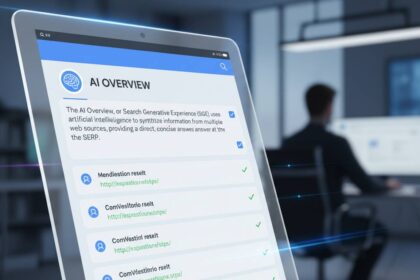

Google's AI Overview feature is one of the biggest shifts in search results we've seen in years. If you're doing any kind of digital marketing or running a website, you've probably noticed it already—that AI-generated summary that sometimes appears at the top of your search results, pulling information from multiple sources into one neat little box.
This guide covers what AI Overview actually is, how it's changing the SEO game, and what you can do to make sure your content still gets seen.
What AI Overview Actually Is
AI Overview is Google's AI-powered summary tool. When you search for something and Google thinks an AI-generated answer would be helpful, you see this expandable box at the top of the results. It takes information from various web pages and combines it into a readable response, with links to the sources it used.
The technology comes from Google's Gemini AI model. Unlike the old featured snippets that just quoted one page, AI Overview pulls from multiple sources. Google rolled this out broadly in 2024 after testing it under the name Search Generative Experience (SGE).
Here's the thing: Google wants to keep you on Google. That's the whole point. AI Overview gives you an answer without clicking away to another website, which is great for Google but raises some real questions for anyone who makes their living from website traffic.
How This Differs From Traditional Search Results
Old-school SEO meant getting your page to rank in the organic results—the regular listings below the ads. When someone clicked, they came to your site. Simple.
AI Overview throws a wrench in that. Now there's an AI-generated answer sitting between the user and those organic results. Many users get their answer right there and never click through. That means even if you still rank #1, you might get fewer clicks than you used to.
But here's the opportunity: those citations inside AI Overview are clickable links. Even if you're not in the top spot traditionally, you might still get cited inside the AI summary. That's a whole new way to get visibility.
What This Means for Your Traffic
The impact has been uneven. Sites with lots of informational content—blogs, educational resources, how-to guides—have felt the hit more than sites focused on products or services. It really depends on whether AI Overview can adequately answer the questions people are asking.
Some publishers are reporting drops in organic traffic. Others are seeing new traffic from people who expand the AI Overview to read more or who click the cited sources. The results vary wildly depending on what industry you're in and what kind of content you produce.
Long-term effects are still unclear. Google keeps tweaking how this works, and user behavior is still adjusting. Some early data suggests people might actually search more because it's easier to get quick answers, which could create new opportunities for sites that figure out how to get cited.
How to Actually Optimize for AI Overview
No magic tricks here, but understanding what Google's AI looks for helps.
Structure your content clearly. Use descriptive headings, keep paragraphs short, and answer questions directly. If someone searches "how do I fix a leaky faucet," make sure your content actually explains that in plain language. Question-based headers that match how people actually search help the AI find your content.
E-E-A-T matters more than ever. That's Experience, Expertise, Authoritativeness, and Trustworthiness. Google's AI prefers credible sources, especially for anything related to health, finance, or safety (the Y-M-Y-L topics). Show your credentials, cite real sources, and don't make stuff up. This isn't new advice, but it's more important now.
Use structured data. Schema markup helps search engines understand what your content is about. It won't guarantee you get cited, but it helps your content get properly understood and considered.
Writing Content That Gets Cited
If you want your content to appear in AI Overviews, think about what makes a useful source.
Write comprehensively. The AI tends to favor sources that actually answer the question fully, not ones that give you half an answer and hope you click through. Anticipate follow-up questions and address them. Be thorough without being boring.
Keep your language factual and straightforward. The AI can spot promotional content from a mile away and usually ignores it. A neutral, informative tone works better than a sales pitch, even though that's counterintuitive for marketing folks.
Update your content regularly. Stale information gets deprioritized in favor of current sources. If you wrote something great two years ago but the information is outdated, either update it or accept it won't perform as well.
Measuring Success
Your regular SEO tools still work, but you need to adjust how you interpret the data. Track impressions, clicks, and positions for queries that trigger AI Overview and compare them to before the feature appeared.
Google Search Console is starting to show some data about AI Overview performance, though it's still evolving. Keep an eye on which pages get cited and whether that correlates with your traffic.
Here's something else to track: your brand visibility inside AI Overviews themselves. Even when people don't click through, seeing your brand name in citations builds awareness. That might show up later in direct searches or brand loyalty.
What's Coming Next
Google isn't done messing with this. AI in search is still evolving, and we'll see more changes.
The smart move is diversify. Don't put all your eggs in the organic search basket. Build direct relationships with your audience through email, social media, whatever works for your business. That way when Google changes things again—and it will—you're not scrambling.
The one thing that never changes: quality matters. Specific, useful content that actually helps people will always find its way to the surface, no matter what the search interface looks like.
Common Questions
What's AI Overview?
It's Google's AI-generated summary that appears at the top of some search results. It pulls information from multiple sources and combines them into one answer with clickable citations.
Will this kill my website traffic?
Maybe, maybe not. It depends on what kind of content you have and what queries you rank for. Informational content takes a bigger hit, while transactional and commercial content tends to fare better.
Can I optimize for AI Overview?
There's no guarantee, but the same things that work for regular SEO help: good structure, authoritative content, clear answers to questions, factual accuracy.
Is traditional SEO dead?
Not at all. AI Overview is an addition, not a replacement. Traditional rankings still matter—they just matter differently now.
What queries trigger AI Overview?
Mostly informational ones where Google thinks it can give a helpful answer. How-to questions, complex topics, and things with lots of reliable sources tend to get the AI treatment.
Is this available everywhere?
Google rolled it out starting in the US and has expanded to other markets, but it's not universal. Not every query or location gets AI Overview yet.