

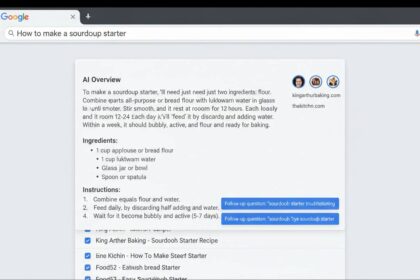

Google's AI Overview represents the most significant change to search results in over a decade. If you've searched for something recently and noticed an AI-generated summary appearing at the very top of your results—with links to supporting sources—you've interacted with this feature. It fundamentally alters how users find and consume information online, and understanding it matters whether you're a casual searcher, a content creator, or a business owner.
In essence, AI Overview is Google's AI-powered summary that appears above traditional organic search results. It synthesizes information from multiple web sources to answer your query directly, often eliminating the need to click through to individual websites. The feature was initially tested as "Search Generative Experience" (SGE) in 2023 before rolling out broadly to US users in May 2024, eventually expanding to more countries throughout the year.
This guide covers everything you need to know about AI Overview—how it works, why it matters, what its limitations are, and how it's reshaping the search landscape.
How AI Overview Works
Google's AI Overview leverages the company's Gemini AI model to analyze dozens or hundreds of web pages simultaneously, extracting relevant information and organizing it into a coherent, conversational answer. Unlike traditional search results, which list links ranked by relevance and authority, AI Overview attempts to answer your question directly within the search engine results page (SERP).
When you enter a query, Google's systems determine whether your search intent could be better served by an AI-generated summary. For informational queries—especially those seeking explanations, comparisons, or how-to information—the AI Overview module typically appears. The system pulls information from sources it deems authoritative, displaying inline citations that link to the original pages.
The technology behind this feature draws from Google's自从2023年以来开发的生成式AI能力。When SGE was first introduced in the Search Labs testing environment, users could see AI-generated responses that included expandable sections showing additional context, suggested follow-up questions, and related search topics. The public rollout simplified this interface while maintaining the core functionality.
Google processes your query through multiple stages. First, the system interprets your intent and determines what type of information would best answer your question. Then, it identifies relevant web sources and uses the AI model to synthesize these sources into a coherent response. Finally, it presents this response with attribution links so you can verify the information or explore sources in greater depth.
The Rollout and Availability
Google's AI Overview has undergone a gradual rollout since its initial testing phase. The company began experimenting with generative AI in search in early 2023, first as a limited experiment through Search Labs. Millions of users tested the feature and provided feedback that shaped its development.
The broader public rollout began in May 2024, when Google started displaying AI Overviews to US users for a wide range of searches. By late 2024, the feature had expanded to numerous additional countries, though availability varies by location and language. Google has indicated plans to continue expanding AI Overview to more regions and languages.
You don't need to enable anything to see AI Overview—it's now the default behavior for applicable searches in the US and other supported markets. However, users in certain regions or those who opt out of personalization may see different results. Google continues to refine when AI Overview appears based on user feedback and performance metrics.
The feature appears most commonly for informational queries, complex questions, and searches where a direct answer would be more useful than a list of links. It less frequently appears for navigational searches (looking for a specific site), transactional queries (making a purchase), or highly specialized topics where the AI may lack confidence in its output.
Why AI Overview Matters for Search
The introduction of AI Overview fundamentally changes the search experience for millions of users. Previously, searching required users to scan multiple links, visit several pages, and synthesize information themselves. Now, Google provides that synthesis directly in the results, potentially answering questions without requiring any clicks at all.
This shift has profound implications for organic web traffic. Multiple studies have documented changes in click-through rates since AI Overview rolled out. Research from various SEO tools and analytics platforms suggests that AI Overviews can capture significant visibility above the traditional first position, sometimes appearing above even the most authoritative organic results. For many queries, users may find their answer in the AI Overview and never visit any website at all.
The feature also changes how content creators and marketers must think about search visibility. Traditional SEO focused heavily on ranking in the top positions. Now, appearing as a cited source within an AI Overview may be equally or more valuable—your content doesn't need to rank first; it needs to be recognized as a credible source that the AI chooses to cite.
Google has emphasized that AI Overview is designed to drive more engaged searches and help users find information more efficiently. The company argues that citing sources prominently actually increases traffic to those sources compared to traditional results in some cases. However, the overall impact on web traffic remains a topic of significant debate among publishers and marketers.
Limitations and Accuracy Concerns
Despite its convenience, AI Overview has faced significant criticism and limitations since its launch. The feature has occasionally produced incorrect, misleading, or nonsensical responses—sometimes called "AI hallucinations"—that have made headlines and raised questions about reliability.
One widely-cited example involved an AI Overview that suggested users add non-toxic glue to pizza sauce to prevent cheese from sliding off. This response appeared to originate from a satirical Reddit comment that the AI incorrectly interpreted as legitimate advice. Such errors highlight the challenge of using AI to synthesize information from across the web, where satire, opinion, and factual content often coexist.
Google has responded to these concerns by implementing improvements to its systems. The company has added better detection for potentially harmful or nonsensical queries, improved its ability to identify high-quality sources, and developed faster mechanisms to correct errors when they're identified. The AI also more frequently shows "KI" (Knowledge Integrity) notices when confidence is lower, suggesting users verify information independently.
The feature works best for queries where a clear, factual answer exists and where authoritative sources widely agree. It struggles more with topics where information is contradictory, rapidly changing, or requires nuanced understanding. Users benefit from treating AI Overview as a helpful starting point rather than an authoritative final answer, especially for important decisions.
Impact on SEO and Content Strategy
The emergence of AI Overview has forced a fundamental rethinking of search engine optimization. For years, SEO focused on ranking signals—keywords, backlinks, page speed, mobile-friendliness, content structure—that helped pages climb the traditional ranking ladder. Now, appearing within AI Overview requires additional considerations.
Authority and trustworthiness have become even more critical. Google's AI preferentially cites sources it considers authoritative, which generally means sites with strong E-E-A-T signals (Experience, Expertise, Authoritativeness, and Trustworthiness). Content from recognized experts, established publications, and trusted institutions tends to receive more citations than anonymous or unverified sources.
Structured data and clear information architecture help AI systems understand your content. Pages that explicitly answer common questions, provide comprehensive coverage of topics, and present information in easily-digestible formats (like clear headings, lists, and tables) are more likely to be cited. Google's AI can more easily extract and synthesize information from well-organized content.
The concept of "cited in AI Overview" has emerged as a new metric that marketers track. Tools are being developed to help publishers understand when and how their content appears in AI Overviews, similar to how rank tracking tools monitor traditional search positions. This represents an entirely new visibility dimension that didn't exist before 2024.
Future Developments and What to Expect
Google shows no signs of reversing course on AI in search. The company has committed to expanding and improving AI Overview, with future developments likely to include more types of queries, better accuracy, and richer presentation formats.
Early 2025 has already seen refinements to when AI Overview appears and how it displays information. Google continues to experiment with different layouts, additional interactive elements, and integration with other AI features like Google's Gemini assistant. The lines between search, AI assistance, and direct answers continue to blur.
Competition also plays a role in Google's roadmap. Microsoft's early integration of AI into Bing search, while capturing less market share, demonstrated feasibility and put pressure on Google to accelerate its own developments. As AI capabilities across the industry improve, users should expect search experiences to become increasingly AI-driven and less dependent on traditional link-based results.
For regular users, this means search will continue becoming more conversational and helpful for complex questions. For content creators and businesses, adaptation is essential—understanding AI Overview and optimizing for citation rather than just ranking represents the new reality of search visibility.
Conclusion
AI Overview marks a fundamental shift in how we find information online. By providing AI-generated summaries directly in search results, Google has created both an opportunity and a challenge for users, content creators, and businesses alike. The feature excels at answering straightforward informational queries quickly, but it struggles with accuracy in certain situations and fundamentally changes the traffic dynamics that have governed the web for decades.
Understanding how AI Overview works, when it appears, and what its limitations are helps you use it more effectively as a searcher. For those creating content or managing online visibility, adapting to this new landscape requires focusing on authority, clarity, and comprehensive coverage of topics. Whether you view AI Overview as a helpful convenience or a disruptive force likely depends on your perspective, but its presence in search is now permanent and growing.
The key takeaway is simple: the search game has changed. Traditional rankings remain relevant, but earning citations from Google's AI Overview may increasingly determine whether your content gets seen at all.
Frequently Asked Questions
What exactly is AI Overview?
AI Overview is a Google search feature that uses artificial intelligence to generate summarized answers at the top of search results. It analyzes multiple web sources and presents a synthesized response directly in the search results page, with links to the sources it used.
How do I see AI Overview results?
In the US and other supported regions, AI Overview appears automatically for applicable searches. There's no setting to enable—you'll see it when Google determines your query could be better answered by an AI summary. If you don't see it for a particular search, that's because Google's systems determined it wasn't appropriate for that query.
Can I disable AI Overview?
There's no official way to disable AI Overview entirely. However, adding specific parameters like "&gl=us" to your search URL or using Google's cache-free format may sometimes show traditional results. Some users also find that very specific navigational or transactional queries less frequently show AI Overviews.
Why did Google remove AI Overview?
Google hasn't removed AI Overview—it remains the default for applicable searches. Some users may not see it for certain queries because Google's systems determine it wouldn't provide a helpful answer, or they may be in regions where the feature isn't yet available. The feature continues to expand globally.
Is the information in AI Overview always accurate?
No, AI Overview can produce inaccurate information, much like other AI systems. It works best for factual queries with clear answers and struggles more with nuanced topics, rapidly changing information, or questions where sources conflict. Google recommends verifying important information with the cited sources.
How does AI Overview affect website traffic?
Research shows AI Overview can reduce clicks to organic results for some queries, as users get their answer directly in the search results. However, the impact varies significantly by query type and industry. Sites that are cited as sources in AI Overviews may see increased traffic from those who want more detail.