

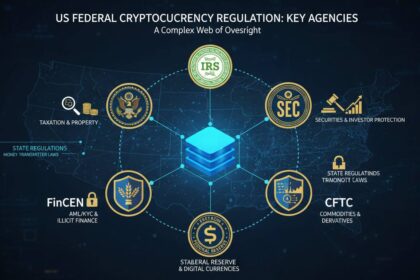

Yes, cryptocurrency is legal in the United States at the federal level. There is no law that explicitly prohibits the purchase, sale, or possession of cryptocurrencies like Bitcoin, Ethereum, or thousands of other digital assets. However, the legal landscape is complex, involving multiple federal agencies, varying state regulations, and evolving frameworks that create a patchwork of rules cryptocurrency users and businesses must navigate.
This guide breaks down everything you need to know about US cryptocurrency regulations, from federal oversight to state-by-state differences, tax implications, and what the future may hold for digital asset law.
Federal Legal Status: The Foundation of US Cryptocurrency Law
The United States does not have comprehensive federal legislation specifically addressing cryptocurrency, which distinguishes it from some countries that have banned digital assets entirely. At the federal level, cryptocurrency operates within existing regulatory frameworks rather than under dedicated crypto laws.
Key federal positions establish legality:
- No explicit prohibition: No federal statute makes cryptocurrency illegal to own, trade, or use
- Property status: The IRS classifies cryptocurrency as property, not currency, for federal tax purposes
- Commodity classification: The CFTC designates Bitcoin and Ethereum as commodities
- Securities framework: The SEC applies the Howey Test to determine if certain tokens qualify as securities
This regulatory approach means cryptocurrency is permitted but heavily regulated. Businesses handling crypto must comply with anti-money laundering (AML) requirements, securities laws where applicable, and consumer protection regulations. The lack of a single comprehensive law creates complexity but also signals governmental acceptance of digital assets within the existing legal framework.
Key Federal Agencies and Their Regulatory Roles
Multiple federal agencies oversee different aspects of cryptocurrency, creating overlapping jurisdictions that businesses and users must understand.
Securities and Exchange Commission (SEC)
The SEC primarily targets initial coin offerings (ICOs) and token sales that qualify as securities offerings. Under the Howey Test—established by a 1946 Supreme Court ruling—the SEC determines whether a digital asset represents an investment of money in a common enterprise with expectations of profits derived from the efforts of others.
The SEC has taken enforcement actions against numerous crypto companies for unregistered securities offerings, including high-profile cases against Telegram and Ripple. The agency's approach has drawn criticism from the crypto industry for perceived overreach and lack of regulatory clarity.
Commodity Futures Trading Commission (CFTC)
The CFTC regulates cryptocurrency derivatives and has classified Bitcoin and Ethereum as commodities. This classification gives the CFTC authority over futures, options, and swaps involving major cryptocurrencies. The agency also oversees cryptocurrency exchanges that offer derivatives products.
Financial Crimes Enforcement Network (FinCEN)
FinCEN, a bureau of the Department of the Treasury, focuses on anti-money laundering (AML) and combating the financing of terrorism (CFT). Cryptocurrency exchanges and money services businesses (MSBs) must register with FinCEN, implement AML programs, file suspicious activity reports (SARs), and comply with the Bank Secrecy Act (BSA).
Internal Revenue Service (IRS)
The IRS treats cryptocurrency as property for tax purposes. Since 2014, the agency has required taxpayers to report cryptocurrency transactions on their tax returns. Failure to report can result in penalties, interest, and potential criminal prosecution. The IRS has increased enforcement actions against taxpayers who fail to report crypto gains.
Consumer Financial Protection Bureau (CFPB)
The CFPB monitors cryptocurrency exchanges and service providers for consumer protection violations. The bureau has warned consumers about crypto-related scams, fraud, and the risks of cryptocurrency-based financial products.
State-by-State Regulations: A Patchwork of Rules
While federal law establishes the foundation, state regulations create significant variations in how cryptocurrency operates across the United States.
States with Clear Regulatory Frameworks
New York requires cryptocurrency businesses to obtain a BitLicense from the Department of Financial Services. Considered one of the strictest regulatory environments, New York's requirements include capital reserves, cybersecurity programs, and compliance with anti-money laundering rules.
Wyoming has taken a more crypto-friendly approach, passing legislation to attract cryptocurrency businesses. The state created special purpose depository institutions (SPDIs) that can custody cryptocurrency and has welcomed major exchanges like Coinbase and Kraken.
Texas established a regulatory framework for cryptocurrency companies operating as money service businesses, with the Texas Department of Banking providing guidance on custody and other activities.
States with Active Regulatory Development
Many states continue developing cryptocurrency regulations, creating uncertainty for businesses. California, Florida, Illinois, and other large states have implemented enforcement actions against unregistered crypto businesses while slowly developing clearer regulatory pathways.
States with Limited Guidance
Some states have not issued specific cryptocurrency regulations, leaving businesses to interpret existing financial services laws. This creates a challenging environment where regulatory requirements remain unclear in several jurisdictions.
Securities vs. Commodities: The Critical Classification
Understanding whether a cryptocurrency qualifies as a security or commodity determines which regulatory framework applies.
The Howey Test Framework
The SEC applies the Howey Test from a 1946 Supreme Court case involving Florida orange groves. Under this test, an investment qualifies as a security when:
- Investors invest money
- In a common enterprise
- With expectations of profits
- Derived from the efforts of others
Many token sales fail the Howey Test because developers promise profits from their efforts to build platforms. Ethereum's initial sale, however, was determined not to be a security because the network was sufficiently decentralized at launch.
Commodity Classification
The CFTC classifies Bitcoin and Ethereum as commodities, giving the agency oversight of derivatives markets involving these assets. This classification also enables the CFTC to pursue fraud and manipulation cases in cryptocurrency spot markets.
The Regulatory Clarity Problem
The absence of clear regulatory guidance creates challenges. Projects launching token sales cannot always determine whether their tokens will be classified as securities, leaving them vulnerable to enforcement actions. Industry advocates have called for legislative clarity, with multiple bills introduced in Congress addressing this issue.
Cryptocurrency Taxation in the United States
Tax implications represent one of the most significant compliance burdens for cryptocurrency users in the United States.
IRS Classification
The IRS classifies cryptocurrency as property, meaning each purchase and sale triggers potential capital gains or losses. This applies to:
- Trading cryptocurrency for goods or services
- Converting one cryptocurrency to another
- Selling cryptocurrency for fiat currency
- Using cryptocurrency to purchase items
Reporting Requirements
Taxpayers must report cryptocurrency transactions on Form 8949 and Schedule D of their tax returns. The IRS requires reporting of all taxable crypto events, not just those involving fiat currency. The agency has increased audit focus on cryptocurrency, sending letters to thousands of taxpayers potentially failing to report crypto income.
Income vs. Capital Gains
Different transactions trigger different tax treatments. Mining rewards, staking income, and airdropped tokens typically count as ordinary income at their fair market value when received. Later sales qualify as capital gains or losses.
Wash Sale Rules
While cryptocurrency wash sale rules remain somewhat unsettled, the IRS has signaled it may apply securities wash sale provisions to crypto transactions. Taxpayers should maintain detailed records of all transactions and consider consulting tax professionals with cryptocurrency expertise.
Regulatory Challenges and Ongoing Debates
The US cryptocurrency regulatory landscape faces several ongoing challenges that affect both businesses and users.
Jurisdictional Clarity
Multiple agencies claiming authority over different aspects of cryptocurrency creates confusion. The SEC, CFTC, FinCEN, and state regulators all play roles, but boundaries remain unclear. This jurisdictional overlap complicates compliance for businesses operating nationally.
Stablecoin Regulation
Stablecoins—cryptocurrency tokens designed to maintain a fixed value—have attracted significant regulatory attention. Regulators have expressed concerns about reserve transparency, potential runs on stablecoins, and their use in money laundering. Legislative proposals have emerged to impose banking-like regulations on stablecoin issuers.
Central Bank Digital Currency (CBDC)
The Federal Reserve continues exploring a potential digital dollar, with research ongoing into a central bank digital currency. The eventual form of any US CBDC could significantly impact private cryptocurrency markets and regulatory frameworks.
DeFi and Decentralization
Decentralized finance (DeFi) platforms present regulatory challenges because their decentralized nature complicates identifying regulated entities. Determining who is responsible for compliance when no central operator exists remains an open question.
Practical Implications for Cryptocurrency Users
For individuals holding or using cryptocurrency in the United States, several practical considerations apply.
Exchange Selection
Users should select reputable exchanges that comply with US regulations, including know-your-customer (KYC) requirements. Major exchanges like Coinbase, Kraken, and Gemini maintain US compliance programs and operate under state money transmitter licenses.
Self-Custody Considerations
Holding cryptocurrency in self-custody wallets provides greater privacy and control but eliminates consumer protections available through regulated exchanges. Users must secure their private keys and understand the tax implications of transfers between wallets.
Due Diligence for Investments
Before investing in any cryptocurrency project, users should research whether the token may be classified as a security, understand the project's regulatory positioning, and recognize that many tokens may eventually face SEC enforcement actions.
Conclusion
Cryptocurrency is legal in the United States, but operating within a complex regulatory environment requires understanding multiple agency jurisdictions, varying state requirements, and evolving compliance obligations. While no federal law prohibits cryptocurrency ownership or use, federal agencies actively regulate exchanges, token offerings, derivatives, and tax reporting.
The regulatory landscape continues developing, with Congress considering comprehensive legislation and agencies issuing new guidance. Users and businesses should monitor regulatory developments, maintain compliance programs, and consult legal and tax professionals familiar with cryptocurrency regulations.
Frequently Asked Questions
Can I legally buy and sell cryptocurrency in the United States?
Yes, you can legally buy and sell cryptocurrency in the United States. There is no federal law prohibiting cryptocurrency transactions. However, you must use compliant exchanges that follow federal and state regulations, including know-your-your-customer requirements and anti-money laundering laws.
Does the SEC regulate all cryptocurrencies?
No, the SEC primarily regulates cryptocurrencies that qualify as securities under the Howey Test. The SEC has asserted that many tokens are securities because they represent investment contracts, while Bitcoin and Ethereum are classified as commodities rather than securities.
Do I need to pay taxes on cryptocurrency gains in the US?
Yes, the IRS requires you to pay taxes on cryptocurrency gains. Every transaction involving cryptocurrency—including trading, selling, or using it for purchases—may trigger capital gains or losses that must be reported on your tax return.
Which US states have the strictest cryptocurrency regulations?
New York has the strictest cryptocurrency regulations, requiring businesses to obtain a BitLicense with extensive compliance requirements including capital reserves, cybersecurity programs, and AML procedures. Wyoming has enacted more crypto-friendly legislation, while many states fall between these extremes.