

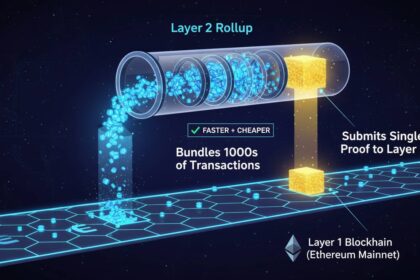

If you've ever tried to send a transaction on Ethereum during peak hours, you know the pain of high fees and slow confirmation times. Layer 2 blockchain solutions exist to solve exactly these problems. They are scaling technologies that operate on top of an existing blockchain network (called the base layer or Layer 1), processing transactions faster and cheaper while still inheriting the security of the underlying network.
This guide will walk you through everything you need to know about Layer 2 technology, from the basic concepts to the most popular solutions available today.
How Blockchain Layers Work
To understand Layer 2, you first need to understand how blockchain networks operate at their foundation. A Layer 1 blockchain like Ethereum or Bitcoin processes transactions directly on its main network. Every transaction must be validated by every node in the network, which ensures security but limits throughput. Ethereum processes approximately 15-30 transactions per second (TPS), while Bitcoin handles around 7 TPS. When demand is high, this creates congestion, leading to elevated transaction fees and slower confirmation times.
Layer 2 solutions address these limitations by handling transactions off the main chain while periodically posting transaction data back to the Layer 1 network. This hybrid approach allows Layer 2 protocols to process thousands of transactions per second while still deriving security from the base layer. Think of it like a highway system: Layer 1 is the main road where every vehicle must pass through toll booths (validators), while Layer 2 solutions are like express lanes or alternative routes that allow faster transit while still connecting back to the main highway.
The relationship between Layer 1 and Layer 2 is often described as a parent-child dynamic. The Layer 1 network serves as the foundational settlement layer thatFinalizes the ultimate state of all transactions, while Layer 2 acts as an execution environment that processes individual transactions much more efficiently.
Types of Layer 2 Solutions
There are several different approaches to building Layer 2 solutions, each with its own trade-offs between speed, cost, security, and decentralization.
Rollups are currently the most popular Layer 2 solution. They bundle multiple transactions into a single batch and submit compressed proof back to the Layer 1 network. There are two main types: zero-knowledge rollups (zk-rollups) use cryptographic proofs to validate transactions without revealing all the underlying data, while optimistic rollups assume transactions are valid by default but allow anyone to challenge them during a dispute period. Projects like Arbitrum, Optimism, and Base use optimistic rollup technology, while zkSync and Starknet focus on zero-knowledge approaches.
Sidechains are independent blockchains that run parallel to the main network and have their own consensus mechanisms. They connect to the main chain through a bridge that allows assets to move between layers. Polygon POS (Proof of Stake) is the most well-known example of a sidechain solution. Sidechains offer high throughput and low fees, but they sacrifice some security since they don't inherit the Layer 1 network's guarantees.
Plasma is a framework for creating child chains that periodically commit their state to the parent chain. Originally developed by Ethereum co-founder Vitalik Buterin and Joseph Poon, Plasma chains are designed to handle many applications without overloading the main network. While promising, Plasma has seen slower adoption compared to rollups due to complexity and user experience challenges.
State Channels allow participants to conduct multiple transactions off-chain while only submitting the initial and final states to the main chain. This technology is particularly suitable for applications requiring high-frequency transactions between a fixed set of participants, such as payment channels or gaming.
Major Benefits of Layer 2 Networks
The primary advantage of Layer 2 solutions is dramatically reduced transaction costs. According to data from L2Beat, a platform that tracks Layer 2 solutions, transactions on Ethereum Layer 2 networks can cost as little as $0.01 to $0.10, compared to $5 to $50 or more on the Ethereum mainnet during periods of high demand. This cost reduction makes it economically viable to transact smaller amounts, enabling use cases that would be impractical on the base layer.
Speed is another significant improvement. While Ethereum mainnet transactions can take anywhere from 15 seconds to several minutes to confirm, Layer 2 solutions typically finalize transactions in under two seconds. This near-instant confirmation creates a much smoother user experience for applications like decentralized exchanges, gaming, and micropayments.
Layer 2 networks also maintain strong security guarantees. Because transaction data is ultimately recorded on the Layer 1 network, users don't need to trust the Layer 2 operator with their funds. Even if the Layer 2 team were to disappear, users can withdraw their assets by providing cryptographic proof of their holdings to the Layer 1 network.
Additionally, Layer 2 solutions reduce the computational burden on the base layer, allowing the entire ecosystem to scale more sustainably. As more applications and users migrate to Layer 2, the Layer 1 network experiences less congestion, benefiting those who still need to use the base layer for high-value transactions or smart contract interactions.
Popular Layer 2 Projects and Networks
The Layer 2 ecosystem has exploded with growth since 2021. Here are some of the most significant players in the space.
Arbitrum is the leading optimistic rollup by total value locked, with over $2.5 billion in assets secured as of early 2025. Developed by Offchain Labs, Arbitrum compatibility with Ethereum's developer ecosystem means most Ethereum dApps can deploy to Arbitrum with minimal modifications. The network processes approximately 10 million transactions per day and has become the home for major DeFi protocols like Uniswap, Aave, and GMX.
Optimism was one of the first major optimistic rollups to launch on Ethereum. Operated by the Optimism Foundation, this network emphasizes simplicity and backward compatibility with Ethereum. The upcoming Bedrock upgrade promises to reduce transaction costs further and improve node performance.
Base is Coinbase's Layer 2 solution built on the OP Stack. Launched in 2023, Base has quickly grown to become one of the most used Layer 2 networks, benefiting from Coinbase's massive user base and brand recognition. The network hosts numerous consumer applications and has formed partnerships with major brands for on-chain commerce.
Polygon offers multiple scaling solutions, including Polygon PoS (a sidechain), Polygon zkEVM (a zero-knowledge rollup), and Polygon Miden (a cryptography-focused solution). The Polygon PoS sidechain has processed billions of transactions and secured billions of dollars in value, making it one of the most widely adopted Layer 2 solutions overall.
zkSync Era and Starknet represent the cutting edge of zero-knowledge rollup technology. While newer and less battle-tested than optimistic rollups, these networks offer potential advantages like immediate transaction finality and stronger privacy guarantees.
Real-World Use Cases and Applications
Layer 2 technology enables use cases that wouldn't be practical on Layer 1 networks due to cost or speed constraints.
Decentralized Finance (DeFi) has seen massive adoption on Layer 2 networks. Trading on decentralized exchanges like Uniswap becomes far more viable when swap fees drop from $15-30 to just a few cents. Lending protocols like Aave and Compound have deployed on Layer 2, allowing users to earn interest and borrow assets with minimal friction.
Gaming and NFTs represent another major use case. Blockchain games require frequent in-game transactions for actions like buying items, trading assets, or claiming rewards. At Layer 1 costs, this would make gaming economically impossible for most players. Layer 2 networks make microtransactions practical, enabling play-to-earn models and digital ownership of in-game assets.
** micropayments and tipping** become feasible at Layer 2 scale. Sending someone a small tip or paying for digital content in fractions of a cent makes sense when transaction costs are negligible. Several platforms are building streaming payment systems where funds transfer continuously rather than in lump sums.
Cross-border payments and remittances benefit from Layer 2 speed and cost advantages. Traditional wire transfers can take days and cost $25-50 per transaction, while Layer 2 solutions can settle payments in seconds for a fraction of a cent.
Challenges and Limitations
Despite their benefits, Layer 2 solutions face significant challenges that users should understand.
Withdrawal delays are inherent to optimistic rollup design. Since these systems assume transactions are valid unless proven otherwise, users must wait approximately seven days to withdraw funds back to Layer 1 (the dispute period duration). This creates inconvenience for users who need quick access to their funds. Some services offer "fast bridges" that provide liquidity for withdrawals, but these introduce counterparty risk.
Exit complexity remains a user experience hurdle. Moving assets from Layer 2 back to Layer 1 typically requires multiple steps and understanding of cryptographic concepts. Average users often find this process confusing compared to traditional banking transactions.
Ecosystem fragmentation occurs when applications and liquidity become spread across multiple Layer 2 networks. Finding the best yields, lowest fees, or most liquid trading pairs requires users to navigate between different networks, each with its own bridges, wallets, and tools.
Sequencercentralization concerns exist because most Layer 2 networks currently operate with a single transaction sequencer (the entity that orders transactions). While this improves performance, it introduces potential censorship risks and a single point of failure. The long-term roadmap for most Layer 2 projects includes decentralizing the sequencer role.
The Future of Layer 2 Technology
The Layer 2 ecosystem is evolving rapidly, with several trends shaping its future.
Zero-knowledge rollups are expected to mature significantly, offering the same developer experience as optimistic rollups while providing faster finality and enhanced privacy. Major projects like zkSync Era and Starknet are continuously improving their performance and expanding their feature sets.
Layer 3 concepts are emerging as teams explore "validium" solutions and specialized application-specific chains that build on top of Layer 2 networks. This hierarchical scaling approach could enable even greater customization for specific use cases.
Interoperability between different Layer 2 networks is improving through protocols that allow seamless asset transfers without returning to Layer 1. This will reduce fragmentation and create a more unified user experience.
Institutional adoption is accelerating as major financial institutions explore Layer 2 technology for settlement, tokenization, and payment applications. The combination of low costs, high speed, and strong security guarantees makes Layer 2 attractive for enterprise use cases.
Frequently Asked Questions
What is the main purpose of Layer 2 blockchain?
Layer 2 solutions primarily exist to scale blockchain networks by processing transactions off the main chain while maintaining security from the base layer. They solve the trilemma of achieving high throughput, low costs, and strong security simultaneously.
Is Layer 2 safer than Layer 1?
Layer 2 networks inherit security from their parent Layer 1 network, meaning they benefit from the established security model of chains like Ethereum. However, users should understand that each Layer 2 implementation has its own trust assumptions and potential centralization risks in how transactions are sequenced.
Can I lose my money on Layer 2?
While Layer 2 protocols are generally considered secure, users should be cautious about using unfamiliar bridges or protocols, as these can be targets for hackers. The underlying funds remain secure as long as you control your private keys and use well-audited Layer 2 networks.
How do I move assets to Layer 2?
You can move assets to Layer 2 by using official bridges provided by the Layer 2 project, centralized exchanges that support Layer 2 withdrawals, or cross-chain swap protocols. Most wallet apps like MetaMask now support direct connections to popular Layer 2 networks.
Will Layer 1 become obsolete with Layer 2?
No, Layer 1 networks will continue to serve as the settlement layer where final transaction records are kept. Layer 2 solutions depend on Layer 1 for security and data availability, so both layers work together as part of a complete scaling solution.
Which Layer 2 should I use?
The best Layer 2 depends on your specific needs. For DeFi activities, Arbitrum and Optimism offer the deepest liquidity. For lower costs, Base and Polygon often provide the best rates. For maximum security guarantees, zk-rollups like zkSync Era may be preferable. Always research current fee structures and network activity before deciding.