

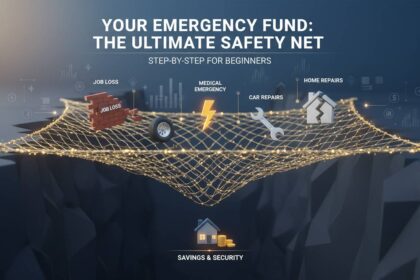

An emergency fund is a financial safety net consisting of easily accessible cash savings designed to cover unexpected expenses or financial disruptions. These funds typically sit in high-yield savings accounts, money market accounts, or other liquid vehicles that allow quick withdrawal without penalties. The core purpose is to prevent you from borrowing money or selling investments at a loss during crises, ranging from job loss to medical emergencies to major home repairs.
Financial experts consistently recommend maintaining three to six months of essential living expenses in your emergency fund, though individual circumstances may warrant adjusting this range. Building this fund requires systematic planning, consistent contribution habits, and strategic financial decisions that prioritize security over immediate returns.
Why an Emergency Fund Matters More Than You Think
The financial security provided by an emergency fund extends far beyond simply covering unexpected bills. Having this cushion fundamentally changes how you interact with your finances and reduces stress during uncertain times.
KEY STATS
- 69% of Americans have less than $1,000 in savings
- 40% of adults would struggle to cover a $400 emergency
- 23 million Americans lost jobs during the 2020 pandemic economic disruption
- 78% of workers live paycheck to paycheck, including many earning six figures
These statistics reveal a troubling reality: most Americans are one unexpected expense away from financial crisis. When car repairs, medical bills, or job loss strikes, those without emergency savings must rely on high-interest credit cards, personal loans, or borrowing from family—options that can compound financial stress and take years to recover from.
The psychological benefits prove equally significant. Research from the American Psychological Association consistently shows financial stress as a leading cause of anxiety and relationship strain. An emergency fund provides peace of mind knowing you can handle life's surprises without derailing your long-term financial goals.
Determining Your Target Emergency Fund Amount
Calculating the right emergency fund size requires honest assessment of your personal circumstances, not arbitrary rules of thumb.
Factors That Influence Your Target
Income Stability
If your employment is steady and your industry has strong job security, three months of expenses may suffice. However, freelancers, gig workers, and those in volatile industries should aim for six to nine months of savings.
Household Composition
Single-income households need larger reserves than dual-income households, where a partner's earnings can offset job loss. Parents with dependent children face higher fixed costs and should lean toward the six-month recommendation.
Health Considerations
Chronic health conditions or family history warrant larger emergency funds given unpredictable medical expenses. Those with excellent health and comprehensive insurance may require less.
Dependents and Obligations
Mortgage payments, child care costs, student loan payments, and other fixed obligations increase your monthly essential expenses. Calculate your true minimum monthly costs, not your current spending.
| Emergency Fund Target | Best For | Monthly Expenses Covered |
|---|---|---|
| 3 months | Dual-income households, stable jobs, renters | $3,000-$4,500 |
| 6 months | Single-income, average risk, homeowners | $6,000-$9,000 |
| 9+ months | Freelancers, high-risk industries, health concerns | $9,000+ |
Step 1: Calculate Your Essential Monthly Expenses
Before saving a single dollar, you must understand exactly how much you need to survive. This exercise often reveals spending habits that need adjustment and provides a concrete savings target.
What Counts as Essential
Essential expenses include housing (mortgage or rent), utilities, insurance, minimum debt payments, groceries, transportation to work, and necessary medical care. Exclude discretionary spending like dining out, entertainment, subscriptions, and non-essential shopping.
EXAMPLE CALCULATION:
Sarah, a marketing professional, calculated her essential monthly expenses:
- Rent: $1,800
- Utilities: $150
- Car payment + insurance + gas: $450
- Groceries: $400
- Minimum student loan payment: $200
- Health insurance premium: $150
- Phone: $80
Total Essential Expenses: $4,230
Her target three-month emergency fund: $12,690
Her target six-month emergency fund: $25,380
This concrete number makes saving feel achievable and provides motivation as you track progress.
Step 2: Choose the Right Savings Vehicle
Where you keep your emergency fund matters almost as much as how much you save. The key requirements are accessibility, safety, and reasonable returns.
High-Yield Savings Accounts
Online banks consistently offer higher interest rates than traditional brick-and-mortar institutions. As of early 2024, high-yield savings accounts offer 4.5% to 5.25% APY, significantly better than the 0.01% to 0.05% offered by most traditional banks.
Advantages:
- FDIC insured up to $250,000
- No withdrawal limits or penalties
- Easy online access
- Interest compounds monthly
Money Market Accounts
These accounts often come with check-writing privileges and debit card access, providing slightly more liquidity than savings accounts while offering similar interest rates. However, they may limit transactions per statement cycle.
What to Avoid
Certificates of Deposit (CDs): Early withdrawal penalties make CDs unsuitable for emergency funds where you might need quick access.
Investments: While the stock market offers higher returns, volatility means you could withdraw during a downturn, losing principal. Emergency funds should never be invested in volatile assets.
Checking Accounts: Regular checking accounts earn minimal or no interest, meaning your emergency fund loses purchasing power to inflation over time.
| Account Type | Typical APY | Access Speed | Best For |
|---|---|---|---|
| High-Yield Savings | 4.5-5.25% | 1-2 days | Most savers |
| Money Market | 4.0-5.0% | Same-day | Those needing check access |
| Traditional Savings | 0.01-0.05% | Same-day | Those preferring branch banking |
| Checking | 0% | Immediate | Only for working capital |
Step 3: Open a Dedicated Account
Separating your emergency fund from your regular spending money prevents accidental use and makes tracking progress easier.
Practical Steps
- Research options: Compare rates across online banks like Ally, Marcus, Discover, or Capital One
- Open account: Most online banks allow account opening in under 10 minutes
- Set up transfers: Link to your primary checking account for easy transfers
- Name it: Label the account "Emergency Fund" to reinforce its purpose
Automation Strategy
Set up automatic transfers on payday, even if starting with $25 or $50. Automation removes decision fatigue and ensures consistent saving. Research from Northwestern Mutual found that automated savers save 30% more than those who save manually.
Step 4: Determine How Much to Save Each Month
With your target number and account ready, calculate the monthly contribution needed to reach your goal within a reasonable timeframe.
The Reverse Engineering Approach
Sarah needs $12,690 for a three-month fund. If she can realistically save $400 per month, she'll reach her goal in approximately 32 months (just under three years). If she wants to reach it faster, she must either increase monthly contributions or reduce her target temporarily.
Recommended Timeline: Most financial experts recommend building your initial $1,000 starter fund first, then expanding to the full three to six month target. This provides a buffer against minor emergencies while building the habit.
Finding Money to Save
If saving feels impossible, audit your spending using the 50/30/20 framework: 50% to needs, 30% to wants, 20% to savings and debt repayment. If you're currently saving less than 20%, look for expenses to cut:
- Cancel unused subscriptions ($15-$50/month)
- Cook at home more often ($200-$400/month savings)
- Switch to cheaper cell phone plans ($30-$50/month)
- Use coupons and cashback apps ($20-$50/month)
- Refinance high-interest debt (hundreds in interest savings)
Step 5: Build Your Fund Systematically
Consistency beats intensity when building emergency savings. Small, regular contributions add up faster than sporadic large deposits.
Milestone Approach
$1,000 Starter Fund
This initial milestone covers most minor emergencies—car repairs, appliance replacement, deductible payments. Reaching it provides psychological win and demonstrates the system works.
Three-Month Reserve
This level provides substantial protection against job loss or major medical events. Most people can recover from setbacks within this timeframe.
Six-Month Premium
The gold standard for financial security. This level protects against prolonged unemployment, severe health issues, or compound emergencies (job loss during a home repair).
Case Study: Marcus's Journey
Marcus, a graphic designer earning $55,000 annually, started with $0 in savings. His essential expenses totaled $3,200 per month, making his six-month target $19,200.
He implemented these strategies:
- Automated $300 monthly transfers
- Picked up freelance projects averaging $400/month extra
- Cut subscription services ($85/month)
- Used the 30-day rule before non-essential purchases
Results:
- Month 6: $2,400 saved (one month of expenses)
- Month 12: $5,800 saved
- Month 18: $10,200 saved
- Month 24: $15,400 saved
Marcus reached his six-month target in 26 months, less than three years from starting.
Step 6: Protect Your Fund From Yourself
The biggest threat to emergency savings isn't market downturns—it's premature withdrawal. Mental accounting tricks can help.
The 24-Hour Rule
Before withdrawing from your emergency fund, wait 24 hours. This cooling-off period prevents impulse decisions and often reveals whether the expense truly qualifies as an emergency.
Define "Emergency" Clearly
Not every unexpected expense warrants emergency fund use. Establish clear criteria:
- Unforeseen and not planned
- Necessary for safety, health, or income generation
- Cannot be deferred or covered otherwise
Routine car maintenance, planned medical procedures, and holiday gifts don't qualify as emergencies. These should be budgeted separately.
Refill Immediately
After any emergency withdrawal, make refilling your fund a priority before resuming other financial goals. Treat the withdrawal as a loan from your future self that must be repaid.
Common Mistakes to Avoid
Mistake #1: Starting with too ambitious a goal
Aim for $1,000 first, then build to three months. Getting discouraged by an enormous target leads to giving up entirely.
Mistake #2: Keeping emergency funds in checking
Money in regular checking gets spent. Separate accounts create psychological barriers to access.
Mistake #3: Investing emergency funds for higher returns
The risk of losing principal during a downturn when you need the money defeats the purpose. Keep it simple and safe.
Mistake #4: Not adjusting the target as life changes
Marriage, children, job changes, or income shifts should trigger recalculation of your target amount.
Mistake #5: Treating "emergency" too broadly
Using the fund for non-emergencies depletes your protection. Maintain discipline.
When to Use Your Emergency Fund
Legitimate emergencies include:
- Job loss or significant income reduction
- Critical home repairs (roof, HVAC, plumbing)
- Essential vehicle repairs
- Medical emergencies not covered by insurance
- Family emergencies requiring travel
Non-emergencies that shouldn't tap your fund:
- Vacations
- Holiday shopping
- Routine car maintenance
- Planned medical procedures
- Wedding expenses
- Down payments
Maintaining Your Emergency Fund Long-Term
Once fully funded, your job isn't finished. Review your fund annually to ensure it matches your current expenses. Inflation and lifestyle changes increase your monthly costs, meaning your target should grow over time.
Keep your emergency fund in a high-yield account and avoid the temptation to invest excess savings. The liquidity and safety of your emergency fund provides more value than marginal investment returns.
Frequently Asked Questions
How long does it typically take to build an emergency fund?
The timeline varies based on income, expenses, and commitment level. Most people who save consistently reach a $1,000 starter fund within 6-12 months and a three-month fund within 2-4 years. Those with higher income or aggressive saving strategies can reach their goals faster, while those saving smaller amounts will take longer.
Should I pay off debt or build an emergency fund first?
Financial experts recommend building a small starter fund of $500-$1,000 before aggressively paying debt. This provides a buffer against new emergencies while you pay down debt. Once you have this minimal protection, you can attack high-interest debt while maintaining modest savings. The interest saved on debt often exceeds savings account returns, but having zero protection leads to more debt when surprises occur.
Is $10,000 enough for an emergency fund?
Whether $10,000 is sufficient depends on your monthly essential expenses. If your monthly costs are $2,000, $10,000 represents five months of coverage—excellent by most standards. If your costs are $5,000, $10,000 represents only two months, which may be insufficient. Calculate your specific situation rather than focusing on round numbers.
Can I use my emergency fund for a down payment on a house?
Using your emergency fund for a down payment is generally not recommended because it depletes your financial protection. However, if you've built your fund beyond the recommended three to six months and are confident in your job security, some financial experts suggest using excess savings for a down payment. Just ensure you rebuild the fund immediately after the purchase, as new homeowners often face unexpected repair costs.
What should I do if I'm self-employed and need a larger emergency fund?
Self-employed individuals should aim for six to twelve months of expenses rather than the standard three to six months. Income volatility means you may go months without major earnings. Additionally, self-employed individuals lack employer-provided benefits like disability insurance, making comprehensive emergency savings even more critical. Consider separating your business and personal emergency funds for clearer financial organization.