

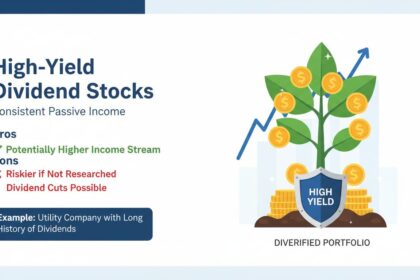

Dividend investing represents one of the most reliable paths to generating passive income in the stock market. Unlike growth stocks that rely solely on capital appreciation, dividend-paying companies return actual cash to shareholders on a regular basis, creating a steady income stream that can supplement—or even replace—traditional employment income. With the right strategies, investors can build portfolios that generate consistent quarterly payments while still benefiting from long-term stock appreciation.
This comprehensive guide explores proven dividend investing strategies that help you construct a portfolio tailored to your income needs and risk tolerance. Whether you're just starting or looking to optimize an existing portfolio, these approaches provide a framework for building lasting wealth through dividends.
Understanding the Fundamentals of Dividend Investing
Before implementing any strategy, you need to understand how dividends actually work. When a company generates profits, its board of directors decides whether to reinvest those earnings back into the business or distribute a portion to shareholders as dividends. Companies that consistently pay and increase dividends over decades have created the most successful dividend investment strategies in history.
The primary metric most investors start with is dividend yield, calculated by dividing the annual dividend payment by the stock price. However, yield alone can be misleading. A very high yield might indicate a troubled company whose stock price has plummeted, potentially signaling a dividend cut is coming. Conversely, a modest yield from a financially strong company with a long track record of dividend increases often proves more valuable than a sky-high yield from a risky enterprise.
Key Takeaways:
- Dividends provide actual cash returns, not just potential capital gains
- Dividend yield must be evaluated alongside financial health and dividend sustainability
- Long-term dividend growers often outperform high-yield strategies
- Reinvesting dividends compounds returns significantly over time
The Dividend Growth Investment Strategy
The dividend growth strategy focuses on companies that consistently increase their dividend payments year after year. This approach, popularized by investors like John Bogle and Warren Buffett, prioritizes sustainability over maximum current yield.
The philosophy is straightforward: a company that can raise its dividend by 7-10% annually will eventually outpace a high-yield stock that pays a static dividend. Over twenty or thirty years, this compounding effect becomes enormous. A company raising its dividend from $1 to $5 annually creates far more wealth than one paying a flat $3 dividend.
Dividend Aristocrats represent the elite of this strategy. These are companies in the S&P 500 that have increased their dividends for at least 25 consecutive years. Similarly, Dividend Kings have maintained dividend increases for 50 consecutive years. These companies have proven their ability to weather economic recessions, inflation spikes, and market crashes while continuing to reward shareholders.
This strategy works best for younger investors with long time horizons who can tolerate some volatility in exchange for growing income. It requires patience but historically delivers excellent total returns.
The High-Yield Dividend Strategy
For investors needing immediate income—perhaps retirees or those seeking supplemental cash flow—the high-yield strategy focuses on stocks with above-average dividend yields. This approach requires more careful analysis because higher yields often come with elevated risks.
The key to succeeding with high-yield investing is distinguishing between sustainable high yields and traps. Companies in stable industries with manageable debt levels and reasonable payout ratios can maintain high yields indefinitely. Utilities, telecommunications companies, and real estate investment trusts (REITs) frequently offer yields in the 4-6% range while maintaining reliable cash flows.
Master Limited Partnerships (MLPs) and business development companies (BDCs) are known for particularly high yields, often exceeding 7%. However, these structures come with unique tax implications that complicate their inclusion in taxable accounts. Understanding the tax treatment of different yield-generating investments is essential for maximizing after-tax returns.
This strategy suits investors who need income now and can accept somewhat lower capital appreciation potential in exchange for higher current cash flow.
The Dividend Capture Strategy
Advanced investors sometimes employ the dividend capture strategy, which involves buying stocks shortly before the ex-dividend date and selling shortly after. The goal is to capture the dividend payment while minimizing the time the capital is at risk in the market.
While theoretically straightforward, this strategy presents practical challenges. Stock prices typically decline by approximately the dividend amount on the ex-dividend date, offsetting the dividend received. Transaction costs and taxes further erode profits. Most professional investors find that the strategy's administrative complexity exceeds its potential returns after accounting for these factors.
For most individual investors, the time and transaction costs involved in dividend capture outweigh the benefits. This strategy works best for those with very large portfolios who can absorb trading costs while capturing small per-share dividends across many positions.
Building a Diversified Dividend Portfolio
Successful dividend investing requires proper diversification across sectors, company sizes, and geographic regions. No single industry provides bulletproof dividend sustainability, so spreading risk across multiple sectors protects your income stream.
A balanced dividend portfolio typically includes:
| Sector | Typical Yield Range | Risk Profile | Examples |
|---|---|---|---|
| Utilities | 3-5% | Low-Medium | Duke Energy, Southern Company |
| Consumer Staples | 2-4% | Low | Procter & Gamble, Johnson & Johnson |
| Financials | 2-4% | Medium | JPMorgan Chase, Bank of America |
| REITs | 4-7% | Medium | Realty Income, AvalonBay Communities |
| Energy | 3-6% | Medium-High | ExxonMobil, Chevron |
International dividend stocks deserve consideration as well. Many foreign companies—and American companies with significant international operations—pay reliable dividends. However, currency fluctuations and different tax treatments complicate international dividend investing. Mutual funds or ETFs focused on international dividends simplify this process while providing diversification.
Key Metrics Every Dividend Investor Must Know
Understanding certain metrics helps you separate sustainable dividends from risky ones. Here are the essential measurements:
Payout Ratio: The percentage of earnings paid as dividends. A payout ratio above 80-90% leaves little room for dividend growth and increases vulnerability to earnings declines. Look for companies with payout ratios below 70% for safety.
Funds From Operations (FFO): Particularly important for REITs, FFO measures the cash generated from operations. Unlike net income, FFO excludes non-cash items like depreciation, providing a clearer picture of a company's ability to fund dividends.
Dividend Yield: The annual dividend divided by stock price. Compare yields within industries rather than across them, as different sectors have different typical yield ranges.
Dividend Coverage Ratio: The ratio of earnings to dividend obligations. A ratio above 1.5x provides a comfortable safety cushion.
Free Cash Flow: Cash remaining after capital expenditures. Companies funding dividends primarily from free cash flow—rather than debt or one-time items—demonstrate sustainable business models.
The Power of Dividend Reinvestment
One of the most powerful tools in dividend investing is Dividend Reinvestment Plans (DRIPs). When you reinvest dividends to purchase additional shares, you harness compounding to accelerate portfolio growth. Over decades, reinvested dividends can account for more than half of your total returns.
Many companies and brokers offer automatic dividend reinvestment at no additional cost. This approach works particularly well during market downturns when lower stock prices allow reinvested dividends to purchase more shares—effectively buying stocks "on sale" during corrections.
The mathematical power of reinvestment is remarkable. A $100,000 portfolio yielding 4% that grows its dividend by 6% annually will generate over $50,000 in annual income after twenty years, with a portfolio value exceeding $300,000—all from starting with less than $20 per day in dividend income.
Risks and Considerations
Dividend investing carries risks that investors must acknowledge. Dividend cuts represent the most significant risk—when a company reduces or eliminates its dividend, both income and stock price typically suffer. The 2008 financial crisis and 2020 pandemic caused numerous companies to slash dividends,教训 for investors who assumed payouts were guaranteed.
Interest rate risk affects bond-like dividend stocks particularly hard. When interest rates rise, investors can earn better returns from bonds, making high-yield stocks less attractive. This dynamic causes stock prices to fall even if the underlying business remains sound.
Inflation gradually erodes the purchasing power of fixed dividend payments. Companies that can increase dividends faster than inflation provide a natural hedge against this risk—which is why dividend growth investing helps address this concern.
Concentration risk occurs when building a portfolio around high-yield stocks in a single sector. Energy companies, for instance, face commodity price volatility that directly impacts their ability to maintain dividends. Proper diversification across sectors mitigates this risk.
Frequently Asked Questions
What is the best dividend strategy for beginners?
For beginners, the dividend growth strategy using Dividend Aristocrats or Dividend Kings through low-cost index funds provides the best balance of safety and growth potential. This approach offers instant diversification, requires minimal research on individual stocks, and captures the historical outperformance of companies with proven dividend track records. Consider starting with a fund like the ProShares S&P 500 Dividend Aristocrats ETF (NOBL) before expanding into individual stock selection.
How much money do I need to start dividend investing?
You can begin dividend investing with any amount through fractional shares or dividend reinvestment plans. Many brokerages allow purchasing fractional shares, meaning you can invest $50 or $100 initially. Some companies offer direct stock purchase plans with minimum investments as low as $10-25. The key is starting early—even small monthly contributions compound significantly over time.
Are dividend stocks safe during economic recessions?
Dividend stocks generally perform better than non-dividend stocks during recessions because investors seek cash-generating assets when uncertain about future growth. However, some sectors cut dividends during severe recessions while others maintain or increase them. Utilities, consumer staples, and healthcare companies historically maintain dividends more reliably than cyclical sectors like consumer discretionary or industrials during economic downturns.
How often do dividend stocks pay?
Most dividend stocks pay quarterly, though some pay monthly, semi-annually, or annually. Monthly dividend payers include many REITs and closed-end funds, providing more frequent cash flow. When building an income portfolio, staggering investments to collect dividends in different months can create more consistent cash flow throughout the year.
Can I live off dividend income alone?
Yes, it is possible to live entirely off dividend income with sufficient portfolio size and appropriate strategy. For example, to generate $40,000 annually in dividend income with a 4% average yield, you would need a $1 million portfolio. Achieving this typically requires decades of compounding and reinvestment, or a combination of dividend income with other income sources and Social Security benefits in retirement.
What's the difference between dividend yield and dividend growth?
Dividend yield measures current income as a percentage of stock price, while dividend growth measures how quickly a company increases its dividend payments over time. High-yield strategies prioritize immediate cash flow; dividend growth strategies prioritize increasing future income. The most successful long-term investors typically combine both approaches, holding a core portfolio of dividend growers supplemented by higher-yield positions for income needs.
Conclusion
Dividend investing provides one of the most reliable paths to building passive income and achieving financial independence. The strategy you choose—whether focusing on dividend growth, high yields, or a combination—should align with your income needs, risk tolerance, and time horizon. The most successful dividend investors emphasize sustainability over maximum yield, diversify across sectors, and harness the compounding power of dividend reinvestment.
Start by establishing clear income goals and assessing your risk tolerance. Consider building a core position in dividend growth stocks or funds, then supplement with higher-yield positions as your portfolio grows. Regardless of the specific strategy, consistency and patience remain the most important factors in building lasting wealth through dividends.
Immediate Action Steps:
| Timeframe | Action | Expected Outcome |
|---|---|---|
| This Week | Open a brokerage account with DRIP capabilities if you don't have one | Foundation for dividend reinvestment |
| This Month | Research and purchase your first dividend ETF or stock | Begin earning dividend income |
| This Year | Contribute monthly to your dividend portfolio | Build habit and compound returns |
| Next 5 Years | Reinvest all dividends and expand portfolio to 20+ positions | Create diversified income stream |
The power of dividend investing lies not in any single strategy but in starting early, staying consistent, and allowing compound growth to work over decades. Your future self will thank you for beginning today.
Disclaimer: This article is for educational purposes only and does not constitute financial advice. Investment decisions should be made based on individual circumstances and in consultation with a licensed financial advisor. Past performance does not guarantee future results. Dividend payments are not guaranteed and can be reduced or eliminated at any time.