

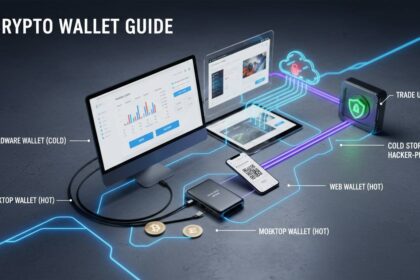

A cryptocurrency wallet is a digital tool that allows you to store, send, and receive cryptocurrencies like Bitcoin, Ethereum, and thousands of other digital assets. Unlike a traditional wallet that holds physical cash and cards, a crypto wallet doesn't actually store your coins directly. Instead, it holds your private keys—the cryptographic secrets that prove ownership of your cryptocurrency and authorize transactions on the blockchain.
Key Insights
- A cryptocurrency wallet stores private keys, not actual cryptocurrency
- Over 420 million people worldwide use cryptocurrency wallets as of 2024
- Wallet choice impacts security, convenience, and which cryptocurrencies you can store
- The global crypto wallet market is projected to reach $48.9 billion by 2030
This guide walks you through everything you need to know about cryptocurrency wallets, from basic concepts to practical usage, helping you choose and secure the right wallet for your needs.
How Cryptocurrency Wallets Actually Work
Understanding how crypto wallets function requires grasping a few fundamental concepts about blockchain technology. Your cryptocurrency doesn't live in a wallet file or app—it exists as records on a decentralized blockchain, which is a distributed digital ledger maintained by thousands of computers worldwide.
When someone "sends" you cryptocurrency, they're actually signing a transaction on the blockchain that transfers ownership from their address to yours. Your wallet generates this digital signature using your private key, which is a long, randomly generated string of numbers and letters.
Every cryptocurrency wallet operates with two essential components:
Private Keys are the most critical element of any wallet. Think of your private key as the password that grants access to your funds. If someone obtains your private key, they can transfer all your cryptocurrency to their own address. This is why keeping your private key secret and secure is absolutely essential.
Public Keys are derived from your private key but can be safely shared with anyone. Your public key is used to generate your cryptocurrency address—the long string of characters you share with others so they can send you funds. You can think of your public key as your bank account number, while your private key is your PIN.
The wallet software manages these keys and interacts with the blockchain to show your balance, create transactions, and communicate with the broader cryptocurrency network. Most wallets also generate a seed phrase (usually 12 or 24 words) that serves as a backup of your private keys.
Types of Cryptocurrency Wallets
Cryptocurrency wallets come in several varieties, each with distinct advantages and trade-offs regarding security, convenience, and functionality. Understanding these differences helps you choose the right wallet for your situation.
Hot Wallets vs. Cold Wallets
Hot wallets are connected to the internet, making them convenient for frequent transactions but more vulnerable to hacking. Examples include mobile apps, web-based wallets, and exchange wallets. Hot wallets are ideal for holding small amounts of crypto you plan to use regularly.
Cold wallets store your private keys offline, providing superior security against online threats. Hardware wallets and paper wallets fall into this category. Cold wallets are recommended for storing significant amounts of cryptocurrency you don't plan to access frequently.
Software Wallets
Mobile wallets run as smartphone applications, offering convenience for everyday transactions and on-the-go access. Examples include Trust Wallet, Coinbase Wallet, and BlueWallet. Mobile wallets are typically hot wallets, meaning they're connected to the internet.
Desktop wallets install on your computer, giving you more control than web or mobile options while remaining relatively convenient. Examples include Electrum, Exodus, and Atomic Wallet. Desktop wallets can be configured as hot or cold depending on your security preferences.
Web wallets run in your browser through websites or browser extensions. While convenient, web wallets expose you to additional risks because you don't control the private keys directly. Major examples include MetaMask and browser-based exchange wallets.
Hardware Wallets
Hardware wallets are physical devices that generate and store private keys offline. They connect to your computer only when you need to sign a transaction, keeping your keys isolated from internet-connected devices the rest of the time. Leading hardware wallets include Ledger, Trezor, and KeepKey devices.
Hardware wallets cost between $50 and $250 but provide the highest level of security for most users. They're particularly valuable for holding substantial amounts of cryptocurrency or for long-term storage.
Paper Wallets
A paper wallet is simply a physical document containing your private key and public address, usually printed as QR codes. Since they're completely offline, paper wallets are immune to hacking—but they're vulnerable to physical damage, loss, and human error. Paper wallets have largely fallen out of favor due to their complexity and risk.
How to Set Up and Use a Cryptocurrency Wallet
Setting up a cryptocurrency wallet involves several important steps that directly impact your security and user experience. Here's a practical walkthrough:
Step 1: Choose Your Wallet
Consider these factors when selecting a wallet:
| Factor | What to Evaluate |
|---|---|
| Security | Encryption, two-factor authentication, backup options |
| Supported Coins | Which cryptocurrencies the wallet can store |
| User Experience | Interface ease, learning curve, customer support |
| Control | Do you hold your private keys (self-custody) or does the provider? |
| Cost | Free, subscription-based, or one-time purchase |
For beginners, reputable options include Coinbase Wallet (mobile), MetaMask (browser/mobile), and Ledger hardware wallets for security-focused users.
Step 2: Create Your Wallet
Once you've chosen your wallet, download it from the official website or app store—never from links in emails or messages, as phishing attacks are common. During setup, you'll:
- Create a strong password (at least 12 characters with mixed types)
- Write down your seed phrase immediately—this is your master backup
- Verify your seed phrase by writing it down in order
- Complete any additional security setup (two-factor authentication, biometrics)
Critical Security Note: Your seed phrase is the ultimate backup. Write it down on paper—never digitally—and store it in a secure location. Anyone with your seed phrase can access all your funds. Never share it with anyone, including wallet support teams.
Step 3: Receiving Cryptocurrency
To receive crypto, you need to share your wallet address. In your wallet app, look for "Receive," "Deposit," or a similar option. You'll typically see:
- A long string of characters (your address)
- A QR code representing that address
Share the address or QR code with the person sending you cryptocurrency. Always verify the address matches exactly—cryptocurrency transactions cannot be reversed.
Step 4: Sending Cryptocurrency
To send crypto, you'll need the recipient's address and decide how much to send. The process generally involves:
- Tap "Send" in your wallet app
- Enter or scan the recipient's address
- Specify the amount (either in crypto units or fiat value)
- Review the transaction details, including network fees
- Confirm with your password, PIN, or hardware device
Transaction fees vary based on network congestion and the cryptocurrency you're sending. Bitcoin fees fluctuate significantly during busy periods, while other networks like Solana or Avalanche typically have lower, more stable fees.
Security Best Practices
Protecting your cryptocurrency requires understanding the threats and implementing proper security measures. The irreversible nature of blockchain transactions means that once funds are stolen, recovery is virtually impossible.
Essential Security Measures
Enable all available security features. This includes two-factor authentication (2FA), biometric login (fingerprint or face recognition), and any additional protections your wallet offers. Multi-layered security makes unauthorized access significantly harder.
Use hardware wallets for significant holdings. If you're storing more than you can afford to lose, a hardware wallet provides essential protection. The $100 investment could prevent catastrophic loss.
Keep your seed phrase secure. Store it in multiple secure locations—consider a fireproof safe or a bank safe deposit box. Never store it digitally, take photos of it, or share it with anyone.
Verify all transactions carefully. Double-check recipient addresses before confirming any transaction. Malware can sometimes modify addresses on your clipboard, so always verify the full address matches what you intend.
Common Security Mistakes to Avoid
| Mistake | Risk | Prevention |
|---|---|---|
| Storing seed phrase digitally | Hacking, data breaches | Write on paper, store physically |
| Using public WiFi for transactions | Man-in-the-middle attacks | Use VPN or private network |
| Clicking links in unsolicited messages | Phishing, wallet draining | Only use official wallet websites |
| Not updating wallet software | Exploitable vulnerabilities | Install updates promptly |
| Sharing wallet address publicly | Privacy concerns | Use new addresses for privacy |
Choosing Between Wallet Types
Your ideal wallet depends on your specific situation, experience level, and goals. Here's a decision framework to help you choose:
Choose a hot mobile wallet (Trust Wallet, Coinbase Wallet) if:
- You're new to cryptocurrency
- You want to make frequent transactions
- You're storing a small amount you're willing to lose
- Convenience is your priority
Choose a browser/web wallet (MetaMask) if:
- You want to interact with decentralized applications
- You're using Ethereum or EVM-compatible networks
- You need accessibility across multiple devices
Choose a hardware wallet (Ledger, Trezor) if:
- You're storing significant cryptocurrency
- You want maximum security
- You're holding long-term investments
- You're comfortable with slightly more complexity
Use an exchange wallet (Coinbase, Binance) if:
- You're actively trading
- You need quick access to funds for trading
- You understand the risks of keeping funds on exchanges
The Future of Cryptocurrency Wallets
Cryptocurrency wallet technology continues evolving rapidly. Several trends are shaping the future of how we'll store and interact with digital assets.
Account abstraction is making wallets more user-friendly by enabling features like social recovery (regaining access through trusted friends or family) and automatic transactions. This technology could eliminate the terrifying scenario of losing access to funds forever if you lose your seed phrase.
Multi-chain compatibility is becoming standard, with modern wallets supporting hundreds of blockchains. Users no longer need separate wallets for Bitcoin, Ethereum, and other networks—though some prefer this for organizational purposes.
Integration with traditional finance is expanding, with some wallets now offering fiat on-ramps, yield generation, and even debit cards that spend your crypto directly. This bridges the gap between cryptocurrency and everyday financial use.
Frequently Asked Questions
What happens if I lose my cryptocurrency wallet?
If you lose your wallet device but have your seed phrase, you can restore your funds by downloading the same wallet software (or a compatible wallet) and selecting the restore option. Enter your seed phrase, and your keys and funds will be restored. If you lose both your device and your seed phrase, your cryptocurrency is permanently lost—there is no central authority that can recover it.
Are cryptocurrency wallets anonymous?
Cryptocurrency wallets are pseudonymous, not anonymous. Your transactions are publicly visible on the blockchain, linked to your address. While addresses don't contain personal names, sophisticated analysis can often link addresses to identities, especially when coins are converted to fiat currency through regulated exchanges.
Can I have multiple cryptocurrency wallets?
Yes, you can and often should have multiple wallets for different purposes. Many users maintain a hot wallet for daily transactions, a cold wallet for savings, and perhaps separate wallets for different cryptocurrencies or purposes. This practice improves security and organization.
Do I have to pay to create a cryptocurrency wallet?
Most software wallets are free to download and use. However, you'll pay network fees when sending transactions, and some wallets charge additional fees for certain features or services. Hardware wallets require an upfront purchase, typically between $50 and $250.
Which cryptocurrency wallet is best for beginners?
For most beginners, Coinbase Wallet or Trust Wallet offer the best balance of ease-of-use, security, and feature sets. Both are mobile-first, support many cryptocurrencies, and have user-friendly interfaces. As you become more experienced, you might add a hardware wallet for larger holdings or explore wallets specialized for specific use cases like DeFi or NFTs.
Can the government take my cryptocurrency?
In most jurisdictions, cryptocurrency is considered property and can be subject to taxation, seizure with proper legal authority, or criminal forfeiture. However, unlike bank accounts, cryptocurrency cannot be frozen or seized without access to your private keys or seed phrase. This is both an advantage (resistance to unauthorized seizure) and a consideration (you have full responsibility for security).
Conclusion
Cryptocurrency wallets are essential tools for anyone participating in the crypto economy. They serve as your interface to the blockchain, managing the cryptographic keys that prove ownership of your digital assets. Understanding how they work—storing private keys rather than actual coins—is fundamental to using them effectively and securely.
Whether you choose a convenient mobile wallet for small transactions, a hardware wallet for secure long-term storage, or a combination of multiple wallet types, the most important steps are choosing reputable software, protecting your seed phrase rigorously, and remaining vigilant about security threats.
The cryptocurrency landscape continues evolving, with wallets becoming more feature-rich and user-friendly. Start with a wallet that matches your current experience level, and don't hesitate to explore more advanced options as your needs grow. Your financial independence in the crypto space begins with understanding and properly securing your wallet.