

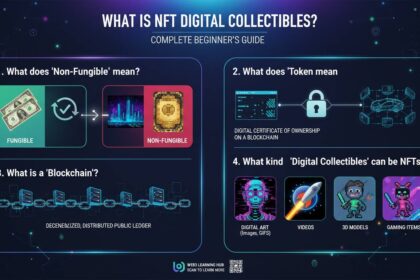

Non-fungible tokens (NFTs) have transformed how we think about digital ownership, creating entirely new markets for verifiable digital collectibles that didn't exist before 2017. Unlike traditional digital files that can be copied infinitely, NFT digital collectibles provide cryptographic proof of authenticity and ownership, enabling creators to monetize digital art, gaming assets, and unique virtual items in ways previously impossible. This comprehensive guide explains what NFT digital collectibles are, how they work, why they matter, and how you can participate in this evolving ecosystem.
Understanding the Fundamentals of NFT Digital Collectibles
An NFT digital collectible is a unique cryptographic token stored on a blockchain that represents ownership of a specific digital item, artwork, video, audio clip, virtual real estate, or in-game asset. The term "non-fungible" means each token is distinct and cannot be exchanged on a one-to-one basis with another token—unlike cryptocurrency where one Bitcoin equals another Bitcoin, every NFT carries unique metadata that distinguishes it from all others.
The concept of digital collectibles predates blockchain technology by decades, from early internet trading cards to video game items. What makes NFT digital collectibles fundamentally different is the blockchain's immutable ledger, which creates permanent, publicly verifiable proof of ownership without requiring a central authority like a game company or gallery. When you purchase an NFT digital collectible, the transaction is recorded on the blockchain, transferring a unique digital signature from the creator's wallet to yours, establishing permanent proof of your ownership.
The Ethereum blockchain originally pioneered NFT standards with ERC-721 in 2017, though the concept traces back to Colored Coins on Bitcoin in 2012-2013. Today, multiple blockchains support NFT functionality, including Solana, Polygon, Binance Smart Chain, Flow, and Tezos, each offering different tradeoffs between transaction speed, cost, and environmental impact.
How NFT Digital Collectibles Actually Work
The technical infrastructure behind NFT digital collectibles combines several distinct components that work together to create verifiable digital ownership.
The Blockchain Foundation
A blockchain serves as the decentralized ledger recording all NFT transactions. When a creator "mints" an NFT, they generate a unique token ID and attach metadata describing the digital item, along with a pointer to where the actual digital file resides. This metadata typically includes the creator's wallet address, a description of the item, attributes or traits (for generative art), and royalty terms for secondary sales. The blockchain doesn't store the digital file itself—instead, it stores a cryptographic hash that verifies the file's integrity and ownership records.
Smart Contracts and Token Standards
Smart contracts automate the rules governing NFT digital collectibles. The most common standard, ERC-721, established the baseline for unique tokens, while ERC-1155 allows for both fungible and non-fungible tokens in a single contract, useful for gaming items or editioned artwork. These contracts handle minting, transfers, royalties, and provenance tracking automatically, ensuring creators receive compensation every time their work resells.
Storage Solutions
The digital assets associated with NFT collectibles require hosting somewhere. Centralized servers (AWS, Google Cloud) offer reliability but create single points of failure. Decentralized storage networks like IPFS (InterPlanetary File System) distribute files across multiple nodes, providing greater censorship resistance. The most premium NFT projects often use IPFS combined with Filecoin for redundant storage, ensuring digital collectibles remain accessible regardless of any single service provider.
Wallets and Marketplaces
To buy, sell, or hold NFT digital collectibles, you need a cryptocurrency wallet like MetaMask, Coinbase Wallet, or Rainbow. These wallets store your private keys—the cryptographic secrets that prove ownership of your blockchain addresses. Marketplaces like OpenSea, Rarible, Foundation, Nifty Gateway, and Blur serve as the storefronts where collectors discover, bid on, and purchase NFT digital collectibles, handling the actual transactions and transferring ownership on the blockchain.
The Benefits and Value Proposition of Digital Collectibles
NFT digital collectibles offer distinct advantages over traditional collecting and digital ownership models, though these benefits come with important caveats about market volatility and speculative risk.
Creator Empowerment
Digital creators historically struggled to monetize their work beyond initial sales. NFT digital collectibles enable programmable royalties, automatically sending a percentage of every secondary market sale to the original creator. Industry data indicates that approximately 90% of NFT collections include royalty structures, typically ranging from 5% to 10% . This creates sustainable, ongoing income for artists, musicians, writers, and content creators who previously received nothing when their work appreciated in value.
Verified Authenticity
Counterfeit digital art and stolen content represent massive problems in creative industries. NFT digital collectibles provide cryptographic proof of authenticity that cannot be forged. When creators mint work as NFTs, the blockchain records their wallet address as the original minter, establishing permanent provenance. Buyers can verify the complete ownership history, known as the "chain of custody," before purchasing.
Global Accessibility and Fractional Ownership
Unlike physical collectibles constrained by geography and shipping, NFT digital collectibles transfer instantly across international borders. Blockchain technology also enables fractional ownership, where multiple people can purchase shares of a single high-value NFT. This democratizes access to premium digital art that would otherwise be unreachable for most collectors.
Interoperability and Cross-Platform Utility
Emerging standards like the Extensible Token Standard and blockchain gaming integrations enable NFT digital collectibles to function across multiple platforms and games. A virtual sword purchased as an NFT might function in several different games, or digital art displayed in multiple virtual galleries, creating utility beyond simple ownership speculation.
Types of NFT Digital Collectibles
The NFT digital collectibles ecosystem encompasses several distinct categories, each with different characteristics, communities, and value propositions.
Digital Art and Generative Collections
Art-focused NFT digital collectibles represent the largest segment by trading volume. Projects like Bored Ape Yacht Club, CryptoPunks, Art Blocks, and Chromie Squiggle pioneered the space, with some individual pieces selling for tens of millions of dollars. Generative art collections use algorithms to create thousands of unique variations, where collectors value rarity of specific traits. The digital art market has grown substantially, with NFT art sales exceeding $2.5 billion in 2023 .
Gaming Assets and Virtual Items
In-game items converted to NFT digital collectibles allow true ownership of virtual swords, skins, land parcels, and characters. Unlike traditional gaming where items remain locked within one company's ecosystem, blockchain gaming promises portable assets that work across different games. Prominent examples include Axie Infinity characters, Decentraland land parcels, and The Sandbox virtual real estate, though the gaming sector has experienced significant volatility and project failures.
Music and Audio
Musicians have adopted NFT digital collectibles to sell exclusive tracks, album artwork, concert tickets, and fan experiences. Unlike streaming platforms where artists receive fractions of a cent per play, NFT sales allow direct fan relationships with meaningful revenue. Kings of Leon released their 2021 album "When You See Yourself" as NFT digital collectibles, reportedly grossing over $2 million in primary sales.
Photography and Fashion
Professional photographers and fashion brands have entered the space, creating NFT digital collectibles representing exclusive images, virtual clothing items, and digital accessories for avatar customization. Brands like Nike (with .SWOOSH), Gucci, and Louis Vuitton have launched NFT collections, signaling mainstream fashion industry's engagement with digital collectibles.
Domain Names and Utility
Blockchain domain names (like .eth or .crypto domains) function as NFT digital collectibles that can be used as wallet addresses or website URLs. These serve both as collectibles and practical utilities, simplifying cryptocurrency address sharing and enabling decentralized websites.
Common Misconceptions and Pitfalls
Understanding what NFT digital collectibles are requires addressing widespread misconceptions that lead to confusion and financial losses.
Misconception: Buying an NFT Means Owning the Copyright
Purchasing an NFT digital collectible typically transfers ownership of the token, not necessarily the intellectual property rights to the underlying work. Most NFT licenses grant the buyer personal use rights, display rights, and the right to resell, but the creator retains copyright unless explicitly transferred. Always verify the specific license terms before purchasing.
Misconception: NFT Prices Reflect Intrinsic Value
The NFT digital collectibles market remains largely speculative, with prices driven by demand, hype, and community status rather than production costs or traditional valuation metrics. Research from DappRadar indicates that approximately 80% of NFT collections trading on secondary markets show zero or minimal trading activity, suggesting many purchases may be illiquid .
Misconception: All Blockchains Are Environmentally Equal
Energy consumption varies dramatically across blockchain networks. Ethereum's transition to proof-of-stake in September 2022 reduced its energy consumption by approximately 99.95%, addressing early environmental criticisms. Other blockchains like Solana and Polygon use proof-of-stake by design, while older proof-of-work chains carry higher environmental costs.
Getting Started with NFT Digital Collectibles
For beginners interested in exploring NFT digital collectibles, a cautious, educational approach serves better than rushing into purchases.
Education First
Before buying anything, understand how wallets work, how to identify scams, and how marketplace fees accumulate. Resources like Ethereum.org's NFT guide, CoinDesk's educational content, and project documentation provide foundational knowledge. Join community Discords, follow experienced collectors on Twitter, and observe market dynamics before committing capital.
Wallet Setup and Security
Creating a wallet like MetaMask generates a seed phrase—a 12 or 24-word phrase that controls access to your funds. Write this down on paper and store it securely offline. Never share your seed phrase with anyone, as anyone who has it can drain your wallet. Enable two-factor authentication on any exchange accounts used to purchase cryptocurrency.
Starting with Low-Risk Exploration
Most marketplaces allow users to browse without connecting wallets. Use this observation period to understand price ranges, verify creator identities, and assess community health. When ready to buy, start with inexpensive items—under $50—rather than premium pieces. This approach lets you learn the mechanics of transfers, gas fees, and storage without significant financial risk.
Evaluating Projects Before Buying
Legitimate NFT digital collectibles projects typically demonstrate transparent team identity (or verified pseudonymous creators), clear roadmaps, active community engagement, and sustainable economic models. Red flags include plagiarized artwork, anonymous teams with no track record, pump-and-dump coordination, and unrealistic promises of guaranteed returns.
| Factor | What to Look For | Red Flags |
|---|---|---|
| Team | Verified identity, track record, active engagement | Anonymous with no history |
| Community | Genuine discussion, organic growth | Bot activity, hype-only engagement |
| Utility | Clear use cases, sustainable features | Vague "utility coming soon" |
| Economics | Realistic floor prices, transparent fees | Guaranteed returns promises |
| Code | Audited smart contracts | Unexplained contract changes |
The Future of NFT Digital Collectibles
The NFT digital collectibles space continues evolving rapidly, with several trends shaping its trajectory.
Enterprise adoption accelerates as major brands launch NFT initiatives for marketing, customer engagement, and loyalty programs. Walmart, Nike, Starbucks, and Samsung have all introduced NFT-related programs, signaling corporate acceptance of digital collectibles as marketing tools. These initiatives typically focus on utility rather than speculation, offering exclusive experiences or rewards rather than investment opportunities.
Technical improvements address current limitations. Layer-2 scaling solutions like Polygon and Arbitrum reduce transaction costs, making small purchases economically viable. Account abstraction promises to eliminate the need for users to understand seed phrases, potentially enabling mainstream adoption through familiar authentication methods. Cross-chain bridges increasingly allow NFT digital collectibles to move between different blockchains, enhancing liquidity and utility.
Regulatory attention intensifies as governments determine how to tax, regulate, and classify NFT digital collectibles. The Securities and Exchange Commission has signaled interest in NFT classification, while various countries develop specific regulatory frameworks. Compliance and legal clarity may ultimately benefit the industry by filtering out fraudulent projects and establishing investor protections.
Frequently Asked Questions
Are NFT digital collectibles just expensive JPEGs?
No. While some NFT digital collectibles are simply image files, the underlying value proposition extends beyond the visual content. NFT digital collectibles provide verifiable ownership, provenance tracking, programmable royalties for creators, and potential cross-platform utility. The token represents a ownership record on the blockchain—the digital file is merely the associated asset.
Can I create and sell my own NFT digital collectibles?
Yes. Anyone can mint NFT digital collectibles on marketplaces like OpenSea, Rarible, or platform-specific launches. You'll need a cryptocurrency wallet, some cryptocurrency for gas fees (transaction costs), and either original digital content or licensed rights to content you wish to tokenize. Creating an NFT requires understanding platform fees, royalty structures, and intellectual property considerations.
Why do some NFT digital collectibles cost millions while similar images cost nothing?
Price differences reflect market perception, community status, historical significance, and speculative demand rather than intrinsic quality. CryptoPunks, the first major generative art collection launched in 2017, command premium prices due to their pioneering status and limited supply. Celebrity endorsement, rarity of traits, and network effects also drive prices. Many inexpensive NFTs exist alongside expensive ones—market valuations aren't based on visual quality alone.
Are NFT digital collectibles a good investment?
This question has no definitive answer. Some collectors have profited substantially; others have lost significant money. The market remains highly speculative, volatile, and subject to fraud. NFT digital collectibles lack the regulatory protections of traditional securities, and liquidity can be extremely poor—finding buyers for specific items at desired prices isn't guaranteed. Anyone considering NFT digital collectibles as an investment should only use disposable income they're prepared to lose entirely.
Do I need cryptocurrency to buy NFT digital collectibles?
Yes. All NFT transactions require cryptocurrency for gas fees and purchase payment. Most marketplaces accept Ethereum (ETH), but some support credit cards through third-party payment processors that handle the cryptocurrency conversion automatically. You'll still need a wallet to receive and hold the NFT after purchase.
What happens to my NFT digital collectibles if the marketplace closes?
Your ownership is recorded on the blockchain, not the marketplace's servers, so the NFT persists even if a specific marketplace shuts down. You can transfer your NFT to any wallet you control and list it on different marketplaces. However, if the associated digital file is hosted on centralized servers that disappear, you may retain the ownership token while losing access to the actual image or file— decentralized storage mitigates this risk.