


Ethereum gas fees are transaction costs users pay to execute operations on the Ethereum blockchain. These fees compensate network validators who process and secure transactions and smart contracts. Without gas fees, the Ethereum network would quickly become congested with spam transactions, as each operation—from sending ETH to swapping tokens—requires computational resources.
When you interact with Ethereum, whether sending cryptocurrency or interacting with a decentralized application (dApp), you pay gas fees in ETH. The fee amount fluctuates based on network demand, transaction complexity, and how quickly you want the transaction confirmed.
Understanding the Gas Model: Gwei and Gas Limits
To grasp Ethereum gas fully, you need to understand two key components: gwei and gas limit.
Gwei (short for giga-wei) is a denomination of ETH—specifically one-billionth of an ETH. Most gas prices are expressed in gwei because the base unit (ETH) is too large for everyday transaction fees. For reference, 1 gwei equals 0.000000001 ETH. When someone says "gas is 50 gwei," they mean the price per unit of gas is 50 gwei.
Gas limit refers to the maximum amount of computational work you're willing to pay for a transaction. Different operations require different amounts of gas:
| Operation | Typical Gas Limit |
|---|---|
| Simple ETH transfer | 21,000 gas |
| ERC-20 token transfer | 65,000 gas |
| Swapping tokens on Uniswap | 150,000-300,000 gas |
| Deploying a smart contract | 1,000,000+ gas |
Setting a higher gas limit provides a cushion for complex transactions, but you only pay for the gas actually used. If you set 100,000 gas limit and only use 50,000, you receive the difference back.
How Ethereum Gas Fees Are Calculated
The total gas fee follows a straightforward formula:
Total Fee = Gas Used × Gas Price
Ethereum uses a base fee + priority fee model introduced in the EIP-1559 upgrade . This replaced the previous auction-style system where users bid higher fees for faster confirmation.
Base Fee
The base fee is a dynamically adjusted amount set by the network itself. It increases when network usage is high and decreases when demand drops. The base fee is burned (permanently removed from circulation), which creates deflationary pressure on ETH supply. According to ultrasound.money, over 6.8 million ETH had been burned through base fees as of early 2024—worth billions of dollars at current prices.
Priority Fee (Tips)
The priority fee (also called a tip) is an optional addition that incentivizes validators to prioritize your transaction. During low congestion periods, you can set this to zero. During high demand, higher tips mean faster confirmation times.
Example Calculation
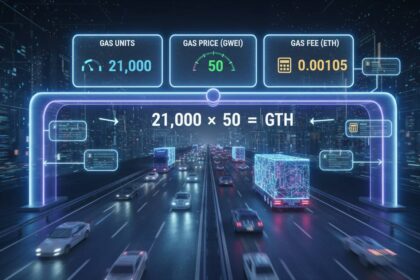
Consider a simple ETH transfer requiring 21,000 gas units:
- Base fee: 50 gwei
- Priority fee: 2 gwei
- Total gas price: 52 gwei
- Total fee: 21,000 × 52 = 1,092,000 gwei = 0.001092 ETH
At $3,000 per ETH, this transaction costs approximately $3.28 in fees.
Why Gas Fees Exist: The Economic Model
Ethereum gas fees serve three critical functions that maintain network integrity and efficiency.
1. Network Security
Gas fees prevent spam attacks by making malicious bulk transactions economically impractical. An attacker would need substantial ETH to flood the network with fake transactions, making large-scale attacks prohibitively expensive. According to Ethereum Foundation documentation, this economic barrier is fundamental to network security.
2. Resource Allocation
Every Ethereum operation—transfers, smart contract executions, NFT minting—consumes computational resources including processing power, memory, and storage. Gas fees create a market mechanism where users compete for these limited resources during peak demand. This ensures the network remains functional even during congestion periods.
3. Validator Compensation
Validators (previously called miners, now using Proof of Stake) receive the priority fees as compensation for processing transactions and maintaining the network. After the Merge upgrade in September 2022, validators also earn staking rewards for securing the network. The combination of priority fees and staking rewards incentivizes validator participation.
Factors That Affect Gas Prices
Several variables influence how much you'll pay in gas fees at any given time.
Network Congestion
The primary driver of gas prices is demand for block space. When many users submit transactions simultaneously, gas prices spike. During major NFT drops, token launches, or market volatility, gas fees can surge 5-10x above normal levels. Etherscan's gas tracker shows gas prices regularly exceeding 100 gwei during peak events, compared to 10-20 gwei during quiet periods.
Transaction Complexity
Simple ETH transfers cost 21,000 gas, while interacting with complex DeFi protocols can require 200,000 gas or more. Each smart contract function call consumes different amounts of computation. Swapping tokens on a decentralized exchange involves multiple operations: approving the token, checking balances, executing the swap—all adding to the total gas used.
Time of Day
Global activity patterns affect gas prices. U.S. business hours (9 AM - 5 PM EST) typically see higher activity as American traders are awake. Asian market hours (especially Japanese and Korean trading sessions) also generate significant demand. Weekend activity tends to be lower, often resulting in cheaper gas.
Block Space Supply
Ethereum targets blocks containing approximately 15 million gas every 12 seconds. When demand exceeds this capacity, users must pay more to outbid others for inclusion. The network can process roughly 15-30 transactions per second at current limits, though ongoing upgrades like proto-danksharding aim to increase capacity significantly.
Strategies to Minimize Ethereum Gas Fees
While you cannot eliminate gas fees, strategic approaches can reduce how much you pay.
Time Your Transactions
Executing transactions during off-peak hours—typically late night U.S. time or weekends—can save 30-50% on fees. Tools like Etherscan's gas tracker, Blocknative, and Gelato provide real-time gas price data and predictions.
Adjust Priority Fees
Most wallets allow you to customize the priority fee. During low congestion, setting a minimal tip (0.1-0.5 gwei) often results in confirmation within minutes. Only increase this when speed is critical.
Use Layer-2 Solutions
Layer-2 networks like Arbitrum, Optimism, Base, and zkSync inherit Ethereum's security while processing transactions off the main chain. These networks typically charge 90-99% less in fees. For example, a token swap that costs $5 on Ethereum mainnet might cost $0.10 on Arbitrum.
Batch Operations
If executing multiple related transactions, consider whether they can be combined. Some protocols offer multi-call functions that execute several operations in a single transaction, reducing overhead costs.
Optimize Smart Contract Interactions
Setting appropriate gas limits (not excessive ones) prevents overpaying. Many wallets estimate gas accurately—manually increasing limits beyond recommendations rarely speeds up transactions but wastes money if the transaction uses less gas than expected.
The Evolution of Ethereum Gas: EIP-1559 and Future Changes
The gas fee system has evolved significantly since Ethereum's 2015 launch, with the most transformative change being EIP-1559 in August 2021.
EIP-1559 Impact
Before this upgrade, Ethereum used a first-price auction system where users bid their maximum gas price, often overpaying significantly. EIP-1559 introduced the base fee mechanism, making fees more predictable and transparent. Users now see the estimated fee before confirming, reducing overpayment.
The burn mechanism created by EIP-1559 has made ETH more deflationary. When network activity is high and base fees increase, more ETH gets burned than validators earn in new issuance. This dynamic has contributed to ETH's scarcity narrative and is closely watched by investors and analysts.
Future Improvements
Ethereum's roadmap includes several upgrades aimed at reducing gas costs:
Proto-danksharding : Implemented in March 2024, this introduces "blobs" of data that can be stored more cheaply than traditional contract data. This primarily benefits Layer-2 rollups, which can pass savings to users.
Full danksharding: Planned for future upgrades, this promises to increase Ethereum's data capacity dramatically, potentially reducing fees by another 10-100x for data-heavy applications.
Account abstraction : Enables smart contract wallets that can bundle multiple operations, pay gas in tokens other than ETH, and implement custom fee logic—potentially abstracting gas complexity away from end users.
Gas Fees Across the Ethereum Ecosystem
Different activities on Ethereum carry different fee implications.
Decentralized Finance (DeFi)
DeFi protocols typically require multiple contract interactions, making gas costs higher than simple transfers. Swapping on Uniswap, providing liquidity, or borrowing assets can cost $5-50+ in gas depending on network conditions. Users must factor these costs into their trading strategies, especially for smaller positions where fees represent a significant percentage of value.
NFTs and Gaming
NFT minting and gaming on Ethereum can involve substantial gas costs. Popular mints often see gas spikes exceeding 200 gwei during high-demand drops. Gas costs for gaming (on-chain games like Axie Infinity or Gods Unchained) vary based on game mechanics but typically range from $0.50-5 per action during off-peak times.
Staking and Protocol Participation
Staking ETH (32 ETH required for a validator) involves a one-time gas cost of approximately $100-300 depending on network conditions. Unstaking and withdrawals also incur fees. Governance participation—voting on proposals in DAOs—typically costs $5-20 in gas per vote.
Frequently Asked Questions
Why do Ethereum gas fees fluctuate so much?
Ethereum gas fees fluctuate based on supply and demand for block space. When many people use the network simultaneously, competition for limited block space drives prices up. When the network is quiet, prices drop. This is similar to surge pricing in ride-sharing apps.
Can I avoid gas fees entirely?
No—gas fees are fundamental to how Ethereum functions. However, you can minimize them by using Layer-2 networks (like Arbitrum or Optimism), timing transactions during off-peak hours, or using protocols that abstract gas complexity. Some dApps offer gasless transactions where the protocol or a third party covers fees.
What happens if I set my gas limit too low?
If your gas limit is too low to complete a transaction, the transaction fails but the gas used up to that point is still consumed. This is called "running out of gas" and results in lost fees without the transaction being completed. Always ensure your wallet's estimated gas limit is sufficient.
Will Ethereum gas fees ever be low permanently?
Ethereum's upgrades aim to reduce fees significantly through increased data capacity (danksharding). However, complete elimination would compromise network security by making spam attacks affordable. The goal is sustainable, lower fees rather than zero fees.
Why do I pay fees when my transaction fails?
Failed transactions still consume computational resources as validators attempt to process them. Even when a transaction reverts (fails), the network has done work to execute and validate it, which requires gas payment. This prevents attackers from flooding the network with intentionally failing transactions.
How do Layer-2 networks have lower fees?
Layer-2 networks batch multiple transactions together and submit them to Ethereum as a single transaction. This shares the cost of the underlying Ethereum transaction across many users. Additionally, Layer-2s use cheaper data storage methods (blobs after EIP-4844), further reducing costs—while still inheriting Ethereum's security guarantees.