

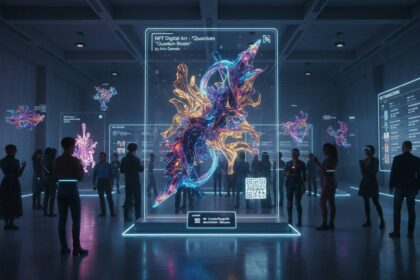

An NFT (Non-Fungible Token) is a unique digital certificate stored on a blockchain that proves ownership of a specific digital or physical item. Unlike cryptocurrencies such as Bitcoin or Ethereum, where each unit is identical and interchangeable, NFTs are one-of-a-kind—no two tokens are exactly the same. This uniqueness is what makes them valuable for verifying authenticity and ownership of digital art, collectibles, music, videos, virtual real estate, and even real-world assets like property titles or event tickets.
Think of an NFT like a signed certificate of authenticity for a painting, except instead of hanging on a wall, this certificate lives on a digital ledger that anyone can verify but no one can alter. The token contains metadata pointing to the underlying asset, transaction history, and ownership details. When you buy an NFT, you're purchasing the token that represents ownership—not necessarily the copyright or the right to reproduce the underlying work.
Key Insights
- The global NFT market reached $3 billion in trading volume during 2021 alone, marking a massive surge from virtually zero just two years prior.
- Ethereum remains the dominant blockchain for NFTs, hosting approximately 90% of all NFT transactions.
- The average price of an NFT varies dramatically—from under $10 for basic digital collectibles to millions for high-profile art pieces.
- Major brands including Nike, Adidas, Starbucks, and Time Magazine have launched NFT-based initiatives.
Understanding NFTs requires grasping both the technical foundation and the practical applications that have emerged since the concept gained mainstream attention in 2020. This guide walks through everything from how NFTs actually work to why they matter for creators, collectors, and businesses.
The Technical Foundation: How NFTs Actually Work
At their core, NFTs are built on blockchain technology—the same decentralized digital ledger system that powers cryptocurrencies. However, NFTs differ fundamentally from traditional crypto tokens in one critical way: they are non-fungible, meaning each token has distinct properties that cannot be replicated or exchanged on a one-to-one basis.
Blockchain Basics for NFTs
A blockchain is a distributed database maintained across thousands of computers worldwide. Each "block" contains a group of transactions, and these blocks are linked together in a chronological "chain." Once information is recorded on a blockchain, it becomes extremely difficult to alter—making the data transparent and tamper-resistant.
When someone creates an NFT, the token is "minted" (created) on a blockchain, typically Ethereum, Flow, Solana, or Polygon. This minting process involves:
- Deploying a smart contract – A self-executing program that defines the NFT's attributes, including metadata standards (like ERC-721 for Ethereum NFTs).
- Assigning unique identifiers – Each NFT receives a distinct token ID and contract address that distinguishes it from every other token.
- Attaching metadata – Information about the underlying asset, such as the file location, description, traits, and properties.
- Recording ownership – The blockchain tracks who owns the NFT and maintains a complete transaction history.
Smart Contracts and Metadata
Smart contracts are the backbone of NFT functionality. These automated programs execute specific actions when predetermined conditions are met. For example, a smart contract can automatically transfer royalty payments to the original creator whenever the NFT is resold—a feature that has revolutionized how digital artists monetize their work.
Metadata refers to the information attached to an NFT that describes what it represents. This typically includes a name, description, and links to image or video files. For a digital artwork NFT, the metadata might include the artist's name, creation date, file format, and a URL pointing to the image hosted on IPFS (InterPlanetary File System) or a centralized server.
It's important to note that the blockchain does not store the actual digital file in most cases. Instead, it stores a reference (a URL or hash) to where the file is located. This distinction matters because if the external hosting server goes down or the link breaks, the metadata might no longer display the associated media.
Why NFTs Matter: Benefits and Use Cases
NFTs have emerged as more than just speculative digital assets. They offer concrete benefits for creators, collectors, and businesses that traditional intellectual property and ownership systems cannot match.
Benefits for Creators
Permanent Ownership and Provenance – Once minted, an NFT's ownership history is permanently recorded on the blockchain. Creators no longer need to rely on third-party platforms to verify authenticity or track ownership chains.
Direct Monetization – Artists can sell their work directly to collectors without intermediaries taking large commissions. Most NFT platforms allow creators to set royalty percentages (typically 5-10%) that are automatically paid on every subsequent sale.
Programmable Rights – Smart contracts can encode specific conditions, such as limiting future sales, granting partial ownership to multiple parties, or unlocking additional content for holders.
Primary Use Cases
Digital Art and Collectibles – This remains the largest NFT category by trading volume. Artists like Beeple (whose digital collage sold for $69.4 million at Christie's) and digital illustrators alike can create and sell unique pieces directly to a global audience.
Gaming Assets – NFTs represent in-game items, characters, and virtual land that players truly own. Games like Axie Infinity and Decentraland allow players to trade these assets for real money, creating play-to-earn economies.
Music and Entertainment – Musicians release exclusive songs, albums, or concert tickets as NFTs, providing fans with unique collectibles and sometimes offering fractional ownership or revenue-sharing opportunities.
Virtual Real Estate – Platforms like The Sandbox and Otherside allow users to purchase virtual land parcels as NFTs, where they can build experiences, host events, or monetize their digital property.
Identity and Credentials – NFTs can represent academic degrees, professional certifications, or identity documents that are verifiable without exposing sensitive personal information.
Understanding NFT marketplaces and Trading
NFT marketplaces serve as the primary venues where buyers and sellers exchange these digital assets. Understanding how these platforms operate helps anyone looking to buy, sell, or create NFTs.
Major Marketplaces
| Marketplace | Founded | Primary Focus | Notable Features |
|---|---|---|---|
| OpenSea | 2017 | General marketplace | Largest selection, supports multiple blockchains |
| Blur | 2022 | Trading-focused | Professional tools, fast transactions |
| Foundation | 2021 | Art-focused | Curated artists, community-driven |
| Rarible | 2020 | Creator-focused | No-code minting, tokenized communities |
| NBA Top Shot | 2020 | Sports collectibles | Video highlights, licensed NBA content |
How to Buy and Sell NFTs
For buyers, the process typically involves setting up a cryptocurrency wallet (like MetaMask), purchasing cryptocurrency (usually Ethereum), and connecting the wallet to an NFT marketplace. Once connected, users can browse, bid on, or purchase NFTs directly.
For sellers, the minting process involves uploading the digital asset, setting a price (or auction parameters), and paying gas fees (transaction costs) to publish the NFT on the blockchain. Platform fees vary but typically range from 2.5% to 5% per sale.
Gas Fees and Transaction Costs
One significant consideration when trading NFTs is "gas fees"—the costs required to process transactions on the blockchain. These fees fluctuate based on network demand. During periods of high activity, gas fees on Ethereum can reach $50-100 or more per transaction, making it expensive to mint or transfer NFTs. Layer-2 solutions like Polygon and Immutable X offer significantly lower fees, though with some trade-offs in security or marketplace selection.
Common Misconceptions and Challenges
The NFT space has attracted significant criticism and misunderstanding. Addressing these concerns provides a more complete picture of what NFTs can and cannot do.
What NFTs Are NOT
NFTs Are Not Copyright Transfers – Buying an NFT typically grants ownership of the token, not the intellectual property rights to the underlying work. The buyer may not have the right to reproduce, modify, or commercialize the art without separate agreements.
NFTs Do Not Guarantee File Persistence – As mentioned earlier, most NFTs only link to external files. If the hosting service closes or the files are deleted, the NFT technically still exists on the blockchain, but the associated image or video may no longer be accessible.
NFTs Are Not Automatically Valuable – The market has seen countless NFTs sell for minimal amounts or fail to find buyers at all. Value depends entirely on perceived utility, scarcity, creator reputation, and collector demand—not the mere fact that something is tokenized.
Environmental Concerns
NFTs and blockchains consume significant amounts of energy, particularly proof-of-work systems like Ethereum (though Ethereum transitioned to proof-of-stake in 2022, reducing energy consumption by approximately 99.95%). Critics argue that the environmental impact of NFT transactions outweighs potential benefits. Many platforms now offer carbon offsets or operate on more energy-efficient blockchains.
Scams and Security Risks
The NFT space has attracted numerous scams, including:
- Fake NFT marketplaces that steal wallet credentials
- Phishing attacks targeting users' private keys or seed phrases
- Plagiarized artwork where creators mint others' work without permission
- Rug pulls where developers launch projects, collect investment, then abandon them
Buyers should verify seller authenticity, use hardware wallets for significant holdings, and double-check contract addresses before making purchases.
The Future of NFTs
The NFT market has experienced dramatic fluctuations since its 2021 boom, with trading volumes declining significantly through 2022 and 2023. However, this correction has not eliminated interest from major institutions and technology companies.
Emerging Trends
Real-World Asset Tokenization – Companies are exploring NFTs to represent physical assets like real estate, luxury goods, and company equity. This could make traditionally illiquid assets more easily tradable.
Fractional Ownership – NFTs can be divided into smaller fractions, allowing multiple investors to own shares of single valuable assets.
Enterprise Adoption – Brands continue experimenting with NFTs for customer loyalty programs, digital collectibles, and supply chain verification.
Gaming Integration – Major gaming companies including Ubisoft, Epic Games, and Square Enix have announced NFT or blockchain initiatives, though consumer reception has been mixed.
Market Projections
While precise predictions remain difficult, analysts at market research firms project the global NFT market could grow from approximately $3 billion in 2023 to $13 billion by 2028, driven by gaming, entertainment, and enterprise adoption. However, these projections carry significant uncertainty given the market's volatility and regulatory ambiguity.
Conclusion
NFTs represent a meaningful evolution in how we establish and transfer ownership of digital assets. By leveraging blockchain technology, they provide verifiable scarcity, transparent ownership history, and programmable monetization for creators—capabilities that simply did not exist in the digital realm before.
Whether NFTs prove to be a lasting technological innovation or a speculative trend remains to be seen. What is certain is that they have already demonstrated the possibility of true digital ownership, opening doors for creators and collectors while prompting serious discussions about intellectual property, sustainability, and the future of digital value.
For those interested in exploring NFTs, the most important advice is to research thoroughly, understand what ownership actually means in each context, and only invest what one can afford to lose in this still-evolving space.
Frequently Asked Questions
What exactly do I own when I buy an NFT?
When you purchase an NFT, you own the token on the blockchain that represents the underlying asset. This typically includes the right to sell, transfer, or potentially display the asset. However, you usually do not automatically receive copyright or commercial rights to the underlying work unless explicitly stated in a separate agreement with the creator.
Can anyone create an NFT?
Yes, anyone can create (mint) an NFT using blockchain platforms and marketplaces. You will need a digital wallet, some cryptocurrency to pay gas fees, and access to an NFT marketplace. The process typically takes just a few minutes, though costs vary by blockchain and network activity.
Are NFTs only for digital art?
No, while digital art and collectibles represent the most visible category, NFTs can represent many types of assets including music, videos, virtual land in gaming worlds, domain names, event tickets, ownership documents for physical items, and fractional shares of real-world assets.
Are NFTs a good investment?
NFTs can appreciate or depreciate significantly, and there are no guarantees of value. Some NFTs have sold for millions, while millions of others have become essentially worthless. Investing in NFTs carries substantial risk, and potential buyers should understand they may lose their entire investment. Research, caution, and only investing disposable income are strongly advised.
How do I know if an NFT is authentic?
Authenticity can be verified by checking the NFT's transaction history on the blockchain, verifying the creator's identity and reputation, confirming the contract address matches the official project, and reviewing the metadata and ownership records through block explorers like Etherscan.