

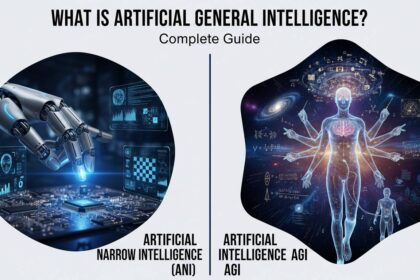

Artificial General Intelligence (AGI) represents one of the most profound technological concepts of the modern era, promising machines capable of matching or exceeding human cognitive abilities across virtually any intellectual task. As major technology companies invest billions into AGI research, understanding this transformative technology has become essential for professionals, policymakers, and the general public alike. This comprehensive guide explores what AGI is, how it differs from current artificial intelligence systems, the current state of research, and its potential implications for society.
Defining Artificial General Intelligence
Artificial General Intelligence refers to a theoretical form of artificial intelligence that possesses the ability to understand, learn, and apply knowledge across a wide variety of tasks, much like a human being. Unlike specialized AI systems designed for specific functions—such as image recognition, language translation, or playing chess—AGI would demonstrate generalized cognitive capabilities, enabling it to reason, plan, solve problems, and adapt to new situations without task-specific programming.
The concept emerged from the broader field of artificial intelligence research, which began in the 1950s. Pioneers like Alan Turing, John McCarthy, and Marvin Minsky laid the intellectual groundwork by asking fundamental questions about whether machines could think. AGI represents the fulfillment of this original vision: creating machines with human-level or beyond human-level intelligence capable of performing any intellectual task that a human can accomplish.
What distinguishes AGI from narrow AI is not merely the breadth of tasks it can perform, but the depth of understanding and adaptability it demonstrates. A narrow AI system might excel at translating between languages but cannot engage in logical reasoning or physical tasks outside its training domain. AGI, by contrast, would integrate multiple cognitive abilities, transfer knowledge between domains, and exhibit genuine understanding rather than pattern matching.
How AGI Differs From Current AI Systems
The artificial intelligence systems that dominate today's technology landscape—from chatbots to recommendation algorithms—fall into the category of Narrow AI, also known as weak AI. These systems are designed and trained for specific tasks and cannot generalize their knowledge to unrelated problems. They operate within boundaries defined by their training data and algorithms, lacking the flexibility and adaptability characteristic of human intelligence.
Large Language Models (LLMs), such as those powering popular conversational AI tools, represent remarkable achievements in narrow AI. These systems can generate human-like text, answer questions, and even demonstrate apparent reasoning capabilities. However, they remain fundamentally limited: they cannot truly understand context beyond patterns in their training data, they cannot learn new tasks without retraining, and they lack consciousness or genuine comprehension of their outputs.
AGI would bridge this gap by possessing what researchers call "transfer learning"—the ability to apply knowledge gained in one domain to entirely new situations. A truly intelligent system should be able to take a geometry theorem it has never seen before and prove it using reasoning, not by matching patterns from training examples, but by genuinely understanding mathematical relationships. This capacity for true reasoning, rather than sophisticated pattern matching, represents the fundamental distinction between narrow AI and AGI.
The Current State of AGI Research
As of 2024, AGI remains a theoretical goal rather than a realized technology. No system currently exists that meets the criteria for true artificial general intelligence. However, rapid advances in machine learning, neural networks, and computational power have brought the concept from pure science fiction to serious academic and commercial consideration.
Major technology companies including Google DeepMind, OpenAI, Anthropic, and Meta have explicitly stated AGI development as their long-term objective. DeepMind's AlphaFold system, which solved the protein folding problem that had stumped scientists for decades, demonstrates how AI can achieve superhuman performance in specific domains. Similarly, advances in reinforcement learning, multimodal AI, and reasoning systems continue to narrow the gap between narrow and general intelligence.
According to a 2023 survey conducted by AI researchers at Stanford University and elsewhere, a majority of experts believe there is a reasonable probability of achieving human-level AGI within the next few decades, though estimates vary widely. Some researchers, including those at DeepMind, have published frameworks for evaluating progress toward AGI, suggesting that concrete milestones may be achievable within the next ten to twenty years.
Research organizations have proposed various benchmarks for measuring progress toward AGI. These include the ability to pass human-level exams across all subjects, perform novel scientific research, and demonstrate genuine understanding rather than statistical correlation. The ARC (Abstraction and Reasoning Corpus) benchmark, developed by François Chollet, measures AI's ability to solve novel problems, a key indicator of general intelligence.
Key Challenges and Technical Hurdles
Developing AGI presents formidable technical challenges that have stumped researchers for decades. One of the most significant obstacles is the difficulty of encoding common-sense reasoning into computational systems. Humans effortlessly understand that water poured from a glass will fall downward, that objects cannot pass through solid walls, and that people need to breathe to survive. These seemingly obvious facts prove remarkably difficult to represent in machine-readable form.
Current machine learning approaches require massive amounts of training data and computational resources, yet still produce systems that can be fooled by adversarial examples—inputs specifically designed to cause incorrect outputs. A human can immediately recognize a stop sign even with stickers placed on it, but the same system might classify it incorrectly. Creating robust, reliable intelligence that performs consistently across novel situations remains a fundamental challenge.
Another critical concern involves the alignment problem: ensuring that an AGI system's goals align with human values and intentions. As systems become more powerful, the potential for unintended consequences increases dramatically. Researchers refer to this as the "alignment problem," and solving it is considered essential before achieving advanced AI capabilities. The challenge lies not in specifying what we want, but in ensuring that AI systems interpret and pursue those goals correctly, especially in unfamiliar situations.
The Race Toward AGI: Industry and Research Landscape
The pursuit of AGI has evolved from academic curiosity to intense commercial competition. Google DeepMind, acquired by Alphabet in 2014, continues to lead in reinforcement learning and has achieved breakthrough results in protein structure prediction, game playing, and scientific applications. OpenAI, founded with the explicit mission of developing safe and beneficial AGI, has become a household name following the release of its GPT language models.
Investment in AGI research has grown exponentially. According to industry analyses, global AI investment exceeded $90 billion in 2023, with significant portions directed toward advanced AI capabilities that could contribute to AGI development. Governments have also taken notice, with the United States, China, and the European Union all releasing national AI strategies that acknowledge the transformative potential of advanced AI systems.
Anthropic, founded by former OpenAI researchers, has positioned itself as a safety-focused alternative, emphasizing the importance of constitutional AI and value alignment in advanced system development. Meanwhile, Meta has open-sourced several significant AI models, arguing that democratized access to AI technology will benefit society. This diversity of approaches—from profit-motivated corporate development to academic research to open-source collaboration—shapes the trajectory of AGI research.
Potential Implications and Societal Impact
The development of AGI would represent one of the most significant technological transitions in human history, with implications spanning economic, social, and ethical domains. Proponents suggest that AGI could accelerate scientific discovery, solve complex global challenges like climate change and disease, and dramatically increase productivity across industries. The economic potential alone couldamount to trillions of dollars in value creation.
However, significant concerns accompany these potential benefits. Economists have warned of massive workforce displacement as AI systems match or exceed human capabilities across cognitive tasks. The concentration of AGI development among a small number of well-resourced organizations raises questions about power and control. Existential risk researchers have highlighted the potential for misaligned AGI systems to act in ways harmful to humanity if not properly designed and governed.
The societal implications extend beyond economics to fundamental questions about human purpose, creativity, and identity. If machines can perform any intellectual task better than humans, what remains uniquely human? Philosophers and ethicists continue to debate these questions, suggesting that preparing for AGI requires not just technical preparation but also social and philosophical engagement.
The Path Forward: Research and Governance
The development of AGI will likely proceed incrementally rather than through a single breakthrough moment. Researchers increasingly focus on developing more capable and generalizable AI systems while simultaneously working on safety and alignment frameworks. This dual-track approach recognizes that the journey toward AGI matters as much as the destination.
Governance and regulation have emerged as critical considerations. The United States has taken executive action on AI safety and reliability, while the European Union has progressed with its comprehensive AI Act. International cooperation remains essential, as AGI development in one country affects global security and economics. Organizations like the OECD and the United Nations have begun discussions on AI governance frameworks.
Investment in AI safety research has grown alongside capabilities research. Organizations dedicated to ensuring advanced AI systems remain beneficial to humanity have received substantial funding. This includes research into interpretability (understanding how AI systems make decisions), robustness (ensuring systems perform reliably under adversarial conditions), and alignment (ensuring systems pursue intended goals).
Conclusion
Artificial General Intelligence represents a transformative concept that sits at the intersection of computer science, philosophy, and human aspiration. While AGI remains theoretical, the rapid advancement of AI capabilities ensures that understanding this technology becomes increasingly important for everyone. The path toward AGI will involve navigating profound technical challenges, addressing significant safety concerns, and making consequential decisions about governance and control.
What is clear is that the development of AGI will reshape humanity's relationship with technology in fundamental ways. Whether AGI emerges in a decade or several decades, preparing for its possibilities and risks requires sustained attention from researchers, policymakers, and the public. The choices made in the coming years will influence whether artificial general intelligence becomes a transformative benefit or a catastrophic risk.
Understanding what AGI is—and what it is not—provides the foundation for informed participation in these consequential decisions. As the field continues to evolve, staying educated about developments in artificial intelligence remains essential for navigating the technological landscape of the future.
Frequently Asked Questions
What is the difference between AGI and AI?
Artificial Intelligence (AI) is a broad term encompassing any computer system designed to perform tasks that typically require human intelligence. AGI (Artificial General Intelligence) is a specific type of AI that would match or exceed human cognitive abilities across all intellectual tasks, not just narrow domains.
When will AGI be developed?
There is no consensus among experts. Predictions range from a few years to several decades. A 2023 survey of AI researchers found a median estimate of around 40% probability of human-level AGI within 20 years, though uncertainty remains very high.
Is ChatGPT considered AGI?
No. ChatGPT and similar large language models are examples of narrow or weak AI. They excel at language-related tasks but cannot generalize their intelligence to unrelated domains, lack true understanding, and cannot perform tasks outside their training.
What are the main risks of AGI?
Primary concerns include: misalignment (AGI pursuing goals harmful to humans), misuse (AGI used for malicious purposes), economic disruption (widespread job automation), and loss of human control over increasingly capable systems. Addressing these risks is a major focus of AI safety research.
How is AGI different from superintelligence?
Superintelligence refers to AGI that surpasses human intelligence in all domains. AGI typically refers to human-level general intelligence. Some definitions assume AGI would quickly transition to superintelligence through self-improvement, while others treat them as distinct concepts.
What companies are leading AGI research?
Major players include Google DeepMind, OpenAI, Anthropic, Meta AI, and various academic research institutions. Government research programs in the United States, China, and Europe also contribute significantly to advanced AI research.