

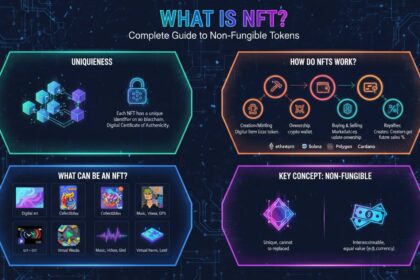

A non-fungible token (NFT) is a unique digital certificate stored on a blockchain that proves ownership and authenticity of a specific digital asset, such as artwork, music, videos, virtual real estate, or collectibles. Unlike cryptocurrencies such as Bitcoin or Ethereum, where each unit is identical and interchangeable, every NFT possesses distinct properties that make it one-of-a-kind and impossible to replicate. This fundamental difference has transformed how we think about digital ownership, creating new markets worth billions of dollars and sparking conversations about the future of art, gaming, and intellectual property in the digital age.
What Exactly Is a Non-Fungible Token?
To understand NFTs, you must first grasp the concept of "fungibility." A fungible item is something that can be exchanged for another identical item without any difference in value. A dollar bill is fungible—any dollar bill can be exchanged for any other dollar bill because they hold equal value. Cryptocurrency works the same way: one Bitcoin equals another Bitcoin in terms of value and functionality.
Non-fungible tokens break this paradigm entirely. Each NFT contains unique metadata that distinguishes it from every other token on the network. This uniqueness is verified through blockchain technology, creating a permanent and tamper-proof record of authenticity, ownership history, and provenance. When you purchase an NFT, you acquire a verified digital certificate of ownership stored on a distributed ledger that cannot be forged or altered retroactively.
The "non-fungible" aspect means that no two NFTs are alike, just as no two paintings by Picasso are identical, even if they share the same artist and medium. This scarcity and uniqueness are what give NFTs their value, mirroring how traditional art and collectibles function in physical markets.
The Technology Behind NFTs
NFTs operate on blockchain networks, with Ethereum being the most prominent platform for NFT creation and trading. The Ethereum blockchain uses the ERC-721 and ERC-1155 token standards to enable non-fungible token functionality. These technical standards define the rules for creating, transferring, and managing unique digital assets on the network.
Each NFT contains several key components stored on the blockchain: a unique token ID that distinguishes it from all other tokens, metadata describing the associated digital asset, ownership records tracking the current and historical owners, and smart contract code that governs how the token can be transferred or interacted with. This information remains permanently recorded on the blockchain, providing transparent verification of authenticity and ownership history.
How NFTs Work: The Technical Foundation
The process of creating an NFT begins with minting, where a digital creator or artist uploads their work to an NFT marketplace and converts it into a blockchain-based token. This minting process embeds the artwork's metadata directly into the smart contract, establishing a permanent connection between the physical or digital file and its blockchain representation.
When someone purchases an NFT, the transaction is recorded on the blockchain as a transfer of ownership from the previous owner to the new owner. This transfer is verified by network participants through a consensus mechanism, ensuring that ownership changes are legitimate and cannot be disputed. The new owner receives a cryptographically verified record of ownership that can be independently checked by anyone on the network.
Smart contracts play a crucial role in NFT ecosystems by automating royalty payments to original creators. When an NFT is resold on the secondary market, the smart contract can automatically distribute a percentage of the sale price to the original artist, ensuring they continue to benefit from their work's increasing value. This feature has revolutionized how digital creators monetize their work, providing ongoing revenue streams that were previously impossible in traditional art markets.
The actual digital files associated with NFTs are typically stored separately from the blockchain, often using decentralized storage systems like IPFS (InterPlanetary File System). The blockchain stores the token ID and metadata pointer, while the underlying image, video, or audio file exists elsewhere. This separation keeps blockchain operations efficient while maintaining the immutable ownership record.
Key Use Cases and Applications
The application landscape for NFTs has expanded dramatically since the technology gained mainstream attention in 2021. While digital art and collectibles remain the most visible use case, the technology has found utility across numerous industries.
Digital Art and Collectibles: Artists can now create and sell digital artwork directly to collectors without intermediary galleries, retaining greater control over their creative output and receiving ongoing royalties from secondary sales. Beeple's "Everydays: The First 5000 Days" sold at Christie's for $69.4 million in March 2021, demonstrating that digital art commands prices comparable to traditional masterpieces.
Gaming and Virtual Assets: NFTs enable true ownership of in-game items, allowing players to buy, sell, and trade virtual assets across different games and platforms. This interoperability represents a fundamental shift from the current gaming model where publishers retain complete control over virtual economies.
Real Estate and Legal Documents: Tokenizing real estate through NFTs can streamline property transfers, reduce fraud, and enable fractional ownership of high-value properties. Similarly, NFTs can serve as digital certificates for diplomas, licenses, and legal documents, providing tamper-proof verification of credentials.
Music and Entertainment: Musicians and content creators use NFTs to sell unique music releases, concert tickets, and exclusive experiences directly to fans, bypassing traditional distribution channels and retaining a larger share of revenue.
Fashion and Luxury Goods: Brands have begun exploring NFT collections that represent digital versions of physical items, enabling virtual try-ons and digital ownership of limited-edition products.
NFT Market: Size, Growth, and Trends
The NFT market experienced explosive growth in 2021, with total trading volume reaching approximately $25 billion according to data from multiple analytics platforms. This represented a massive increase from the $95 million recorded in 2020, illustrating the rapid mainstream adoption of non-fungible tokens.
The market underwent significant correction in 2022, with trading volumes declining substantially as speculative excess faded and investor sentiment shifted. However, this consolidation period weeded out unsustainable projects while legitimate use cases continued developing. By 2023, the market had stabilized with more realistic valuations and increased focus on utility-driven NFTs rather than pure speculation.
Current market data indicates that Ethereum remains the dominant blockchain for NFT activity, accounting for the majority of trading volume and established marketplaces. Alternative blockchains including Solana, Polygon, and Avalanche have gained market share by offering lower transaction costs and faster confirmation times, though they still lag Ethereum in total user adoption and liquidity.
The emergence of layer-2 scaling solutions has addressed some of Ethereum's limitations regarding transaction costs and speed, making NFT interactions more accessible to everyday users. These technical improvements have contributed to renewed interest in NFT applications beyond pure speculation, with focus shifting toward practical utility and real-world integration.
Benefits and Advantages of NFTs
NFTs offer several distinct advantages over traditional systems of ownership and authentication that have driven their adoption across industries.
Immutable Verification: The blockchain provides permanent, unchangeable records of ownership and authenticity. Unlike traditional certificates that can be forged or altered, NFT ownership records are cryptographically secured and publicly verifiable. This feature is particularly valuable for high-value collectibles, luxury goods, and credential verification where authenticity is paramount.
Direct Creator Economics: Artists and content creators retain unprecedented control over their work and receive automatic royalty payments through smart contracts. The typical royalty structure ranges from 5% to 10% of all secondary market sales, providing sustainable income that accumulates over time as works appreciate in value.
Global Accessibility: Anyone with an internet connection can purchase NFTs regardless of geographic location, enabling creators to access global markets without requiring traditional gallery representation or distribution deals. This democratization has opened economic opportunities for artists in regions historically underserved by traditional art markets.
Fractional Ownership: NFTs can be divided into smaller units, allowing multiple investors to own portions of valuable assets. This fractionalization opens investment opportunities that were previously available only to ultra-high-net-worth individuals, democratizing access to blue-chip digital and physical assets.
Programmable Royalties: Smart contracts automatically execute royalty payments whenever NFTs change hands, eliminating the need for manual tracking or enforcement. This automation ensures creators receive their entitled compensation without relying on intermediaries or legal enforcement.
Common Misconceptions and Mistakes to Avoid
Despite growing awareness, several persistent misconceptions continue to confuse newcomers to the NFT space.
Misconception 1: NFTs Are Only for Art Speculation
While art and collectibles dominated early headlines, NFTs serve legitimate purposes across gaming, identity verification, supply chain tracking, and intellectual property management. The technology's value lies in its ability to establish verified digital ownership, regardless of whether the asset is artwork, event tickets, or legal documents.
Misconception 2: You Can Only Buy Expensive NFTs
The market operates across all price points, with numerous platforms facilitating transactions ranging from under $10 to millions of dollars. Newcomers can start exploring the technology with affordable entries without requiring significant capital.
Misconception 3: Anyone Can Copy My Digital Art
Creating an NFT does not inherently protect against copyright infringement. The token proves ownership of a specific blockchain-recorded instance, but it does not grant intellectual property rights or prevent others from copying the underlying image. Artists should understand the distinction between ownership of a token and ownership of copyright.
Mistake 1: Not Understanding Storage Mechanisms
Many newcomers fail to recognize that purchasing an NFT typically grants ownership of the token rather than the underlying file. Understanding where digital assets are stored and what rights are conveyed through purchase is essential before making acquisitions.
Mistake 2: Ignoring Gas Fees and Transaction Costs
Blockchain transactions involve network fees that fluctuate based on demand. Newcomers sometimes overlook these costs when calculating the total expense of purchasing or creating NFTs, leading to unexpected expenses that significantly impact profitability.
Mistake 3: Storing NFTs in Exchange Wallets
Maintaining NFTs in custodial exchange wallets introduces counterparty risk, as exchanges can fail or be hacked. Hardware wallets and secure self-custody solutions provide superior security for valuable digital assets.
Getting Started with NFTs
For those interested in exploring NFT ownership or creation, understanding the basic workflow and necessary tools is essential for safe participation.
Setting Up a Wallet: The first step involves creating a cryptocurrency wallet compatible with NFT transactions. MetaMask is the most widely used wallet for Ethereum-based NFTs, though alternatives like Coinbase Wallet and Rainbow also offer robust NFT support. After installing the wallet extension or mobile app, users must secure their seed phrase—a 12 or 24-word recovery phrase that provides complete access to the wallet. This seed phrase should never be shared or stored digitally.
Funding the Wallet: Most NFT transactions require Ethereum (ETH) or the native cryptocurrency of the blockchain being used. Users can purchase cryptocurrency through exchanges like Coinbase, Kraken, or Binance, then transfer funds to their personal wallet. Beginners should transfer only the amount planned for NFT activities to minimize exposure.
Choosing a Marketplace: NFT marketplaces provide platforms for buying, selling, and creating non-fungible tokens. OpenSea remains the largest general marketplace, while specialized platforms focus on specific categories. Other marketplaces like Foundation, Rarible, and Magic Eden offer different user experiences, fee structures, and community characteristics.
Research Before Purchasing: Due diligence is critical before any NFT acquisition. Potential buyers should verify the authenticity of the collection, review the project's team and roadmap, examine historical price data and ownership distribution, and understand the specific rights associated with ownership. Scams and fraudulent projects exist, making careful verification essential.
Frequently Asked Questions
What is the difference between cryptocurrency and NFT?
Cryptocurrency is fungible—each unit is identical and interchangeable with any other unit of the same currency. One Bitcoin equals another Bitcoin in value and function. NFTs are non-fungible, meaning each token possesses unique properties that distinguish it from every other token, making them irreplaceable and one-of-a-kind.
How do I know if an NFT is authentic?
Authenticity is verified through the blockchain record, which shows the entire ownership history from the original minting to current ownership. Each NFT has a unique token ID and smart contract address that can be independently verified on blockchain explorers. Purchasing from reputable marketplaces and verifying the collection's verification status provides additional assurance.
Can I create my own NFT?
Yes, anyone can mint an NFT by connecting their wallet to a marketplace and following the minting process. The creator pays gas fees for the initial minting transaction and sets royalty parameters for future sales. Creating an NFT does not automatically grant copyright protection—it establishes ownership of that specific token instance.
What happens to my NFT if the marketplace closes?
Because NFTs exist on the blockchain rather than on the marketplace itself, they remain in your wallet regardless of marketplace status. As long as you maintain control of your wallet's private keys, you retain ownership of your NFTs even if the trading platform ceases operations. The blockchain provides permanence that does not depend on any single service provider.
Are NFTs bad for the environment?
The environmental impact of NFTs depends primarily on the underlying blockchain network. Ethereum completed "The Merge" transition to proof-of-stake validation in September 2022, reducing its energy consumption by approximately 99.95%. Other blockchains use various consensus mechanisms with different environmental profiles, making it important to consider which network hosts specific NFTs when evaluating environmental impact.
How much does it cost to buy an NFT?
NFT prices span an enormous range from under $10 to millions of dollars. Beyond the purchase price, buyers should account for transaction fees (gas fees) that vary based on network congestion. During high-demand periods, gas fees can significantly exceed the price of the NFT itself, making timing an important consideration for cost-conscious buyers.