

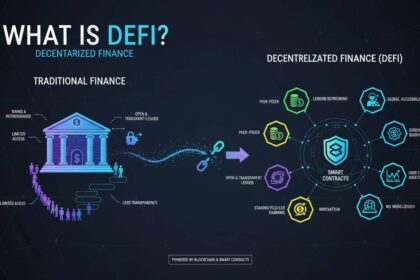

Decentralized finance, commonly referred to as DeFi, represents one of the most significant technological transformations in the global financial system since the advent of online banking. As blockchain technology continues to mature, understanding what isDeFi decentralized finance becomes essential for investors, technologists, and anyone interested in the future of money. This comprehensive guide explores the mechanics, opportunities, and challenges shaping this rapidly evolving sector.
Understanding Decentralized Finance
Decentralized finance encompasses a broad ecosystem of financial applications built on blockchain networks, primarily Ethereum, that aim to recreate traditional financial instruments without the need for intermediaries such as banks, brokerages, or exchanges. The fundamental premise behind what isDeFi decentralized finance centers on removing centralized authorities from financial transactions while maintaining security, transparency, and accessibility.
The DeFi movement emerged from the broader cryptocurrency industry, leveraging the capabilities of smart contracts—self-executing programs stored on blockchains that automatically enforce agreements between parties when predetermined conditions are met. This technological foundation allows for the creation of financial products and services that operate autonomously, 24 hours a day, seven days a week, without requiring approval from traditional financial institutions.
What isDeFi decentralized finance fundamentally challenges the existing financial infrastructure by offering an alternative model where users maintain complete control over their assets and transactions. Instead of entrusting their funds to banks or other custodians, DeFi participants interact directly with code-based protocols that facilitate lending, borrowing, trading, and earning interest on cryptocurrencies. This paradigm shift has attracted billions of dollars in total value locked within DeFi protocols, demonstrating growing mainstream acceptance of blockchain-based financial services.
How DeFi Works: The Technology Behind the Revolution
The architecture of decentralized finance rests on several interconnected technological components that work together to replicate and improve upon traditional financial services. Understanding these elements provides insight into how what isDeFi decentralized finance functions as a cohesive system.
Smart contracts serve as the backbone of DeFi applications, enabling automated execution of financial agreements without human intervention. These self-executing programs automatically transfer assets or perform calculations when specific conditions are satisfied, eliminating the need for trust between counterparties. For example, a lending protocol might automatically liquidate collateral if a borrower's position falls below a certain threshold, ensuring lender protection without manual oversight.
Blockchain networks provide the decentralized infrastructure necessary for DeFi operations. Ethereum remains the dominant platform for DeFi development, though other blockchains like Solana, Avalanche, and Polygon have gained significant traction due to lower transaction costs and faster processing times. These distributed ledgers record all transactions permanently and transparently, creating an immutable record accessible to anyone with an internet connection.
Decentralized applications, or DApps, represent the user-facing interfaces through which individuals interact with DeFi protocols. These applications connect to blockchain networks, allowing users to access financial services through cryptocurrency wallets rather than traditional accounts. Popular DApps include decentralized exchanges like Uniswap, lending platforms like Aave, and yield farming protocols like Yearn Finance.
The concept of total value locked, or TVL, measures the overall capital deposited in DeFi protocols across all blockchain networks. This metric serves as a key indicator of industry growth and adoption, fluctuating based on market conditions, new protocol launches, and shifting investor sentiment. As of recent data, the DeFi sector has experienced substantial growth, with billions of dollars committed to various protocols worldwide.
Key Components of the DeFi Ecosystem
The decentralized finance landscape comprises numerous interconnected components that collectively form a comprehensive alternative to traditional banking services. Examining these elements clarifies what isDeFi decentralized finance and how it creates value for users across the globe.
Decentralized exchanges, commonly known as DEXs, enable peer-to-peer cryptocurrency trading without intermediaries. Unlike centralized exchanges that hold user funds, DEXs facilitate direct transactions between traders through automated market makers algorithms. Popular platforms like Uniswap and SushiSwap allow users to swap tokens instantly while maintaining control of their assets throughout the trading process.
Lending and borrowing protocols represent some of the most utilized DeFi services, allowing users to supply cryptocurrencies to liquidity pools and earn interest or borrow assets against collateral. These platforms use algorithmic interest rates determined by supply and demand dynamics within each protocol. Major lending platforms include Compound, Aave, and MakerDAO, each offering unique features and token economics.
Stablecoins form a critical pillar of the DeFi ecosystem, providing price stability necessary for various financial operations. These cryptocurrencies maintain fixed values, typically pegged to the US dollar or other fiat currencies, through various mechanisms including collateral backing and algorithmic stabilization. Tether, USD Coin, and Dai represent the most widely adopted stablecoins, facilitating trading, lending, and payments within the decentralized finance space.
Yield farming has emerged as a prominent strategy within DeFi, involving the movement of assets across different protocols to maximize returns. Participants stake or lock their cryptocurrencies in various liquidity pools, earning token rewards in addition to standard interest payments. While yield farming can generate substantial returns, it also carries significant complexity and risk, requiring careful management of multiple positions.
Benefits and Opportunities in Decentralized Finance
The advantages offered by DeFi extend beyond technological novelty, presenting tangible benefits that address longstanding limitations in traditional finance. Understanding these opportunities clarifies why what isDeFi decentralized finance matters for the future of global economic systems.
Financial inclusion represents perhaps the most significant promise of decentralized finance. Approximately 1.7 billion adults worldwide lack access to traditional banking services, according to World Bank data. DeFi eliminates many barriers to entry by requiring only an internet connection and a cryptocurrency wallet rather than extensive documentation, credit history, or minimum balance requirements. This democratization of financial access has particular relevance for underbanked populations in developing nations.
Transparency stands as another fundamental advantage of DeFi architecture. All transactions, code, and protocol parameters remain publicly visible on blockchain networks, allowing anyone to audit operations independently. This radical transparency reduces corruption risks and enables informed decision-making based on verifiable data rather than relying solely on institutional assurances.
Permissionless innovation allows developers to build upon existing protocols without seeking approval from centralized authorities. This open-source approach accelerates innovation cycles, as developers can fork successful protocols or combine multiple services to create novel financial products. The composability of DeFi applications—where different protocols can seamlessly interact—creates exponential possibilities for financial engineering.
Reduced costs and faster settlement times represent practical benefits for users accustomed to traditional finance inefficiencies. Cross-border payments that typically take days and incur substantial fees can settle within minutes on blockchain networks, while automated processes eliminate many administrative overhead costs associated with conventional banking.
Risks and Challenges in the DeFi Space
Despite its transformative potential, decentralized finance carries substantial risks that participants must understand before engaging with these protocols. A balanced understanding of what isDeFi decentralized finance requires acknowledging these significant challenges.
Smart contract vulnerabilities have resulted in hundreds of millions of dollars in losses across the DeFi ecosystem. Code bugs, logic errors, or unexpected interactions between complex protocols can lead to catastrophic failures. High-profile exploits have targeted numerous DeFi projects, emphasizing the importance of thorough due diligence and, increasingly, formal code verification processes.
Regulatory uncertainty creates significant challenges for DeFi participants and developers. Governments worldwide continue debating appropriate frameworks for cryptocurrency and decentralized finance oversight. Potential regulatory actions could impact protocol operations, token classifications, or user privacy, creating an environment of uncertainty that complicates long-term planning.
Market volatility affects virtually all cryptocurrency assets, including those utilized within DeFi protocols. Rapid price swings can trigger automatic liquidations, cause liquidity shortages, or create cascading failures across interconnected protocols. The inherent volatility of crypto markets amplifies risks associated with leverage and collateralized borrowing.
Operational complexity presents barriers to mainstream adoption, as many DeFi applications require technical understanding of cryptocurrency wallets, private keys, gas fees, and blockchain mechanics. User experience improvements continue making DeFi more accessible, but significant learning curves remain for non-technical participants entering this space.
Real-World Applications and Use Cases
DeFi applications have moved beyond experimental concepts to deliver practical financial services utilized by millions worldwide. These use cases demonstrate how what isDeFi decentralized finance translates into tangible value for diverse user populations.
Decentralized lending has enabled individuals to earn competitive interest rates on cryptocurrency deposits while providing borrowers access to capital without traditional credit checks. Farmers, small business owners, and individuals in countries with limited banking infrastructure have utilized DeFi lending to access liquidity when conventional options remained unavailable.
Tokenization of real-world assets represents an emerging DeFi application with significant implications for traditional finance. Blockchain technology enables the fractional ownership of real estate, art, commodities, and other illiquid assets, potentially democratizing investment opportunities previously reserved for wealthy individuals or institutional investors.
Decentralized insurance protocols explore ways to automate claims processing and create peer-to-peer insurance pools. These emerging platforms aim to reduce costs and increase transparency in insurance markets while providing coverage options for risks inadequately addressed by traditional providers.
The Future of Decentralized Finance
The trajectory of DeFi points toward continued growth, innovation, and integration with traditional financial systems. Understanding what isDeFi decentralized finance requires considering how this sector might evolve in coming years.
Institutional participation has increased markedly, with major financial institutions exploring DeFi for treasury management, collateralized lending, and settlement operations. This institutional involvement brings capital, infrastructure, and legitimacy while potentially driving further innovation in regulatory compliance and risk management.
Cross-chain interoperability improvements will likely enable seamless asset and data transfer between different blockchain networks, expanding the scope of DeFi operations. Bridge technologies and multi-chain protocols aim to overcome current fragmentation, creating a more unified decentralized finance ecosystem.
Regulatory frameworks will continue developing, potentially providing clearer guidelines that enable sustainable growth while protecting consumers. The evolution of "regulatory technology" within DeFi may eventually enable compliant operations that satisfy both decentralized principles and governmental requirements.
Conclusion
Decentralized finance represents a fundamental reimagining of how financial services operate in the digital age. What isDeFi decentralized finance? It is a comprehensive ecosystem that leverages blockchain technology to create accessible, transparent, and permissionless financial instruments. While significant challenges including security risks, regulatory uncertainty, and operational complexity remain, the benefits of financial inclusion, transparency, and innovation continue driving growth and adoption.
As the technology matures and user experience improves, decentralized finance may increasingly complement and potentially transform traditional banking systems. Participants considering involvement in this space should conduct thorough research, understand the risks involved, and approach DeFi as an evolving ecosystem rather than a finished product. The future of finance likely involves both centralized and decentralized systems coexisting, each serving different needs and preferences within a diverse global economy.
Frequently Asked Questions
What is the difference between DeFi and traditional finance?
Traditional finance relies on intermediaries like banks and brokerages to facilitate transactions, while DeFi uses automated smart contracts to enable peer-to-peer financial services. DeFi operates 24/7 without traditional banking hours, requires no personal documentation, and gives users full control of their assets.
How do I get started with DeFi?
To begin using DeFi, you need a compatible cryptocurrency wallet like MetaMask, some cryptocurrency (typically Ethereum or tokens on other DeFi-enabled blockchains), and an understanding of the specific protocols you wish to use. Start with small amounts to learn the processes before committing significant capital.
Is DeFi safe to use?
DeFi carries substantial risks including potential loss from smart contract bugs, hacks, or user error. No centralized authority can reverse transactions or recover lost funds. Users should only invest what they can afford to lose and thoroughly research protocols before providing liquidity or assets.
What are gas fees in DeFi?
Gas fees are transaction costs paid to blockchain networks for processing operations. On Ethereum, these fees vary based on network congestion and transaction complexity. Users should factor gas costs into their DeFi calculations, as fees can sometimes exceed potential returns on smaller positions.
Can I lose money in DeFi?
Yes, DeFi investments can result in complete loss of funds through various scenarios including impermanent loss, protocol exploits, rug pulls, or market crashes. The high-risk nature of DeFi makes it unsuitable for risk-averse investors or those needing capital preservation.
What is impermanent loss?
Impermanent loss occurs when providing liquidity to automated market makers results in holding fewer assets than if you had simply kept them in your wallet. This happens when token price ratios change after deposit, creating a difference between your portfolio value and what it would have been without providing liquidity.