

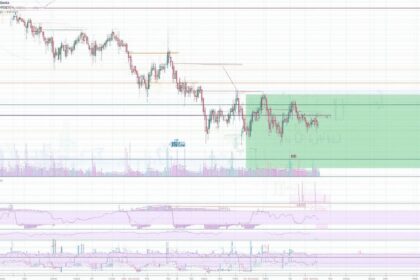

In today’s fast-moving financial markets, data drives every decision. Nowhere is this more apparent than in crypto and stock trading, where order book data offers a transparent, real-time window into market activity. From individual traders reacting to sudden volatility, to algorithmic trading firms exploiting fractional price differentials, access to high-quality order book data has become not just an advantage, but an expectation. As trading volumes in digital assets surge and market microstructure evolves, understanding the mechanics and nuanced signals of the order book is essential for anyone aiming to compete—or simply survive—in this landscape.
What Is Order Book Data? Foundations and Function
Order book data refers to the electronic ledger that lists all outstanding buy and sell orders for a particular asset, such as a stock or cryptocurrency. Unlike historical price or volume indicators, this live dataset displays:
- Bid Prices (offers to purchase, with associated quantities)
- Ask Prices (offers to sell, with associated quantities)
- Order Depth (aggregate supply and demand at different price levels)
Displayed within trading interfaces (and available through APIs), order books provide a transparent snapshot of real-time market intent. This “market depth” forms the backbone of price discovery on electronic exchanges from NASDAQ to Binance.
Key Components of Order Book Data
Understanding the structure of an order book is critical:
- Level I Data: Shows the best bid and ask, with quantities.
- Level II Data: Offers a deeper look at multiple price levels beyond the top quotes.
- Order Flow: Real-time updates on incoming, modified, and cancelled orders.
"Order book data lays bare the actual intent of market participants, offering a layer of transparency that both professional and retail traders can learn to interpret for actionable insights."
— Anna Weber, Market Microstructure Analyst
How Order Book Data Shapes Trading Decisions
Order book data is not just a passive record; it is the battlefield on which every trade occurs. Markets react to the constant ebb and flow of buying and selling pressure—making direct access to order book information essential for informed, timely decisions.
Spotting Support and Resistance
Order books often highlight key psychological price levels, where clusters of bids or asks form “walls.” For instance:
- Support may develop if a large number of buy orders accumulates at a particular price.
- Resistance often surfaces where many are ready to sell, potentially capping price advances.
Experienced traders watch these levels for possible reversals or breakouts. For example, during Bitcoin’s rapid rallies in recent years, visible order book support bands frequently heralded reversals, while thin order books foreshadowed sharp volatility.
Detecting Market Manipulation and Liquidity Traps
In both traditional and crypto markets, sophisticated actors may “layer” the order book with non-genuine orders—submitting, then quickly cancelling large orders to create misleading cues. Careful analysis of order persistence, order size, and flow patterns helps detect such tactics. On high-volume exchanges, transparency mechanisms and circuit breakers aim to counteract manipulation, but real-time vigilance remains indispensable.
Order Book Data in the Algorithmic Era
The past decade has witnessed a transformation as more market participants rely on algorithms and automated strategies. High-frequency trading (HFT) firms consume order book data not just for insight, but as raw input for rapid-fire decisions executed in microseconds.
API Access and Integration
Most major exchanges, including Coinbase Pro and NYSE Arca, provide public or premium access to real-time order book data via APIs. These feeds can power:
- Custom dashboards for human traders
- Automated bots that “listen” for tradable events
- Quantitative research tools for backtesting and simulation
Real-World Example: Crypto Market-Making
On platforms like Binance and Kraken, leading crypto market makers use advanced models to monitor order book imbalances and drift. For instance, if aggressive buying depletes the ask side across several price levels, a market-making algorithm may adjust quotes or hedge inventory, thereby influencing the spread itself.
The Impact of Real-Time Order Book Data on Market Transparency
A common critique of legacy financial systems is their limited visibility—where market makers could operate in “dark pools” and retail traders lacked access to granular order details. The rise of digital assets and API-driven trading has changed this dynamic.
Democratization of Data Access
Retail traders now have dashboards showing full depth-of-book on leading exchanges. Services like TradingView and CryptoCompare incorporate order book heatmaps and aggregate data feeds, closing the information gap that previously benefited only institutional participants.
Regulatory Responses and Data Quality Considerations
In both regulated and emerging markets, there is increasing scrutiny of data integrity:
- Exchanges implement safeguards against “wash trading” and quote stuffing.
- Regulatory bodies, such as the SEC and ESMA, weigh best practices for pre-trade transparency.
Still, not all order book data is created equal. Thinly traded assets may show gaps or unreliable depth, while fragmented liquidity across multiple exchanges can obscure the true market picture—a perennial challenge for both retail and professional traders.
Strategies for Leveraging Order Book Data
Analyzing order book data can yield actionable insights, but context and discipline are indispensable. Practical strategies include:
1. Order Flow Analysis
By tracking the direction and magnitude of recent order entries and cancellations, traders can assess whether momentum is building or waning. This is vital for “scalping” in fast-moving crypto pairs, where seconds count.
2. Spread and Slippage Management
Monitoring the bid-ask spread and overall depth can help traders minimize slippage—crucial for large transactions in lower-liquidity markets.
3. Algorithmic Execution
Institutions often deploy “smart order routing” to split large trades across multiple venues, reducing market impact and concealment. These systems rely on reliable, high-fidelity order book feeds.
"The quality of order book data—and the tools used to interpret it—often defines the fine line between consistent profitability and chasing losses in today’s markets."
— Lucas Meyer, Head of Quantitative Trading
Emerging Trends: The Future of Order Book Intelligence
As trading infrastructure evolves, so too does the landscape for order book data.
- On-chain order books: Decentralized finance (DeFi) protocols increasingly offer fully transparent, immutable order books, extending the ethos of peer-to-peer trading.
- Aggregated liquidity platforms: Several fintech startups now aggregate order book data from dozens of venues, helping traders identify best execution paths even across fragmented marketplaces.
- AI and Deep Learning: Sophisticated pattern recognition and predictive analytics, trained on years of historical order book data, aim to forecast price movements with increasing precision.
Conclusion: Adapting to an Order Book-Driven Market
The modern trading ecosystem thrives on transparency and speed. Order book data, once a behind-the-scenes resource for institutions, is now a vital public utility. Whether trading stocks or digital assets, success rests on the ability to read, interpret, and act upon real-time market signals. As technology continues to democratize access—and new analytics unlock deeper layers of insight—staying competitive will depend not just on reading the data, but truly understanding the complex dynamics behind every trade.
FAQs
What is the difference between Level I and Level II order book data?
Level I data provides only the best bid and ask prices for an asset, while Level II data shows multiple price levels above and below the current market, offering deeper insight into supply and demand.
Can order book data predict future price movements?
While order book data reveals immediate buying and selling interest, it should not be considered a foolproof predictor. Traders often use it in conjunction with other indicators and risk management strategies.
How can retail traders access real-time order book data?
Most major exchanges and trading platforms offer public order book displays, and some provide API access for deeper integration. Third-party tools also aggregate and visualize this data.
Is order book data available for all assets and markets?
Order book transparency varies by market and regulatory environment. While it is standard for major crypto and equity exchanges, some over-the-counter or illiquid assets may offer limited visibility.
What are common risks when using order book data for trading?
Risks include misinterpreting “fake” orders (placed and cancelled rapidly), reacting to low-liquidity spikes, or relying on incomplete data from fragmented markets.
How do professional traders use order book data differently from retail participants?
Institutional traders often use sophisticated algorithms and direct data feeds for split-second decision-making, while retail traders typically analyze visible order book trends alongside other technical or fundamental indicators.
