

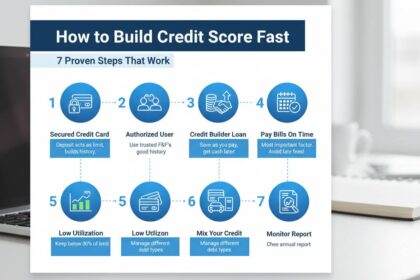

QUICK ANSWER: Building credit score fast requires a strategic combination of checking your credit report for errors, becoming an authorized user on a family member's account, getting a secured credit card, making on-time payments consistently, keeping credit utilization below 30%, diversifying your credit mix, and maintaining these habits for 6-12 months. The most impactful factors are payment history (35% of FICO score) and credit utilization (30% of FICO score).
AT-A-GLANCE:
| Factor | Impact on FICO Score | Time to See Results |
|---|---|---|
| Payment History | 35% of score | 1-3 months |
| Credit Utilization | 30% of score | 1-2 months |
| Length of Credit History | 15% of score | 6-12 months |
| New Credit Inquiries | 10% of score | 3-6 months |
| Credit Mix | 10% of score | 6-12 months |
| Secured Card Reporting | Adds to history | 1-3 months |
| Authorized User Status | Inherits account history | Immediate impact |
KEY TAKEAWAYS:
- ✅ Your payment history is the single most important factor, accounting for 35% of your FICO score—never miss a payment
- ✅ Credit utilization below 30% can improve your score within 1-2 months; below 10% is even better
- ✅ Becoming an authorized user on a family member's card with good history can boost your score within 30 days
- ✅ Secured credit cards report to all three major bureaus and can build history in 3-6 months
- ❌ Applying for multiple credit cards at once triggers hard inquiries that can temporarily lower your score by 5-10 points
KEY ENTITIES:
- Credit Scoring Models: FICO Score 8, FICO Score 10, VantageScore 3.0 and 4.0
- Credit Bureaus: Equifax, Experian, TransUnion
- Government Resources: AnnualCreditReport.com, Consumer Financial Protection Bureau (CFPB)
- Products: Secured credit cards, credit-builder loans, authorized user accounts
LAST UPDATED: January 14, 2026
Building credit from scratch or repairing damaged credit doesn't happen overnight, but with the right strategy, you can see meaningful improvement in as little as three to six months. The credit scoring system rewards consistent, responsible behavior—and punishes mistakes. Understanding which actions move the needle fastest is the key to accelerating your journey to an excellent credit score.
Understanding How Credit Scores Work
Before diving into specific steps, you need to understand what credit scores measure and why certain actions matter more than others. Your credit score is a three-digit number that represents your creditworthiness to lenders, landlords, and even some employers.
The two most widely used scoring models are FICO and VantageScore. FICO scores range from 300 to 850, with scores above 800 considered exceptional, 740-799 very good, 670-739 good, 580-669 fair, and below 580 poor. VantageScore uses a similar range but weighs factors slightly differently.
Five factors determine your FICO score, each carrying different weights:
Payment history accounts for 35% of your score, making it the most influential factor. This tracks whether you pay your bills on time, have any collections, or have experienced bankruptcies or judgments. Credit utilization—the amount of available credit you're using—makes up 30%. Financial experts recommend keeping utilization below 30% and ideally under 10% for the best scores.
The length of your credit history contributes 15%. This considers how long your accounts have been open and the average age of all your accounts. New credit inquiries account for 10%, as each application triggers a hard pull that can temporarily lower your score. Finally, credit mix—the variety of credit types you have—makes up the remaining 10%.
Understanding these weights helps you prioritize your efforts. Focusing on payment history and utilization delivers the fastest results because they carry the most weight and respond quickest to positive changes.
Step 1: Check Your Credit Report for Errors
The first and most overlooked step in building credit is reviewing your credit reports from all three bureaus. Errors on your report can drag down your score unnecessarily, and disputing them is free.
You are entitled to one free credit report every 12 months from each of the three major bureaus through AnnualCreditReport.com. During the pandemic, this was expanded to weekly updates, and while that flexibility has changed, you can still request reports throughout the year by staggering requests from different bureaus every four months.
When reviewing your report, look for several common error types. Incorrect personal information, such as a misspelled name, wrong address, or accounts that don't belong to you, can indicate identity theft or clerical errors. Account status errors include closed accounts showing as open, payments marked late that were actually on time, or balances that don't match your records. Additionally, look for outdated negative information that should have fallen off your report—most negative items like late payments or collections remain for seven years, while bankruptcies can stay for seven to ten years.
To dispute errors, file a claim directly with the credit bureau reporting the mistake. They have 30 days to investigate and must provide results in writing. According to the Federal Trade Commission, one in five consumers has an error on at least one credit report, and correcting these errors can boost scores significantly enough to qualify for better loan terms or interest rates.
Step 2: Become an Authorized User
One of the fastest ways to build credit is becoming an authorized user on someone else's credit card account—typically a parent, spouse, or close family member with excellent credit history.
As an authorized user, you receive a card in your name but don't legally owe the debt. The primary account holder maintains responsibility for payments. However, the entire account history—including years of on-time payments and low utilization—gets reported to the credit bureaus under your name. This "piggybacks" your credit history onto theirs, potentially boosting your score within 30 to 60 days.
This strategy works particularly well for young adults building credit for the first time or anyone trying to recover from past credit problems. The authorized user doesn't even need to use the card for it to help; the mere existence of the well-managed account on their credit report makes a difference.
Before proceeding, discuss the arrangement openly with the primary cardholder. Ensure they have a track record of on-time payments and low credit utilization—their habits become part of your credit profile. Some card issuers allow authorized users to be added without a hard inquiry, meaning it won't impact the primary holder's score either. However, a few issuers do require a hard pull, so verify this beforehand if minimizing inquiries matters to the primary account holder.
Step 3: Get a Secured Credit Card
If you don't have existing credit or need to rebuild after problems, a secured credit card is one of the most effective tools available. These cards require a cash deposit as collateral, which becomes your credit limit. The deposit protects the issuer, making them willing to approve applicants with poor or no credit.
Secured cards work like regular credit cards: you make purchases, receive a monthly statement, and must pay at least the minimum amount due. Your activity gets reported to all three major credit bureaus, building your payment history and credit file just like an unsecured card.
When choosing a secured card, look for these features: no annual fee (or low fee relative to deposit size), reporting to all three bureaus, and the ability to upgrade to an unsecured card after responsible use. Popular options include the Discover it Secured, Capital One Secured Mastercard, and Citi Secured Mastercard.
The key to success with secured cards is using them responsibly. Make small purchases each month—perhaps a single recurring bill—and pay the full balance by the due date. This establishes payment history without carrying a balance. After 12 to 18 months of on-time payments, many issuers will refund your deposit and convert you to an unsecured card with a higher limit.
Avoid secured cards with excessive fees or those that don't report to all bureaus. Some predatory options charge high annual fees without offering meaningful credit-building benefits. Research carefully before applying.
Step 4: Make Payments On-Time Consistently
Payment history carries the highest weight in your credit score calculation, making on-time payments absolutely essential. Even a single late payment can remain on your credit report for seven years and cause significant score damage.
The good news: if you've struggled with late payments in the past, their impact diminishes over time. Recent late payments hurt much more than older ones. Building a fresh pattern of on-time payments can offset past mistakes within one to two years.
To ensure you never miss a payment, automate everything. Set up automatic minimum payments through your credit card or loan servicer to guarantee you never hit a due date without paying something. However, always pay more than the minimum when possible to reduce interest costs and utilization.
For those juggling multiple accounts, create a payment calendar or set reminders a week before each due date. Some people prefer paying all bills on the same day each month—their pay date—rather than tracking individual due dates.
If you've already missed a payment, act quickly. Pay the overdue amount as soon as possible. While the late payment will still be reported, catching up before 30 days past due prevents additional damage. Late payments are reported at 30, 60, 90, and 120 days past due, with each tier causing progressively worse damage to your score.
Step 5: Reduce Your Credit Utilization
Credit utilization measures the percentage of your available credit that you're using. It's calculated both per-card and across all your accounts. Lower utilization consistently correlates with higher credit scores.
The magic threshold is 30%—utilization above this level starts hurting your score, while staying below it keeps your score healthy. Even better, utilization below 10% is considered optimal by many scoring models and can give your score a noticeable boost.
There are two primary ways to lower utilization: reduce your balance or increase your credit limit. Paying down balances is the faster approach for immediate results. If you carry balances from month to month, focus on paying them down aggressively. Even moving payment timing—paying before the statement closing date rather than after—can help because credit bureaus typically snapshot your balance on the statement closing date.
Requesting a credit limit increase is another effective strategy, particularly if your income has grown or you've maintained good payment history. Most issuers allow soft-pull limit increases that don't impact your score. A higher limit reduces utilization percentage without requiring you to pay down debt, assuming spending stays constant.
For those with multiple cards, consider spreading charges across cards to keep individual card utilization low, rather than maxing out one card while others remain empty. Also, keep accounts open—even if you don't use an old card, its available credit still counts toward your total utilization.
Step 6: Diversify Your Credit Mix
Credit mix accounts for 10% of your FICO score, rewarding consumers who responsibly manage different types of credit. This factor considers whether you have installment accounts (car loans, mortgages, student loans) and revolving accounts (credit cards) in your profile.
While this factor carries less weight than payment history or utilization, it can still help your score, particularly for those looking to reach the highest credit tiers. However, never open new credit just to diversify—this often costs more in interest and inquiry damage than the potential score benefit.
For those building credit from scratch, consider a credit-builder loan after establishing some history with credit cards. These small loans, typically $300 to $1,000, are offered by credit unions and some banks. The money is held in a savings account while you make monthly payments, and you receive the funds after paying off the loan. The on-time payments get reported to bureaus, building your credit file.
If you already have credit cards, adding an installment loan—such as an auto loan or personal loan—can improve your mix. Just ensure the loan terms are favorable and you can comfortably afford the payments. Missing payments on a new loan to diversify your credit would actually hurt more than help.
Step 7: Be Patient and Consistent
Building credit is a marathon, not a sprint. The strategies above work—but they require time and consistency. Understanding realistic timelines helps maintain motivation through the process.
Payment history improvements appear within one to three months of establishing on-time payment patterns. Utilization changes show results within one to two months after reducing balances. Becoming an authorized user can impact your score within 30 to 60 days. Secured card activity begins affecting your score within three to six months of opening the account.
Major score improvements—moving from fair to good or good to excellent—typically require 12 to 24 months of sustained responsible behavior. Establishing an excellent credit score (800+) usually takes three to five years of flawless history.
During this journey, avoid common mistakes that setback progress. Don't close old credit cards, as this reduces total available credit and shortens your credit history. Don't apply for too many new accounts at once, as multiple hard inquiries signal risk to lenders. Don't carry high balances, thinking you need to "use" credit to build it—you don't.
Instead, focus on consistent, small actions repeated over time. Check your credit score monthly through free services to track progress. Celebrate milestones—a 50-point improvement is worth acknowledging. Stay the course through temporary fluctuations, which are normal.
Frequently Asked Questions
How long does it take to build a credit score from 0?
Starting with no credit history typically takes three to six months of responsible credit use to generate a score. Reaching a "good" score (670+) usually requires 12 to 24 months of consistent on-time payments and low utilization. Going from good to excellent (800+) typically takes three to five years of established credit history.
Does paying my bills twice a month help my credit score?
Making multiple payments can help your credit score indirectly by keeping your reported balance lower. Credit bureaus typically snapshot your balance on the statement closing date, so paying before that date reduces the balance that gets reported. However, paying multiple times doesn't directly affect your payment history—the key factor is whether payments arrive by the due date.
Can I build credit without a credit card?
Yes. Options include becoming an authorized user on someone else's card, getting a secured credit card, taking out a credit-builder loan, or applying for a retail store card (which often has lower approval requirements). Student loans, auto loans, and mortgages also build credit history when payments are made on time.
Will checking my own credit score lower it?
No. When you check your own credit score or report, it counts as a "soft inquiry" and does not impact your credit score. Only hard inquiries from applying for credit—such as a loan or credit card application—temporarily lower your score by five to ten points.
What's the fastest way to improve my credit score?
The fastest improvements come from reducing credit utilization and ensuring all payments are on time. Paying down credit card balances below 30% utilization can improve your score within one to two months. Becoming an authorized user on an account with excellent history can show results within 30 days. Fixing errors on your credit report can produce immediate improvements if the bureau verifies and removes inaccurate information.
Conclusion
Building credit faster requires understanding what actually impacts your score and focusing your efforts there. The seven strategies outlined—checking for errors, becoming an authorized user, getting a secured card, making on-time payments, reducing utilization, diversifying your credit mix, and maintaining patience—work together as a comprehensive approach.
Start by checking your credit report for errors this week. If you have a family member with good credit, discuss becoming an authorized user. If not, apply for a secured credit card and commit to using it responsibly. Set up automatic payments to never miss a due date, and work to pay down balances below 30% utilization.
Remember that credit building is a long-term commitment. Your payment history becomes more powerful as it ages. Your credit score compounds positively with consistent behavior over time. Stay focused on the fundamentals, avoid shortcuts that could backfire, and monitor your progress regularly.
The effort you put in today will pay dividends for years—in the form of better loan rates, approved rental applications, lower insurance premiums, and financial opportunities that require good credit. Start with one action this week and build from there.