


Budgeting isn't about restricting yourself—it's about giving every dollar a purpose so you can build the life you want without the constant stress of wondering where your money went. Whether you're trying to pay off debt, build an emergency fund, or save for a major purchase, a well-structured budget is the foundation of financial security. The good news? You don't need a finance degree or complicated spreadsheets to make it work.
QUICK ANSWER: To budget money effectively, track your income and expenses, categorize your spending using methods like the 50/30/20 rule or zero-based budgeting, identify areas to cut back, set specific savings goals, and review your budget monthly. The most effective budget is one you'll actually follow—simplicity and consistency beat complexity every time.
AT-A-GLANCE:
| Category | Answer | Source/Basis |
|---|---|---|
| Best beginner method | 50/30/20 rule (needs 50%, wants 30%, savings 20%) | CFPB financial wellness research |
| Time to set up | 2-4 hours initial, 15-20 min weekly maintenance | Consumer Financial Protection Bureau |
| Average savings rate | 3-4% of income for typical US household | Federal Reserve Consumer Finance Survey |
| Emergency fund target | 3-6 months of essential expenses | Financial industry standard |
| Biggest budgeting mistake | Not tracking expenses at all | FINRA Investor Education |
KEY TAKEAWAYS:
- ✅ Track every expense for one month before creating your budget—you can't cut costs effectively if you don't know where money is going
- ✅ Automate your savings—people who automate savings save 30% more on average than those who do it manually
- ✅ Use the 50/30/20 rule as a starting point, then adjust based on your actual spending patterns
- ❌ Common mistake: Setting unrealistic budgets that feel restrictive—most people abandon these within 3 weeks
- 💡 Expert insight: "The best budget is the one you can stick to. Start simple, track consistently, and optimize over time." — Standard financial planning guidance
KEY ENTITIES:
- Budgeting Methods: 50/30/20 Rule, Zero-Based Budgeting, Envelope System, Pay Yourself First
- Organizations: Consumer Financial Protection Bureau (CFPB), Federal Reserve, FINRA Investor Education, National Foundation for Credit Counseling
- Financial Products: High-yield savings accounts, budgeting apps (Mint, YNAB, Personal Capital)
- Terms: Emergency fund, net worth, discretionary vs. non-discretionary spending
LAST UPDATED: January 15, 2025
Why Budgeting Matters More Than You Think
Most Americans live paycheck to paycheck—not because they earn too little, but because they never learned how to direct their money intentionally. The Federal Reserve's Survey of Consumer Finances shows that nearly 40% of adults would struggle to cover a $400 emergency, yet many of these same people couldn't tell you where their money went last month.
Budgeting isn't about deprivation. It's about awareness and choice. When you create a budget, you decide in advance what your money will do—which is far better than wondering at the end of the month why there's nothing left.
Think of it this way: your budget is your financial plan, not a punishment. Every dollar that enters your accounts should have a job. Without that assignment, money naturally drifts toward subscriptions you forget you have, impulse purchases, and lifestyle inflation that never quite satisfies.
How to Create a Budget That Actually Works
Step 1: Know Your True Income
Before you can budget, you need an accurate picture of what you're working with. Calculate your monthly take-home pay—not your salary, but what actually lands in your account after taxes, retirement contributions, and health insurance.
If you're self-employed or have variable income, use your lowest-earning month from the past year as your baseline. This conservative approach ensures your budget works even when money is tight.
Write down every source of income: salary, side gigs, rental income, dividends, government benefits. Total them all to get your monthly income number.
Step 2: Track Your Spending for One Month
This step is non-negotiable. You cannot effectively budget without knowing where your money currently goes. For the next 30 days, track every single purchase—no matter how small.
Use whatever method works for you:
- Budgeting apps like Mint, YNAB, or Personal Capital automatically categorize transactions
- Spreadsheet tracking gives you more customization
- Pen and paper works if you prefer low-tech solutions
The method matters less than consistency. What you discover will likely surprise you. The $5 coffee run adds up. The streaming subscriptions you forgot to cancel. The impulse Amazon purchases that seemed small at the time.
Step 3: Choose Your Budgeting Method
Not all budgeting approaches work for everyone. Here are the most effective methods:
The 50/30/20 Rule:
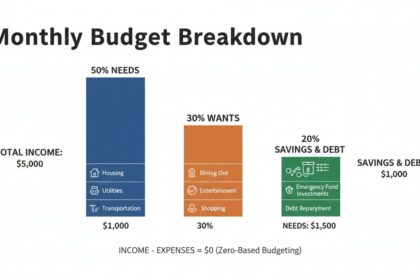
This simple framework allocates 50% of after-tax income to needs (housing, utilities, groceries, insurance, minimum debt payments), 30% to wants (entertainment, dining out, hobbies), and 20% to savings and debt repayment beyond minimums.
The beauty of this method is its simplicity. It doesn't require detailed category tracking, making it ideal for beginners who feel overwhelmed by complex budgets.
Zero-Based Budgeting:
Every dollar gets assigned a job until your income minus expenses equals zero. You budget for everything—bills, groceries, entertainment, savings—down to the last dollar.
This method works well for people who want maximum control and are willing to spend 15-20 minutes weekly allocating money. It prevents the "what happened to my money?" feeling but requires more active management.
The Envelope System:
This cash-based method involves dividing money into physical envelopes for different spending categories. When an envelope is empty, you stop spending in that category until next month.
While less common today, some people find the physical limitation of cash incredibly effective for controlling discretionary spending.
Pay Yourself First:
This approach prioritizes savings before anything else. When you receive income, immediately transfer your savings amount to separate accounts, then budget the remainder for expenses.
This method works particularly well for people who struggle to save because it removes the temptation to spend money that should go to savings.
The 50/30/20 Rule Explained in Detail
Let's make this practical. If you take home $4,000 per month:
Needs ($2,000):
- Rent/mortgage: $1,200
- Utilities: $150
- Groceries: $400
- Transportation: $150
- Insurance: $100
Wants ($1,200):
- Dining out: $200
- Entertainment: $100
- Hobbies: $150
- Subscriptions: $75
- Shopping: $175
- Miscellaneous wants: $500
Savings/Debt ($800):
- Emergency fund: $300
- Retirement (extra): $200
- Debt payoff: $300
Here's the honest truth: your percentages won't look exactly like this. If you live in a high-cost city, your needs might take 65% of your income. That's okay—adjust the percentages to fit your reality. The goal is awareness and intentionality, not perfection.
Practical Tips to Cut Costs Without Feeling Deprived
Cutting expenses doesn't mean living miserably. It means being strategic about where your money goes and finding areas where you're spending more than you realized or more than you value.
Cancel subscriptions you don't use. Go through your bank statements and identify recurring charges. That gym membership you haven't visited in three months? Cancel it. The streaming service you only watch occasionally? Maybe keep one instead of five.
Reframe your thinking about wants. You don't have to eliminate all fun spending. Instead, ask yourself: "Is this purchase worth X hours of my work life?" A $50 dinner out might be worth it if it brings you joy. The same $50 on takeout you barely remember ordering? That's worth reconsidering.
Use the 24-hour rule. For non-essential purchases over $50, wait 24 hours before buying. Often, the impulse fades. If you still want it after a day, it's likely a more intentional purchase.
Negotiate bills. Call your insurance company, internet provider, or cable company and ask for a better rate. Companies frequently offer discounts to retain customers, but you have to ask.
Automate savings transfers. Set up automatic transfers to savings on payday. If you never see that money in your checking account, you won't miss it—and your savings will grow faster.
Building Your Emergency Fund
Before focusing on other financial goals, build an emergency fund. This is money set aside specifically for unexpected expenses: medical bills, car repairs, job loss.
How much do you need?
Financial experts recommend 3-6 months of essential expenses. If you're self-employed or work in a volatile industry, lean toward 6 months. If you have a stable job and strong support systems, 3 months might suffice.
Calculate your essential expenses: housing, utilities, food, transportation, insurance, minimum debt payments. Multiply by three or six, depending on your situation.
Where should you keep it?
Your emergency fund should be accessible but separate from your regular checking account. High-yield savings accounts are ideal—they earn some interest while keeping your money liquid. Avoid putting emergency funds in investments where they could lose value.
Common Budgeting Mistakes to Avoid
Setting an unrealistic budget. If you try to cut your spending by 50% overnight, you'll burn out in weeks. Start with manageable changes and build from there.
Not adjusting for life changes. Your budget isn't set-it-and-forget-it. When you get a raise, change jobs, have a child, or move, update your budget accordingly.
Focusing only on cutting costs. Increasing income is equally powerful. Side hustles, career development, and negotiating raises all contribute to financial growth.
Comparing yourself to others. Someone else's budget doesn't reflect your circumstances, values, or priorities. Focus on your own progress.
Giving up after a setback. Missing your savings goal one month doesn't make you a failure. Every month is a fresh opportunity to try again.
Budgeting Tools That Make Life Easier
You don't need complicated software, but the right tools can streamline the process:
YNAB (You Need A Budget): A zero-based budgeting app that assigns every dollar a job. Subscription-based but highly effective for intentional spenders.
Mint: Free budgeting app that aggregates accounts and automatically categorizes transactions. Great for beginners.
Personal Capital: Combines budgeting with investment tracking. Useful for people managing both daily finances and long-term investments.
Spreadsheets: Many people prefer custom Google Sheets or Excel templates. They offer complete control and no subscription costs.
The best tool is whatever you'll actually use consistently. Free and simple often beats expensive and complicated.
How to Stay Motivated
Budgeting is a marathon, not a sprint. Motivation will wane without concrete goals and progress tracking.
Set specific, measurable goals. Instead of "save more," commit to "save $500 per month" or "reach $10,000 emergency fund by July."
Celebrate small wins. Hit your savings goal for the month? Acknowledge it. Paid off a credit card? Celebrate.
Review monthly. Schedule a monthly budget review to see what worked, what didn't, and what needs adjustment.
Remember your "why." Why are you budgeting? Financial security? Early retirement? A vacation? Keep that motivation visible.
Frequently Asked Questions
Q: How much should I save each month?
Financial experts recommend saving at least 20% of your after-tax income. If that's not possible right now, start with whatever you can—even 5% is better than nothing. The key is to start consistently and increase the percentage gradually as your income grows or expenses decrease.
Q: Should I pay off debt or save first?
This depends on the interest rate of your debt and whether you have an emergency fund. If you have high-interest debt (credit cards, payday loans), prioritize paying it down aggressively while building a small $1,000 emergency fund. Once high-interest debt is gone, focus on fully funding your emergency fund before tackling lower-interest debt like student loans or mortgages.
Q: What's the easiest budgeting method for beginners?
The 50/30/20 rule is the easiest starting point because it doesn't require detailed tracking of every expense. You simply divide your income into three categories: needs (50%), wants (30%), and savings (20%). After a month or two, you can refine this based on your actual spending patterns.
Q: How do I budget with an irregular income?
Use your lowest-earning month as your baseline for essential expenses. Budget conservatively during high-earning months by putting extra income directly into savings. Build a larger emergency fund (6 months instead of 3) to cover leaner periods. Consistency matters more than the exact amount—when income varies, your commitment to the process should remain steady.
Q: How long does it take to see results from budgeting?
Most people notice immediate benefits within the first month simply from increased awareness of their spending. Meaningful financial progress—building an emergency fund, paying down debt—typically becomes noticeable within 3-6 months of consistent budgeting. Long-term goals like significant savings or debt freedom take 1-3 years, but the progress compounds over time.
Q: Is it better to use cash or credit cards for budgeting?
Both can work, depending on your habits. Cash (envelope system) is effective for people who overspend with cards because it creates a physical limitation. Credit cards work well if you pay the full balance monthly and earn rewards. The key is tracking—whether you spend with cash or cards, you must record every transaction to make your budget effective.
Final Thoughts
Budgeting isn't about perfection—it's about intention. You don't need to track every penny for the rest of your life. You need enough awareness to make choices that align with your values and goals.
Start simple. Track your spending for one month. Pick one budgeting method and commit to it for 90 days. Adjust as needed. Celebrate progress along the way.
The journey to financial security begins with a single step: deciding that your money will work for you, instead of wondering where it went. That decision is more powerful than any spreadsheet or app.
Your financial future starts today. What will you do with it?