

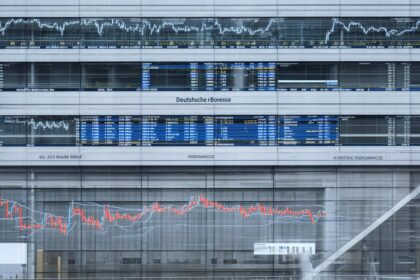

The Deutsche Boerse Group, a leading exchange organization based in Frankfurt, is recognized as a bellwether for European capital markets. Its share price not only reflects the company’s corporate health but also serves as a proxy for wider investor confidence in the region’s financial infrastructure. For institutional fund managers and private investors alike, tracking the Deutsche Boerse share price offers valuable perspectives on market sentiment, economic cycles, and competitive dynamics within the global exchange sector.
Overview of Deutsche Boerse AG’s Market Position
Role in the Financial Ecosystem
Deutsche Boerse AG is instrumental in connecting global market participants through trading, clearing, and settlement services. Its flagship platform, Xetra, hosts some of Europe’s most liquid securities, while the company’s derivatives exchange (Eurex) is among the top venues globally for futures and options.
The group’s diversified revenue streams — including data services, post-trade settlement, and index provision — insulate it from volatility seen in purely trading-driven business models. This diversification often translates into more resilient share price performance compared to sector peers during uncertain economic periods.
The Share Price as a Performance Barometer
Monitoring the Deutsche Boerse share price provides more than a snapshot of past performance; it enables investors to gauge ongoing shifts in regulatory policy, M&A activity, and technological innovation within capital markets. Analysts frequently reference its trajectory to interpret trends in:
- Transaction volumes across European bourses
- Investor confidence in financial services infrastructure
- The broader health of the eurozone economy
As an exchange operator, Deutsche Boerse’s valuation is closely correlated with trading activity, regulatory stability, and advancements in digital market infrastructure.
Key Trends Shaping Deutsche Boerse Share Price
Impact of Market Volatility and Volume
Periods of heightened market volatility, as seen during recent geopolitical crises or during the COVID-19 pandemic, have historically driven increased trading volumes. For an exchange group like Deutsche Boerse, these spikes often mean higher transaction and clearing revenues — factors that buoy its share price even amidst market turmoil.
Conversely, prolonged periods of low volatility or economic stagnation can compress trading volumes, placing downward pressure on the company’s revenue base. However, Deutsche Boerse's expansion into data analytics and index services has helped mitigate some of this cyclicality.
"Exchanges like Deutsche Boerse outperform during turbulent periods, as volatility boosts demand for hedging and liquidity. This defensive characteristic makes them unique among financial stocks," notes Dr. Marcus Fahrner, a financial markets analyst at MainFirst Bank.
Technological Innovation and Platform Expansion
Digital transformation remains a central pillar of Deutsche Boerse’s strategic direction. Investments in clearing technology, blockchain solutions, and the expansion of digital asset services signal management’s intention to future-proof the business and capture new growth areas.
For example, the group’s partnership initiatives — such as those in digital custody or ESG indices — have enhanced its competitive edge. These strategic moves are often swiftly recognized in the share price, particularly when new ventures translate into measurable revenue streams.
Recent Performance: Chart Patterns and Financial Results
Share Price Trajectory and Milestones
Recent years have seen Deutsche Boerse’s share price register steady increases, bolstered by solid earnings growth and effective cost management. Investors often reference technical chart patterns — including moving averages and breakout levels — to inform entry and exit points.
Supplementing technicals, earnings reports and guidance updates provide fundamental validation for bullish or bearish momentum in the stock. Key performance indicators for the group include:
- Growth in trading and clearing revenues
- Progress in expanding data and analytics offerings
- Margin stability amid changing cost structures
Since 2020, Deutsche Boerse has displayed double-digit percentage gains over certain multi-year periods, outpacing many European financial sector peers.
Dividend Policy and Shareholder Returns
Stability in dividend distributions has further contributed to investor confidence. Deutsche Boerse has maintained a relatively attractive and reliable dividend profile — a quality valued in uncertain or low-yield market environments. Regular share buybacks have also amplified total shareholder return over multiple reporting periods.
External Factors Influencing Deutsche Boerse Shares
Regulatory Developments and Competitive Landscape
As a highly regulated entity, Deutsche Boerse’s valuation is particularly sensitive to changes in European Union financial directives and capital market regulations. Developments such as MiFID II and post-Brexit trading arrangements continually reshape the landscape within which the exchange operator competes.
Expansive regulatory scrutiny, however, often favors established market infrastructure groups such as Deutsche Boerse, making it more challenging for new entrants to gain material market share without significant investment.
Geopolitical and Macroeconomic Impact
Broader macroeconomic drivers — including interest rate movements, geopolitical tensions, and cross-border financial flows — sway investor sentiment and overall exchange sector valuations. Events that stimulate or dampen cross-border investment activity naturally flow through to trading volumes and thus share price performance.
Case in point: The post-Brexit migration of certain trading activities from London to continental Europe provided a marginal tailwind to Deutsche Boerse’s market share.
Charting the Stock: How Investors Track Deutsche Boerse’s Performance
Interpreting Real-Time Stock Charts
Investors increasingly rely on interactive stock charts to monitor Deutsche Boerse’s price movements. Key tools include:
- Candlestick patterns for gauging intraday sentiment
- Technical indicators such as RSI (Relative Strength Index) for identifying overbought or oversold scenarios
- Volume overlays to confirm price action
Combining fundamental news with real-time chart analysis enables investors to build a more nuanced view of Deutsche Boerse’s share performance.
Peer Comparisons and Index Benchmarks
Analysts frequently compare Deutsche Boerse’s total return to that of other exchange operators, such as Euronext or London Stock Exchange Group. Additionally, inclusion in key indices like the DAX sustains strong institutional demand for the shares, allowing for more consistent liquidity and tighter spreads.
Strategic Outlook: What Lies Ahead for Deutsche Boerse Shares
With global market infrastructure evolving at breakneck speed, Deutsche Boerse’s continued investments in technology and regulatory compliance position it well for ongoing resilience. Recent commentary from sector leaders underlines confidence in the group’s ability to capture new opportunities without compromising its reputation for security and reliability.
Long-term investors typically view the stock as a core European financial holding, insulated by high barriers to entry and a track record of innovation.
Conclusion
The Deutsche Boerse share price reflects far more than just the company’s operational metrics. It serves as a barometer of European financial health, a lens for viewing technological progress, and a bellwether for regulatory and geopolitical shifts. For equity investors seeking both defensiveness and growth potential, Deutsche Boerse AG remains one of the Continent’s most compelling listed infrastructure assets. Close monitoring of its share price, technical patterns, and strategic announcements can offer important clues not only about the company’s health, but also about evolving trends in the global capital markets sector.
FAQs
What factors most influence the Deutsche Boerse share price?
Trading volumes, regulatory changes, technological upgrades, and broad economic trends are major influences. Company financial results and strategic initiatives also play significant roles.
How does Deutsche Boerse compare to other European stock exchanges?
Deutsche Boerse is considered one of the largest and most technologically advanced, often outperforming smaller regional exchanges due to its diversification and innovation.
Where can investors access real-time Deutsche Boerse stock charts?
Investors can view live charts on financial news portals, brokerage platforms, and the company’s investor relations website. These charts display crucial metrics like price movement, volume, and technical indicators.
Does Deutsche Boerse pay dividends to shareholders?
Yes, Deutsche Boerse maintains a policy of paying regular dividends, making it attractive for income-based investors. Dividend yields are reviewed annually in accordance with earnings.
What is the outlook for Deutsche Boerse shares?
Most analysts view Deutsche Boerse as a stable long-term investment, citing its strong market position, ongoing innovation, and ability to adapt to regulatory shifts.
Which industries or global events have the largest impact on Deutsche Boerse?
Financial sector reforms, cross-border investment flows, and macro events such as market volatility or geopolitical shifts can all impact Deutsche Boerse’s performance. These factors shape trading activity and ultimately the share price.
