

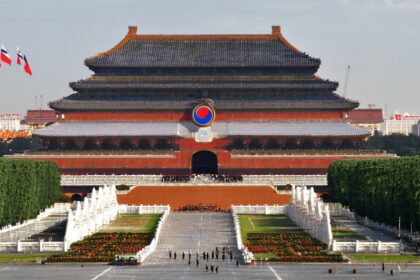

North Korea, officially known as the Democratic People's Republic of Korea (DPRK), stands as one of the most secretive and enigmatic nations in the modern world. Sandwiched between powerful neighbors China, Russia, and South Korea, this country of nearly 26 million people has captivated, alarmed, and perplexed the international community for decades. Its harsh political regime, isolationist policy, and unique cultural environment provoke questions and intrigue in equal measure. Understanding North Korea requires moving beyond stereotypes and headlines to consider the nation's complex history, authoritarian government, and unusual social fabric.
Historical Origins and the Korean Peninsula’s Division
The Roots: Japanese Occupation and World War II
To grasp the dynamics of North Korea, it's essential to start with the peninsula’s divisive history. Korea endured over three decades of Japanese colonial rule from 1910 until Japan’s defeat in World War II. In the aftermath, the peninsula was split along the 38th parallel: Soviet forces occupied the north, while the south came under American influence.
This arbitrary division solidified into two starkly different regimes, leading to the 1950–1953 Korean War. Millions perished, cities were decimated, and the conflict ended in an uneasy armistice rather than a formal peace. The DMZ (Demilitarized Zone) still separates North and South Korea—a symbol of enduring tension and the unresolved legacy of mid-20th-century geopolitics.
"Korea's division is one of the most tragic and enduring legacies of the Cold War, and nowhere is its cost more apparent than in the starkly contrasting lives of those on either side of the DMZ."
— Dr. Bruce Cumings, historian and Korea expert
The Rise of the Kim Dynasty
From 1948, leadership in the North consolidated under Kim Il-sung, a former guerrilla fighter who established a totalitarian system grounded in communist ideology and a unique doctrine of self-reliance, known as Juche. After his death in 1994, power passed to his son, Kim Jong-il, then to his grandson, Kim Jong-un—a rare third-generation dynasty in modern authoritarianism.
The Political Structure: Authoritarianism and Control
One-Party Rule and the Cult of Personality
North Korea is a single-party state run by the Workers' Party of Korea. The political system is characterized by extreme centralization, with the Supreme Leader serving as the head of state, head of government, and supreme commander of the military. Elections exist in name but not in practice; all candidates are pre-approved, ensuring total regime control.
The Kim family enjoys an almost divine status, elevated through an elaborate cult of personality that permeates every facet of daily life. Giant statues, mandatory displays of deference, and a tightly controlled media apparatus reinforce the leadership’s image as infallible and paternal.
Surveillance and Social Control
Social order in North Korea relies on comprehensive surveillance and a punitive legal system. Citizens are subject to regular monitoring, with networks stretching into workplaces and neighborhoods. Defectors recount stories of neighborhood “Inminban” (people’s units) responsible for reporting dissent or suspicious behavior, leading to severe penalties.
The state’s strict information control extends to technology. The vast majority of citizens are barred from unfettered internet access and outside news, relying heavily on state propaganda, which shapes their worldview.
The Military and Nuclear Program
North Korea is among the world's most militarized countries, dedicating a significant share of its GDP to defense. Since the early 2000s, the regime has prioritized nuclear weapons development—a source of both international leverage and acute concern.
For example, a series of missile launches and nuclear tests have drawn condemnation and sanctions from the United Nations and neighboring states. Despite crippling economic hardship, North Korea’s leadership maintains that its nuclear arsenal is essential for the country’s survival amidst perceived external threats.
Economy and Daily Life: Isolation and Survival
Closed Economy and International Sanctions
North Korea’s economy is largely state-controlled and chronically underdeveloped, the consequence of central planning, isolation, and long-standing international sanctions. Trade with China—its main ally and economic partner—provides vital lifelines but is insufficient to foster robust growth.
Occasional reports and satellite data reveal food shortages and periodic famines. Foreign aid, though sometimes accepted, is tightly channeled, and humanitarian organizations have limited access. Black markets and informal trading networks (“jangmadang”) have proliferated to fill economic gaps, allowing some degree of entrepreneurial activity at the grassroots level.
Everyday Life: Between Uniformity and Resilience
Daily life in North Korea oscillates between regimentation and remarkable resilience. While urban centers like Pyongyang display well-maintained avenues and showcase monuments, access is highly restricted and these urban perks are limited to the elite.
Most North Koreans live in rural areas under modest conditions, facing challenges such as limited access to electricity, healthcare, and consumer goods. Despite these hardships, glimpses of creativity and adaptation can be seen—ranging from makeshift home industries to secret enjoyment of foreign media, usually at great personal risk.
Culture and Curiosities: Identity Amidst Isolation
National Celebrations and Symbolism
The regime orchestrates grand cultural displays—mass games, synchronized marches, and large-scale festivals—that combine traditional Korean motifs with revolutionary zeal. These displays serve not only to entertain but also to reinforce unity and ideological loyalty.
North Korea’s architectural landscape steeps in symbolism, from the 170-meter Juche Tower in Pyongyang to the ornate Kumsusan Palace of the Sun, where eternal President Kim Il-sung lies in state.
Unusual Laws and Daily Restrictions
Many facets of North Korean society inspire fascination and disbelief abroad. The regime enforces unusual restrictions: approved hairstyles, mandated dress codes, and even specific calendar years based on Kim Il-sung’s birth date. Foreign visitors, few as they are, encounter chaperoned itineraries and are barred from interacting freely with locals.
Yet, beneath these rules, ordinary North Koreans share many similarities with their southern neighbors in terms of language, dietary staples like rice and kimchi, and vibrant traditional music and dance.
The International Role: Isolation and Engagement
Foreign Relations and Diplomatic Tensions
North Korea maintains embassies in a select group of nations, mainly fellow authoritarian states and a handful of European and Asian capitals. Relations with the United States, South Korea, and Japan remain particularly fraught, with recurring cycles of negotiation, confrontation, and occasional diplomatic breakthroughs—such as the historic summits between Kim Jong-un and former U.S. President Donald Trump.
Sanctions and isolation continue to define the North Korean experience, but episodic humanitarian cooperation and family reunions between North and South Korea offer reminders of enduring connections.
Human Rights and Humanitarian Concerns
International organizations have repeatedly called attention to North Korea’s dire human rights record. Reports describe political prison camps, severe censorship, and restrictions on movement. While the regime vigorously denies such allegations, numerous defectors’ testimonies and satellite imagery substantiate these concerns.
Despite adversity, advocates for engagement argue that dialogue, cultural exchanges, and carefully managed aid are essential for improving ordinary North Koreans’ lives over the long term.
Conclusion: The Persistent Puzzle of North Korea
North Korea remains one of the world’s most closely watched—and least understood—countries. Its unique blend of history, politics, and culture continues to defy expectations and challenge observers. Peering inside the DPRK reveals a nation grappling with internal hardship, international isolation, and the ambition to chart its own path, no matter the cost. For policymakers and the public alike, understanding North Korea is not only an exercise in historical curiosity but also a key to stability and peace in Northeast Asia.
FAQs
What is the main ideology of North Korea?
North Korea follows the Juche ideology, emphasizing self-reliance and independence from outside influences, developed by its first leader, Kim Il-sung.
How does the government maintain control over its people?
Control is enforced through pervasive surveillance, strict censorship, a single-party political system, and an extensive cult of personality around the ruling Kim family.
Why does North Korea pursue nuclear weapons?
The leadership views nuclear weapons as essential for deterring external threats and securing the regime’s survival, especially in light of historical conflicts and current hostilities.
Is it possible to visit North Korea as a tourist?
Limited tourism is allowed for foreigners but is tightly controlled, with organized tours, restricted movement, and constant supervision from government guides.
What are the living conditions like for average North Koreans?
Most citizens experience modest or challenging living standards, with recurring food shortages, limited access to modern amenities, and restricted economic opportunity outside of black markets.
How does North Korea relate to South Korea today?
The relationship is characterized by periodic tension and dialogue, including moments of confrontation and brief diplomatic engagement, but the peninsula remains formally divided with heavily secured borders.
