

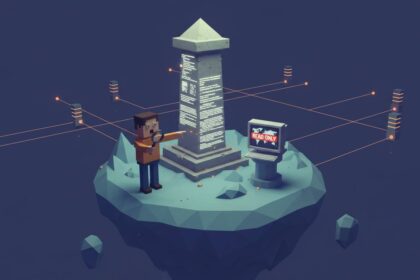

Web3 represents a fundamental shift in how people interact with the internet, built on blockchain technology, decentralized protocols, and token-based economics. Unlike the current internet model where large corporations control platforms and user data, Web3 aims to return ownership of digital assets and identity to individual users. Understanding this technology isn't just for developers or cryptocurrency enthusiasts—it's becoming essential for anyone who wants to participate in the evolving digital economy.
What Is Web3?
Web3, also known as the decentralized web, describes an internet infrastructure built on blockchain technology where users own their data, digital assets, and online identities without relying on centralized intermediaries. The term encompasses a broad ecosystem of technologies, protocols, and philosophies that collectively aim to restructure how information flows and value transfers online.
At its core, Web3 eliminates the need for trusted third parties in digital transactions. Instead of a bank verifying a payment or a social media company storing your personal information, Web3 uses cryptographic algorithms and distributed network consensus to validate transactions and secure data. This fundamental architectural change means that no single company or entity has control over the network—decision-making is distributed among participants who hold governance tokens.
The Web3 ecosystem includes several distinct categories of applications. Decentralized finance (DeFi) platforms enable financial services like lending, borrowing, and trading without traditional banks. Non-fungible tokens (NFTs) create verifiable ownership of digital collectibles and assets. Decentralized autonomous organizations (DAOs) allow communities to organize and make collective decisions using smart contracts. Decentralized applications (dApps) function like traditional apps but run on peer-to-peer networks rather than centralized servers.
The Evolution from Web1 to Web3
To understand why Web3 matters, you need to recognize how internet technology has evolved through three distinct eras. Each phase brought new capabilities and fundamentally different relationships between users and platforms.
Web1 (1990-2005) represented the early internet as a read-only medium. The first websites were static pages with minimal interactivity. Users consumed content created by a small number of organizations, and there was little opportunity for ordinary people to publish or participate. Companies like AOL and early search engines served as gatekeepers, curating what users could access. The infrastructure was decentralized by default—anyone could run a server and publish content—but the user experience was limited.
Web2 (2005-present) introduced interactivity and user-generated content. Social media platforms, blogs, and video sharing sites transformed the internet into a read-write medium. Users could create profiles, share content, and connect with others globally. However, this came with a significant trade-off: to participate, users had to surrender control of their data to centralized platforms. Companies like Facebook (now Meta), Google, and Amazon built trillion-dollar businesses by aggregating and monetizing user information. These platforms owned the infrastructure, controlled the rules, and could modify or terminate accounts at will.
Web3 (2020-future) aims to create a read-write-own internet. Users not only create content but also own pieces of the platforms they use. Blockchain technology enables true digital ownership—you can hold cryptocurrency in a wallet that only you control, purchase digital art that cannot be duplicated, and participate in governance decisions that affect protocol development. The key innovation is that Web3 removes the need to trust a central authority. Instead, trust is embedded in the code and enforced by network consensus.
Key Technologies Driving Web3
Several foundational technologies make Web3 possible, each addressing different challenges of decentralization, security, and user control.
Blockchain serves as the backbone of Web3 infrastructure. A blockchain is a distributed ledger that records transactions across many computers in a way that makes the records extremely difficult to alter. Bitcoin, the first blockchain, demonstrated that a global network could agree on a shared record of transactions without a central authority. Ethereum expanded this concept by adding smart contracts—self-executing programs that automatically enforce agreements when conditions are met.
Smart contracts are pieces of code stored on a blockchain that execute automatically when predetermined conditions are fulfilled. They eliminate the need for intermediaries in countless scenarios. A smart contract can automatically transfer ownership of digital art when payment is received, distribute royalties to musicians every time their song plays, or unlock funds from an escrow account when a project reaches its fundraising goal. Because the code is visible and the execution is deterministic, participants don't need to trust each other—they simply trust the code.
Decentralized storage addresses a fundamental problem: if blockchain stores transaction data efficiently, where do you store larger files like images, videos, or documents? Solutions like IPFS (InterPlanetary File System) and Filecoin create peer-to-peer networks where files are stored across many nodes rather than on centralized servers. This approach makes content more resilient to censorship and server failures.
Wallets in Web3 function as your digital identity and authentication mechanism. Unlike traditional login systems where you create accounts with usernames and passwords, Web3 wallets like MetaMask or Phantom generate cryptographic keys that prove ownership without revealing your identity. Your wallet address becomes your username, your private key becomes your password, and you retain complete control. If you lose your private key, no customer support can help you recover it—which is a feature, not a bug, because it means no central authority can access your assets either.
DAO governance provides mechanisms for decentralized decision-making. A Decentralized Autonomous Organization is essentially a digital organization governed by rules encoded in smart contracts and decisions made by token holders. Instead of a CEO or board making choices, stakeholders vote on proposals using governance tokens. This structure enables communities to collectively own and direct the platforms they use.
Why Web3 Matters: Benefits and Opportunities
The shift to Web3 offers several distinct advantages that could reshape how people interact with technology, finance, and each other online.
True digital ownership represents perhaps the most immediate benefit. When you buy digital items in traditional games or platforms, you don't actually own them—the platform operator retains the right to modify, delete, or take them away. Web3 changes this by creating verifiable, blockchain-backed ownership. Purchased items exist as tokens that you can transfer, sell, or use across different applications. This applies to game assets, digital art, domain names, and eventually real-world assets like property titles or stocks.
Financial inclusion becomes possible through permissionless systems. Approximately 1.4 billion adults worldwide lack access to traditional banking services. Web3 protocols operate 24/7 without requiring identification, credit history, or minimum balances. Anyone with an internet connection can send money globally, earn interest on savings, or access credit through decentralized lending pools. This accessibility represents a fundamental expansion of financial infrastructure.
Censorship resistance protects free expression in regions where governments control internet platforms. When content or applications run on decentralized networks, no single entity can remove access or delete content. This feature has practical implications for journalists, activists, and ordinary users in authoritarian contexts, but also protects against corporate censorship when platform owners decide to remove controversial content.
Transparency and auditability characterize Web3 systems in ways that traditional institutions cannot match. Every transaction on a public blockchain is visible and verifiable. Protocol code is typically open-source, allowing security researchers to identify vulnerabilities. Governance decisions and voting records are permanently recorded. This level of openness creates accountability that centralized systems struggle to provide.
New economic models emerge when creators retain more value from their work. Traditional platforms extract significant fees—app stores take 30% of purchases, streaming services pay fractions of cents per play. Web3 enables peer-to-peer transactions with minimal intermediaries, meaning creators can keep more of what they earn. Smart contracts can automatically route payments to all contributors, ensuring fair compensation across complex creative projects.
Challenges and Considerations
Despite its promise, Web3 faces significant obstacles that temper expectations and require honest assessment.
User experience remains a major barrier to mainstream adoption. Managing private keys, understanding gas fees, navigating multiple wallets, and securing digital assets requires technical knowledge that average users don't possess. Lost keys mean lost funds with no recovery option—a stark contrast to traditional banking where forgotten passwords can be reset. While improvements are ongoing, the friction in Web3 interactions limits appeal to technically sophisticated early adopters.
Scalability presents technical challenges. Popular blockchain networks like Ethereum can process only about 15-30 transactions per second, far below the thousands per second that Visa handles. This limitation leads to network congestion, slow confirmation times, and high transaction costs during busy periods. Layer 2 solutions and alternative blockchain architectures aim to address these constraints, but widespread scaling remains an ongoing engineering challenge.
Regulatory uncertainty creates risk for participants. Governments worldwide are still determining how to classify cryptocurrencies, NFTs, and DAOs—whether they constitute securities, commodities, property, or currencies. Sudden regulatory changes can dramatically impact asset values and platform operations. The decentralized nature of Web3 also conflicts with existing frameworks designed for centralized entities, creating legal ambiguity.
Environmental concerns accompany energy-intensive proof-of-work consensus mechanisms. Bitcoin mining has drawn criticism for substantial electricity consumption, though the industry is shifting toward more efficient proof-of-stake systems. Ethereum completed a major upgrade (The Merge) in 2022 that reduced its energy consumption by approximately 99.95%. Ongoing debates about blockchain sustainability continue as the industry evolves.
Scams and fraud plague the space, with phishing attacks, rug pulls (where developers abandon projects after collecting investment), and Ponzi schemes costing participants billions annually. The pseudonymity that protects privacy also enables bad actors. Users must exercise caution, verify protocols independently, and accept that the lack of regulation means limited recourse when things go wrong.
The Future of Web3 and What It Means for You
Web3 technology continues developing rapidly, with meaningful progress expected across several dimensions in the coming years.
Enterprise adoption is accelerating as major companies explore blockchain applications. Financial institutions are piloting settlement systems, retailers are testing supply chain tracking, and gaming companies are building play-to-earn economies. This corporate involvement brings resources, expertise, and credibility while potentially centralizing certain aspects of an otherwise decentralized ecosystem.
Interoperability improvements will connect previously siloed blockchain networks. Cross-chain bridges and protocols like the Cosmos ecosystem enable assets and data to flow between different blockchains. This connectivity creates a more unified Web3 landscape where users can move value across platforms without friction.
Identity solutions are emerging that balance privacy with verification. Self-sovereign identity systems allow users to control which aspects of their identity to reveal while proving specific attributes (like age or citizenship) without exposing unnecessary data. These developments could reduce the data harvesting that characterizes Web2 platforms.
Institutional infrastructure is maturing with regulated exchanges, custody solutions, and investment products. The presence of traditional financial institutions brings stability and consumer protections while potentially altering the anti-establishment ethos that originally animated Web3 development.
For individuals, engaging with Web3 doesn't require abandoning familiar platforms or becoming a cryptocurrency trader. Small steps include learning how wallets function, understanding how blockchain ownership differs from traditional accounts, and exploring decentralized applications that align with existing interests—whether that's gaming, finance, creative work, or social connection. The technology is still maturing, meaning early participants help shape what Web3 ultimately becomes.
Frequently Asked Questions
Is Web3 the same as cryptocurrency?
No, though they are closely related. Cryptocurrency is one component of Web3—the tokens used for transactions and governance within decentralized systems. Web3 is the broader concept encompassing decentralized protocols, applications, and philosophies that aim to restructure internet infrastructure. Cryptocurrency provides economic incentives and ownership mechanisms, but Web3 includes decentralized storage, computing, identity, and governance systems.
Do I need technical knowledge to use Web3 applications?
Not necessarily, though comfort with technology helps. Some Web3 applications offer user experiences similar to traditional apps, abstracting away blockchain complexity. However, managing your own keys and understanding basic security practices remains important. Start with small transactions and reputable platforms to build familiarity before engaging with more complex systems.
Is Web3 environmentally sustainable?
It depends on the specific blockchain. Proof-of-work systems like Bitcoin consume significant energy, while proof-of-stake systems like Ethereum's current model use approximately 99.95% less energy. Many newer blockchains are designed with efficiency in mind. Environmental impact varies significantly across the ecosystem, and ongoing developments aim to address sustainability concerns.
Can Web3 be regulated?
Governments are actively exploring regulatory frameworks. Because Web3 protocols operate globally and often across borders, enforcement is complex. Some aspects, like cryptocurrency exchanges serving specific jurisdictions, face existing financial regulations. Other decentralized protocols resist classification, creating ongoing legal tensions. Regulatory clarity is still developing and will significantly shape Web3's evolution.
Is Web3 just a trend, or is it here to stay?
Web3 technologies have demonstrated genuine utility beyond speculation, with applications in finance, gaming, supply chain, and identity showing real-world value. The underlying principles—decentralization, user ownership, and cryptographic verification—address legitimate problems with current internet architecture. Whether Web3 achieves mainstream adoption in its current form or evolves into something different, the core innovations are influencing broader technology development.
How do I get started with Web3 safely?
Begin by researching reputable wallet providers like MetaMask or Coinbase Wallet. Start with small transactions on established platforms to understand how blockchain transactions work. Never share your private keys or seed phrases with anyone—legitimate services will never ask for them. Use hardware wallets for significant holdings, enable two-factor authentication where available, and be skeptical of unsolicited investment opportunities.