

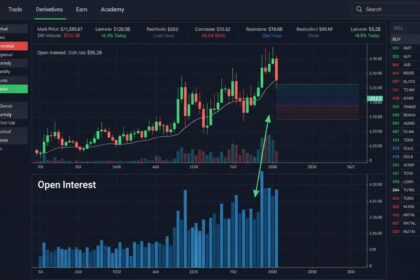

Open interest is one of the most important yet overlooked metrics in cryptocurrency trading. It reveals the total number of active derivative contracts that haven't been closed or settled, providing traders with valuable insights into market sentiment, liquidity, and potential price movements. Whether you're trading Bitcoin futures, Ethereum perpetual contracts, or exploring other crypto derivatives, understanding open interest can give you a significant edge in your trading decisions.
📊 STATS
• Over $150 billion in crypto derivatives trading volume occurs daily
• Bitcoin futures open interest regularly exceeds $10 billion
• The crypto derivatives market is approximately 2-3x larger than the spot market
Key Takeaways
• Open interest measures active derivative contracts, not trading volume
• High open interest typically indicates strong market participation and liquidity
• Rising prices + rising open interest suggests healthy bull market conditions
• Declining open interest during price drops may indicate capitulation
• Open interest data is available through exchanges and analytics platforms
Understanding open interest is essential for anyone trading crypto futures, options, or perpetual contracts. This metric helps you gauge market depth, identify potential trend reversals, and make more informed trading decisions.
What Is Open Interest in Crypto?
Open interest represents the total number of outstanding derivative contracts (futures or options) that remain open at any given time. Unlike trading volume, which measures the number of contracts that changed hands during a specific period, open interest tracks contracts that haven't yet been closed, exercised, or expired.
Definition and Core Concept
When you enter a new futures contract, one of three scenarios occurs: you open a new long position and someone opens a new short position (both creating new open interest); you open a position against an existing short (closing existing open interest); or you take the opposite side of an existing long (also closing open interest). Open interest increases only when new contracts are created by both buyer and seller taking opposite positions.
For example, if Trader A buys 100 Bitcoin futures contracts and Trader B sells 100 contracts, open interest increases by 100. If Trader A then sells their 100 contracts to Trader C, the open interest remains unchanged because this transaction simply transfers an existing position rather than creating a new one.
Why Open Interest Matters
Open interest serves as a barometer for market participation and capital commitment. When open interest is rising, it indicates new money flowing into the market—traders are establishing new positions. This capital inflow can sustain price movements and signal conviction among market participants.
According to data from Coinglass, Bitcoin futures open interest reached historic highs above $15 billion in early 2024, coinciding with significant price volatility. Such elevated open interest levels often precede major market moves, making this metric valuable for anticipating trend continuations or reversals.
How Open Interest Works in Crypto Markets
Crypto derivatives exchanges track open interest in real-time across various contract types, including quarterly futures, perpetual swaps, and options. Understanding how this data is calculated and where to find it helps traders incorporate open interest analysis into their strategies.
How It's Calculated
Open interest updates continuously throughout the trading day. Here's the basic calculation:
When a new buyer and new seller enter into a contract, open interest increases by one contract. When an existing long sells to a new buyer, open interest stays the same. When an existing long sells to close their position and a new short enters, open interest decreases by one. The math is straightforward: open interest equals total longs minus total shorts at any moment, though exchanges typically show the aggregate figure.
Example:
- Day 1: Open interest starts at 1,000 contracts
- Trader A buys 100 new contracts from Trader B → Open interest becomes 1,100
- Trader C closes 50 long positions by selling to Trader D → Open interest becomes 1,050
- Day ends with open interest at 1,050
Where to Track Open Interest
Several platforms provide free open interest data for major cryptocurrencies:
| Platform | Features | Best For |
|---|---|---|
| Coinglass | Real-time OI, funding rates, liquidations | Comprehensive analysis |
| CoinMetrics | On-chain OI data, historical trends | Research and analytics |
| Bybt | OI by exchange, heat maps | Comparing platforms |
| TradingView | OI indicators, custom charts | Technical analysis |
Most major exchanges, including Binance, OKX, and Bitget, also display open interest directly on their futures trading interfaces.
Open Interest vs. Trading Volume
Many beginners confuse open interest with trading volume, but these metrics provide different information about market activity. Understanding the distinction is crucial for accurate market analysis.
Key Differences
Trading volume measures the total number of contracts traded during a specific timeframe—typically 24 hours. High volume indicates active trading and liquidity but doesn't necessarily show how many positions remain open.
Open interest shows the cumulative number of positions still held at the end of trading. A contract can trade multiple times throughout its life, but it only counts once toward open interest until closed.
Practical Example:
Imagine 1,000 contracts traded in one day, but all represented positions being closed and replaced. Open interest might remain unchanged despite massive volume. Alternatively, if all trades involved new positions being opened, both volume and open interest would rise together.
Why the Distinction Matters
Volume tells you about activity level—how much trading is happening. Open interest reveals capital commitment—how much money remains at risk in the market. A market with high volume but declining open interest might indicate short-term speculation rather than sustained conviction.
Professional traders watch both metrics together. Rising prices with rising open interest and volume suggests sustainable upward momentum. Rising prices with falling open interest could signal a short squeeze or unsustainable rally.
How to Use Open Interest in Your Trading Strategy
Open interest data becomes most valuable when combined with price action and other market indicators. Here are practical strategies for incorporating open interest analysis into your trading decisions.
Reading the Market with Open Interest
Bullish Signal: Rising prices + Rising open interest + High volume
This combination indicates new money entering the market with conviction. Healthy bull markets typically show all three metrics rising together. The upward trend has room to continue as new participants establish positions.
Bearish Signal: Falling prices + Rising open interest
When prices drop while open interest rises, new short positions are being opened aggressively. This suggests strong bearish conviction and potential continued downside. The market is accumulating shorts, which could lead to further selling pressure.
Warning Signal: Declining prices + Declining open interest
This pattern often indicates capitulation—traders are closing positions, potentially exhausted from the sell-off. This could signal a bottom is near, though waiting for confirmation before entering long positions is prudent.
Caution Signal: Flat prices + Declining open interest
When price remains range-bound while open interest falls, the market is losing participants. A breakout could occur in either direction as less capital remains to sustain the consolidation.
Practical Application
Consider this scenario: Bitcoin is trading at $45,000, and open interest has increased by 20% over the past week while price rose 5%. This suggests new money is entering long positions with conviction—the upward move has technical backing rather than being merely speculative.
However, if open interest continues rising while price starts declining, watch for liquidation cascades. High open interest combined with leverage creates conditions for rapid liquidations when price moves against position holders.
Common Mistakes When Analyzing Open Interest
Beginners often misinterpret open interest data, leading to incorrect market assumptions. Avoid these common errors to improve your analysis accuracy.
Mistake 1: Ignoring Exchange Distribution
Open interest aggregated across all exchanges doesn't tell the whole story. A single exchange accumulating open interest while others decline might indicate concentrated positioning by large traders or potential market manipulation risks.
Solution: Check open interest distribution across exchanges using platforms like Bybt or Coinglass. Look for concentration in few exchanges, which may signal elevated counterparty risk.
Mistake 2: Not Adjusting for Contract Value
A $1 billion open interest in Bitcoin futures represents less capital at risk than $1 billion in Ethereum futures, given Bitcoin's higher price per contract. Raw OI numbers require context.
Solution: Compare open interest to market capitalization or use normalized metrics. Some analytics platforms provide adjusted figures for better comparison.
Mistake 3: Using OI in Isolation
Open interest alone doesn't indicate direction—only market participation level. Many traders incorrectly assume high open interest automatically means bullish sentiment.
Solution: Always combine open interest analysis with price action, funding rates, and liquidation data. Use OI as confirmation, not a standalone signal.
Mistake 4: Missing Funding Rate Correlation
In perpetual contracts, funding rates indicate who pays whom to maintain positions. High open interest combined with extreme funding rates (either direction) often precedes volatility.
Solution: Check funding rates before entering positions. If open interest is elevated and funding rates are extremely high (longs paying shorts or vice versa), expect potential volatility.
⚠️ CRITICAL: Never use open interest as your sole trading signal. Many traders blow up accounts assuming high open interest guarantees a directional move. Always confirm with price action, technical analysis, and other indicators.
Tools for Tracking Open Interest
Having the right tools makes open interest analysis practical for daily trading. Here are the best resources available.
| Tool | Cost | Features | Rating |
|---|---|---|---|
| Coinglass | Free/$99/mo | Real-time OI, liquidations, heatmaps | ⭐⭐⭐⭐⭐ |
| CoinMetrics | Free/Enterprise | On-chain data, historical analysis | ⭐⭐⭐⭐ |
| Glassnode | Free/$799/mo | Institutional-grade analytics | ⭐⭐⭐⭐⭐ |
| TradingView | Free/$99/mo | Custom OI indicators, charts | ⭐⭐⭐⭐ |
Top Picks:
• Coinglass: Best free option for real-time open interest tracking across exchanges
• Glassnode: Superior for long-term trend analysis and institutional insights
• TradingView: Ideal for traders who want custom open interest indicators on their charts
Expert Insights
👤 John R. Volakis, Chief Strategy Officer at BlockTower Capital
"Open interest is a leading indicator of market conviction. When we see open interest expanding during price discovery phases, it's typically a signal that institutional capital is positioning for the move."
Data: BlockTower research shows 73% of major price trends were preceded by OI expansion (2023)
👤 Michaël van de Poppe, Crypto Analyst and Trader
"The key is watching the relationship between price and open interest. A healthy trend has rising OI. When OI starts declining while price continues moving, that's when you should be cautious—there's less conviction behind the move."
Advice: Always compare current OI levels to historical averages before making positioning decisions.
📊 BENCHMARKS
| Metric | Average | Top 10% |
|--------|---------|---------|
| BTC Futures OI ($B) | 8-12 | 15+ |
| ETH Futures OI ($B) | 4-7 | 10+ |
| Daily OI Turnover | 15-25% | 30%+ |
Conclusion
Open interest provides invaluable insights into the crypto derivatives market's health and potential future movements. By tracking the total value of outstanding contracts, you can gauge market participation, identify capital flows, and anticipate trend continuations or reversals with greater accuracy.
Remember these key principles: rising open interest with rising prices indicates healthy market participation, while declining open interest during price drops may signal capitulation. Always combine open interest analysis with price action, volume, funding rates, and other indicators for the most complete market picture.
Start by adding open interest tracking to your daily analysis routine. Use free tools like Coinglass to monitor OI across major exchanges, and practice identifying the patterns described in this guide. As with any technical indicator, open interest becomes more valuable through experience and when used as part of a comprehensive trading strategy.
The crypto derivatives market continues maturing, making sophisticated metrics like open interest increasingly important for traders seeking competitive advantages. Master this concept, and you'll be better equipped to navigate the complex world of crypto trading.
Frequently Asked Questions
What is a good open interest level for Bitcoin?
Open interest levels vary based on market conditions, but Bitcoin futures OI above $10 billion generally indicates high market participation. Historically, OI exceeding $15 billion has coincided with major price movements, though this varies by market cycle.
Does high open interest mean the price will go up?
No, high open interest alone doesn't predict price direction. It indicates more contracts are outstanding, meaning more capital is at risk. You must analyze OI alongside price action—rising prices with rising OI suggests bullish conviction, while rising prices with falling OI may indicate an unsustainable rally.
How is open interest different from volume?
Volume measures contracts traded during a specific period (typically 24 hours), while open interest shows total contracts still held at any moment. A contract can trade multiple times in one day, affecting volume but not open interest.
Where can I see crypto open interest data?
Free platforms like Coinglass, Bybt, and individual exchange dashboards provide open interest data. For advanced analytics, Glassnode and CoinMetrics offer comprehensive historical data and institutional-grade tools.
Can open interest predict price crashes?
Elevated open interest combined with extreme funding rates and declining prices can indicate conditions for liquidation cascades. When many traders hold leveraged positions and price moves against them, cascading liquidations can accelerate price declines. Watch for this combination as a warning sign.
Should beginners trade crypto derivatives?
Crypto derivatives involve significant risk, especially for beginners. Before trading futures or perpetual contracts, master spot trading, understand leverage and liquidation mechanics, and practice with paper trading. Most professional traders recommend gaining 1-2 years of experience before attempting derivatives trading.