


In an era of economic uncertainty and rising living costs, Americans are increasingly seeking financial strategies that generate income without requiring constant active involvement. Passive income—the earnings derived from ventures in which an individual is not materially participating—has emerged as a powerful tool for building wealth, achieving financial independence, and creating additional security for families across the nation. With proper planning and strategic investment choices, individuals can establish multiple income streams that work for them around the clock. This comprehensive guide explores the most effective passive income opportunities available in today's market, examining their potential returns, risk factors, and practical steps for implementation.
Understanding Passive Income and Its Growing Importance
The concept of passive income has gained substantial traction over the past decade, particularly following the economic disruptions caused by the COVID-19 pandemic. According to recent surveys conducted by financial literacy organizations, nearly 40% of American adults now actively pursue some form of passive income opportunity, marking a significant increase from previous years. This shift reflects a broader recognition that traditional employment alone may not provide sufficient financial security in an era of economic volatility.
Passive income differs fundamentally from active income in that it requires upfront investment of either capital, time, or both, but demands minimal ongoing effort once established. Financial experts often cite the concept of "portfolio income" and "business income without active participation" as key components of a diversified financial strategy. The Internal Revenue Service specifically categorizes passive income activities under tax regulations that allow certain deductions and treatment, making it essential for investors to understand both the opportunities and obligations associated with these income streams.
The benefits extend beyond mere financial returns. Passive income streams can provide geographic independence, retirement security, and the ability to pursue personal interests without financial constraints. For many Americans, building passive income represents a pathway to achieving financial goals decades earlier than traditional saving methods would allow.
Top Passive Income Ideas for American Investors
Dividend Investing
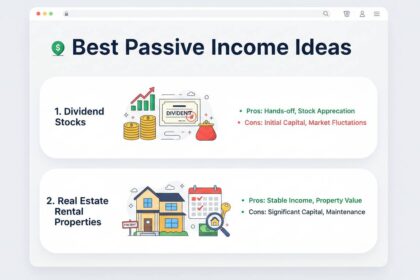
Dividend investing remains one of the most accessible and time-tested methods for generating passive income. Companies that issue dividends distribute a portion of their profits directly to shareholders, typically on a quarterly basis. This approach allows investors to build wealth through both capital appreciation and regular cash distributions.
Blue-chip companies with long histories of consistent dividend payments—often referred to as "dividend aristocrats"—have demonstrated the ability to maintain or increase their payouts through various economic cycles. The average dividend yield for S&P 500 companies currently hovers around 1.5% to 2%, though certain sectors, including utilities, consumer staples, and financial services, offer significantly higher yields. Investors seeking income stability often construct dividend portfolios focusing on companies with dividend yield percentages between 3% and 5%, balancing yield against company fundamentals and payout sustainability.
The key advantage of dividend investing lies in its simplicity and the compounding effect of reinvesting dividends to purchase additional shares. Over time, this strategy can create a snowball effect where growing dividend income funds further investments, accelerating wealth accumulation.
Real Estate Investments
Real estate has long been considered one of the most reliable passive income vehicles available to American investors. Property investments offer multiple income-generating pathways, including traditional rental arrangements, short-term vacation rentals through platforms like Airbnb, and real estate investment trusts (REITs) that provide exposure to commercial and residential properties without direct ownership.
Direct property ownership, while requiring more active management, often produces higher returns than alternative investment vehicles. The median annual return for residential rental properties in the United States ranges from 8% to 12% when considering both rental income and property appreciation. However, investors must account for expenses including property taxes, insurance, maintenance costs, and potential periods of vacancy.
Real estate investment trusts offer a more hands-off approach to property investment. These publicly traded entities own and operate income-producing real estate across various sectors, distributing at least 90% of their taxable income to shareholders as dividends. REITs provide liquidity advantages that direct property ownership cannot match, allowing investors to buy and sell shares throughout trading hours while receiving consistent quarterly distributions.
Peer-to-Peer Lending
Peer-to-peer lending platforms have transformed the traditional banking model by connecting borrowers directly with individual lenders, eliminating the financial intermediary. This marketplace approach often results in higher returns for lenders compared to traditional savings accounts, with interest rates typically ranging from 5% to 10% annually depending on borrower creditworthiness and loan terms.
Platforms such as LendingClub and Prosper facilitate personal loans, debt consolidation loans, and small business financing, allowing investors to diversify across numerous borrowers to mitigate default risk. The passive nature of these investments requires minimal ongoing attention once funds are deployed, though investors should periodically review their portfolios and adjust risk tolerances as needed.
High-Yield Savings Accounts and Certificates of Deposit
While perhaps less glamorous than other passive income strategies, high-yield savings accounts and certificates of deposit (CDs) provide guaranteed returns with virtually no risk to principal. Following Federal Reserve interest rate decisions, the best high-yield savings accounts now offer annual percentage yields exceeding 4.5%, significantly outpacing traditional savings accounts offered by major brick-and-mortar banks.
Certificates of deposit typically offer higher yields in exchange for locking funds for specified periods, ranging from three months to five years. Early withdrawal penalties make CDs most suitable for funds that won't be needed immediately, but the predictable returns and Federal Deposit Insurance Corporation protection make these instruments valuable components of a conservative income strategy.
Index Fund and ETF Investing
Index funds and exchange-traded funds (ETFs) have democratized access to diversified passive investing strategies that previously required significant capital and expertise. These funds track specific market indices, such as the S&P 500 or total stock market indices, providing broad market exposure with minimal expense ratios.
The historical average annual return for the S&P 500 index exceeds 10% over extended periods, though investors should note that past performance does not guarantee future results. Index fund investing requires minimal management once portfolio allocations are established, making it an ideal passive income strategy for long-term wealth building. Many index funds also offer dividend reinvestment programs, allowing distributions to automatically purchase additional shares.
Royalties from Creative Work
Creative intellectual property represents another avenue for generating passive income, though it requires significant upfront investment of time and effort. Authors, musicians, artists, and content creators can earn royalties from their works indefinitely after initial creation, providing potential income streams that grow over time as works gain exposure.
Self-publishing platforms have lowered barriers to entry for aspiring authors, while music streaming services provide residual income for musicians who secure placements. Similarly, photographers and digital artists can license their work through stock photography websites, earning passive income from each download or purchase. The key to success in creative passive income lies in producing quality work that continues generating interest long after the initial creation effort.
Building a Diversified Passive Income Portfolio
Successful passive income strategies rarely rely on a single income stream. Financial advisors generally recommend constructing portfolios that balance multiple approaches, considering factors including risk tolerance, time horizon, available capital, and personal interests or expertise.
Diversification across asset classes helps mitigate risk while maximizing potential returns. An investor might combine dividend-paying stocks for steady income, REITs for real estate exposure, and a high-yield savings account for liquidity and capital preservation. This approach ensures that poor performance in any single investment doesn't devastate overall portfolio returns.
Tax efficiency represents another critical consideration for passive income investors. Different income streams carry different tax treatments, with some dividends qualifying for lower capital gains rates while others face ordinary income taxation. Understanding these distinctions can significantly impact net returns over time.
Expert Perspectives on Passive Income Generation
Financial planners consistently emphasize the importance of starting early when building passive income streams. Compound interest and reinvested returns create exponential growth potential over time, making delayed action considerably costly in terms of foregone earnings. Industry professionals often recommend beginning with modest contributions to establish habits, then increasing allocations as income grows.
Risk management remains paramount across all passive income strategies. While higher returns typically correlate with higher risk, prudent investors carefully assess their risk tolerance and avoid investments that could cause financial hardship if values decline. Maintaining emergency funds outside of passive investments provides additional security against unexpected circumstances.
Frequently Asked Questions
What is the easiest passive income idea to start with?
High-yield savings accounts represent the easiest entry point for passive income, requiring minimal research and providing guaranteed returns with FDIC insurance protection. Investors can open accounts online in minutes with no minimum investment requirements at many institutions.
How much money do I need to start generating passive income?
The capital required varies significantly by strategy. Some approaches, like high-yield savings accounts, require as little as a few dollars to begin, while real estate investments typically demand substantial down payments. Many investors start with smaller amounts through fractional investing platforms or low-cost index funds.
Is passive income truly passive?
Most passive income requires some initial effort and ongoing monitoring. True passive income with zero maintenance is rare; however, strategies like index fund investing require only periodic rebalancing, while rental properties may need only occasional oversight if professional property management is engaged.
Are passive income earnings taxable?
Yes, most passive income is taxable. Dividend income, interest payments, rental income, and royalties must be reported on tax returns. However, certain passive income sources receive preferential tax treatment, and retirement accounts offering tax-advantaged status can shelter some passive income from immediate taxation.
How long does it take to see returns from passive income investments?
Timeline varies by strategy. High-yield savings accounts begin earning interest immediately, while dividend investments typically pay quarterly. Real estate and peer-to-peer lending may take months before initial returns materialize. Long-term strategies like index fund investing often require years to realize significant gains.
Can passive income replace a full-time salary?
While possible, replacing a full-time income entirely through passive means typically requires substantial capital accumulation over many years. Most financial experts recommend building passive income streams as supplements to primary employment income rather than replacements, at least initially.
Conclusion
The pursuit of passive income represents a strategic approach to financial security that resonates with Americans across demographic groups and economic circumstances. While no investment guarantees success, the strategies outlined in this guide offer proven pathways to generating income without continuous active involvement. The key to success lies in selecting approaches aligned with individual financial goals, risk tolerances, and available resources.
Beginning the passive income journey requires only modest initial capital and a commitment to consistent effort over time. Whether through dividend-paying investments, real estate exposure, creative royalties, or interest-bearing accounts, Americans have more opportunities than ever to build wealth beyond traditional employment income. As economic conditions continue evolving, those who establish diversified passive income streams will possess significant advantages in achieving long-term financial stability and independence.