

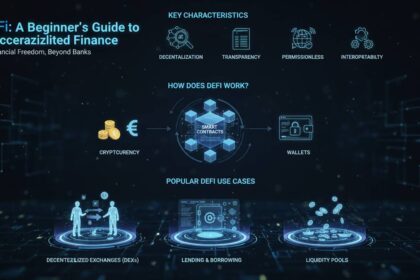

The financial landscape is undergoing a dramatic transformation as decentralized finance, commonly known as DeFi, challenges traditional banking systems and promises to democratize access to financial services. By leveraging blockchain technology and smart contracts, DeFi aims to create an open, permissionless, and transparent financial ecosystem accessible to anyone with an internet connection. This comprehensive guide explores what DeFi is, how it works, its potential benefits and risks, and what the future holds for this rapidly evolving sector.
Understanding the Basics of DeFi
Decentralized finance refers to a collection of financial applications and services built on blockchain networks, primarily Ethereum, that operate without traditional intermediaries such as banks, brokerages, or insurance companies. Unlike conventional finance, where institutions act as trusted middlemen facilitating transactions, DeFi utilizes self-executing smart contracts to automatically enforce agreements between parties. This eliminates the need for central authorities while theoretically providing greater transparency, efficiency, and accessibility.
The concept emerged from the broader cryptocurrency movement, specifically building upon the foundational principles of Bitcoin: decentralization, transparency, and censorship resistance. However, while Bitcoin primarily functions as a digital currency, DeFi extends these principles to encompass the entire financial stack, including lending, borrowing, trading, insurance, and asset management. According to industry data, the total value locked in DeFi protocols reached over $40 billion at its peak in late 2021, demonstrating significant investor interest and market adoption despite the sector's volatility.
What distinguishes DeFi from traditional finance is its composability—the ability for different applications to integrate seamlessly with one another, creating complex financial instruments from building blocks. Developers can combine lending protocols with exchange platforms, prediction markets, and stablecoins to construct sophisticated financial products that would require extensive legal infrastructure and regulatory compliance in the traditional realm.
How DeFi Works: The Technology Behind Decentralized Finance
At the core of DeFi lies blockchain technology, which provides a distributed ledger that records all transactions across a network of computers, making the system virtually tamper-proof and transparent. Ethereum remains the dominant platform for DeFi development due to its support for Turing-complete smart contracts—self-executing programs that automatically enforce terms when predetermined conditions are met.
Smart contracts replace traditional financial agreements and intermediaries. For example, when a user deposits cryptocurrency into a lending protocol, the smart contract automatically issues interest-bearing tokens and records the transaction on the blockchain. When another user borrows against collateral, the smart contract manages the collateral, interest calculations, and liquidation processes without human intervention. This automation reduces operational costs, eliminates counterparty risk, and operates continuously without traditional banking hours.
Decentralized exchanges (DEXs) represent another fundamental DeFi application, enabling peer-to-peer cryptocurrency trading without centralized order books or custodians. Automated market makers (AMMs) like Uniswap use liquidity pools and mathematical formulas to determine token prices, allowing users to trade directly from their wallets. This contrasts sharply with centralized exchanges that hold user funds and match buy and sell orders through internal systems.
The ecosystem also includes stablecoins—cryptocurrencies designed to maintain a fixed value, typically pegged to fiat currencies like the US dollar. These tokens provide price stability essential for practical financial applications, enabling users to avoid the extreme volatility common in other cryptocurrencies while participating in DeFi activities.
Key Components and Use Cases of DeFi
The DeFi ecosystem encompasses numerous interconnected components that together form a comprehensive alternative financial system. Understanding these building blocks helps illustrate the breadth of possibilities within decentralized finance.
Lending and Borrowing Platforms
DeFi lending protocols like Aave, Compound, and MakerDAO allow users to lend their crypto assets and earn interest or borrow against their holdings without credit checks or identity verification. Users deposit cryptocurrencies into liquidity pools, and borrowers can access these funds by providing collateral exceeding the loan value. Interest rates adjust dynamically based on supply and demand, with algorithms continuously balancing rates to maintain protocol stability.
Decentralized Exchanges
Platforms such as Uniswap, SushiSwap, and Curve Finance facilitate token swaps through liquidity pools rather than traditional order matching. Users can trade cryptocurrencies instantly at prices determined by mathematical formulas, while liquidity providers earn fees for contributing assets to these pools. This model has become increasingly popular, with decentralized exchanges processing billions of dollars in daily trading volume.
Yield Farming and Staking
Yield farming involves strategically moving crypto assets across different DeFi protocols to maximize returns, often generating annual percentage yields far exceeding traditional finance interest rates. Staking, meanwhile, involves locking cryptocurrency tokens to support network operations and earn rewards, particularly prominent in proof-of-stake blockchain networks following Ethereum's transition to this consensus mechanism.
Synthetic Assets and Derivatives
DeFi enables the creation of synthetic assets that track the value of real-world commodities, stocks, or other cryptocurrencies. Platforms like Synthetix allow users to create and trade tokenized representations of assets without actually holding them, opening traditional investment opportunities to anyone with an internet connection and compatible wallet.
Insurance and Prediction Markets
Decentralized insurance protocols like Nexus Mutual provide coverage against smart contract failures and other blockchain-related risks, while prediction markets like Polymarket allow users to trade on the outcomes of real-world events, from election results to sporting events and economic indicators.
Risks, Challenges, and Regulatory Considerations
While DeFi offers compelling advantages, participants must understand the significant risks inherent in this nascent ecosystem. Smart contract vulnerabilities have resulted in billions of dollars in losses through hacks and exploits, as coding errors or malicious actors can drain funds from protocols designed without sufficient security measures. The immutable nature of blockchain means that once funds are stolen, recovery is virtually impossible.
Market volatility poses another substantial risk, as the value of collateral supporting loans can fluctuate dramatically, triggering automatic liquidations that result in permanent losses for borrowers. Unlike traditional finance, where margin calls might allow time to add collateral, DeFi liquidations occur instantly when preset thresholds are breached, sometimes during extreme market conditions that maximize losses.
Regulatory uncertainty represents perhaps the most significant long-term challenge for DeFi. Governments worldwide are grappling with how to apply existing financial regulations to decentralized protocols that intentionally operate without identifiable operators or geographic boundaries. Questions around securities law, money transmission, and consumer protection remain largely unresolved, creating potential compliance risks for users and developers alike.
The pseudo-anonymous nature of blockchain transactions also presents challenges for anti-money laundering and know-your-customer requirements that traditional financial institutions must follow. Regulatory actions could significantly impact DeFi operations, potentially restricting access or requiring fundamental protocol changes.
The Future of Decentralized Finance
Despite current challenges, the DeFi sector continues evolving rapidly, with developers addressing security concerns, improving user experience, and creating more sophisticated financial products. Layer 2 scaling solutions and alternative blockchain networks are reducing transaction costs and increasing throughput, making DeFi more practical for everyday use.
Institutional interest in DeFi has grown substantially, with major financial institutions exploring ways to participate while managing regulatory compliance. This corporate involvement could bring capital, expertise, and legitimacy to the sector, potentially accelerating mainstream adoption.
The convergence of DeFi with traditional finance appears increasingly likely, with hybrid models emerging that combine decentralized infrastructure with regulated financial services. Central banks are also exploring central bank digital currencies (CBDCs) that could integrate with or compete against decentralized alternatives.
As the technology matures and regulatory frameworks develop, DeFi could fundamentally reshape how individuals and businesses access and manage financial services, particularly in regions with underdeveloped banking infrastructure where smartphone access exceeds traditional banking penetration.
Conclusion
Decentralized finance represents a paradigm shift in how financial services are created, delivered, and consumed. By removing intermediaries and replacing them with transparent, programmable smart contracts, DeFi promises greater financial inclusion, efficiency, and user control. However, significant risks including smart contract vulnerabilities, extreme market volatility, and regulatory uncertainty require careful consideration by anyone participating in this ecosystem.
The sector remains in its early stages, with ongoing technological developments and regulatory discussions likely to determine its long-term trajectory. Whether DeFi fulfills its transformative potential or eventually integrates into a broader regulated financial framework, its underlying innovations are already influencing the evolution of global finance. For those interested in understanding the future of money and financial services, grasping the fundamentals of DeFi has become increasingly essential.
Frequently Asked Questions
What is the main difference between DeFi and traditional finance?
Traditional finance relies on centralized institutions like banks and brokerages as intermediaries to facilitate transactions, while DeFi uses blockchain technology and smart contracts to enable peer-to-peer financial transactions without intermediaries. This eliminates the need for trust in centralized institutions and typically provides greater transparency and accessibility.
Is DeFi safe to use?
DeFi carries significant risks including potential losses from smart contract bugs, hacks, and extreme market volatility. Users should only invest what they can afford to lose, conduct thorough research on protocols before using them, and consider starting with small amounts to understand the technology. No DeFi platform is completely risk-free.
How do I start using DeFi?
To begin using DeFi, you need a cryptocurrency wallet compatible with the Ethereum network or other DeFi-enabled blockchains. You must acquire cryptocurrency (typically ETH for transaction fees) and connect your wallet to DeFi applications. However, users should thoroughly research security practices and understand the technical aspects before transferring significant funds.
What are gas fees in DeFi?
Gas fees are transaction costs paid to blockchain networks for processing and validating transactions. On Ethereum, these fees vary based on network congestion and transaction complexity. During periods of high activity, gas fees can become substantial, making small transactions impractical.
Can DeFi work with traditional currencies?
DeFi primarily operates with cryptocurrencies, but stablecoins—cryptocurrencies pegged to fiat currencies like the US dollar—provide a bridge to traditional finance. Users can convert fiat to stablecoins through centralized exchanges, then use those stablecoins within DeFi protocols while maintaining relatively stable value.
Will governments regulate DeFi?
Governments worldwide are actively discussing DeFi regulation, though specific frameworks remain uncertain. Regulatory approaches could range from light-touch oversight to comprehensive rules that significantly impact DeFi operations. Users should monitor regulatory developments in their jurisdictions as the sector continues evolving.