

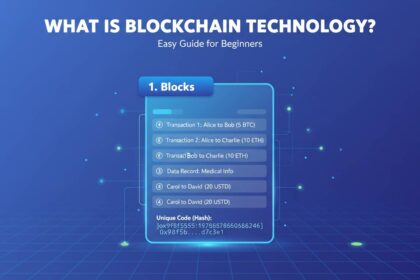

Blockchain technology often gets described as revolutionary, but what does it actually mean in practice? This guide breaks down the fundamentals of blockchain in plain language, covering how it works, where it's being used, and why it matters for our increasingly digital world.
Understanding the Basics of Blockchain
At its simplest, blockchain is a digital ledger that records transactions across many computers in a network. Once information gets recorded, it's extremely difficult to change or delete. The name comes from how the system works: individual transaction records, called "blocks," link together in chronological order, creating a permanent history of all activity.
Traditional databases are controlled by a single entity—a bank or company, for example. Blockchain works differently. No central authority runs the system. Instead, thousands of computers called "nodes" maintain copies of the entire blockchain and work together to validate new transactions. This decentralization is what makes blockchain resistant to fraud and manipulation.
Most people first heard about blockchain through cryptocurrencies like Bitcoin, but the technology has applications far beyond digital money. According to industry analysts at Gartner, blockchain could create $3.1 trillion in business value by 2030.
How Blockchain Works
A blockchain transaction follows a specific process. It starts when someone initiates a transaction—sending cryptocurrency to another person, for instance, or recording data on the blockchain.
Once created, the transaction broadcasts to a network of nodes spread across the globe. These nodes compete to solve complex mathematical puzzles or validate transactions through mechanisms like proof of stake. This competition acts as a consensus mechanism, ensuring all nodes agree on the state of the blockchain.
After the network confirms a transaction is valid, it groups with other transactions into a new block. This block then adds to the existing chain, permanently recording the transaction. The entire process usually takes minutes, though exact times vary by network.
Each block contains three things: the transaction data, a hash (a unique digital fingerprint), and the hash of the previous block. This interconnected structure provides security. If someone tries to alter a past transaction, the hash of that block changes, breaking the link to subsequent blocks and alerting the network immediately.
Key Components of Blockchain Networks
Understanding these elements helps explain how blockchain achieves its combination of transparency, security, and decentralization.
Blocks are the basic storage units. Each block holds a batch of transactions, a timestamp, and a cryptographic hash. Most blockchains limit how much data a single block can hold, which constrains how many transactions the network can process.
Nodes are the computers that participate in the blockchain network. Every node maintains a complete copy of the blockchain and validates new transactions. Because the data distributes across many machines, the network keeps working even if some nodes fail or act maliciously.
Miners are specialized nodes that bundle transactions into blocks and solve cryptographic puzzles to add new blocks to the chain. They receive cryptocurrency rewards for their work, creating an economic incentive that keeps the network secure.
Smart contracts are self-executing programs stored on the blockchain. When predetermined conditions are met, they automatically enforce the terms of an agreement. These digital contracts remove the need for intermediaries like lawyers or brokers, enabling parties who may never meet to transact securely.
Types of Blockchain Networks
Different blockchain networks offer different trade-offs in transparency, access, and control.
Public blockchains like Bitcoin and Ethereum are open networks where anyone can participate. These offer maximum decentralization and transparency but may struggle with scalability and energy use.
Private blockchains restrict participation to invited members only. Organizations often use these for internal operations where privacy and speed matter more than full decentralization. IBM and Microsoft have developed private blockchain solutions for enterprise use.
Consortium blockchains are a hybrid approach where multiple organizations share control. A group of pre-selected nodes governs these networks, balancing the openness of public blockchains with the efficiency of private ones.
The right choice depends on the specific application—whether transparency matters more than speed, how sensitive the data is, and how fast transactions need to be.
Real-World Applications Beyond Cryptocurrency
Cryptocurrency remains blockchain's most famous use, but the technology reaches into many industries.
In supply chain management, blockchain enables end-to-end tracking of products from manufacturing to delivery. Walmart implemented blockchain to trace food origins, cutting the time to identify contamination sources from days to seconds.
Healthcare benefits from blockchain's ability to store and share medical records securely. Patients gain more control over their health data, while providers access reliable, tamper-proof information that improves care coordination and cuts administrative costs.
Financial services continue adopting blockchain for cross-border payments, trade finance, and identity verification. Major banks like JPMorgan Chase and Citigroup have developed blockchain platforms that settle international transactions in seconds rather than days.
Voting systems are another promising application. Blockchain's immutability could prevent election fraud and enable secure remote voting.
Advantages and Challenges
Blockchain offers real benefits. All transactions are visible to participants and cannot be secretly modified. Cryptographic encryption and distributed consensus make unauthorized changes nearly impossible. Eliminating middlemen and automating processes reduces costs.
But challenges remain. Scalability is a concern—many blockchains struggle with high transaction volumes. Bitcoin processes roughly seven transactions per second, while Visa handles thousands.
Energy consumption draws criticism, especially for proof-of-work systems. Environmental concerns pushed Ethereum to adopt proof-of-stake in 2022, an upgrade called "The Merge."
Regulatory uncertainty creates headaches for organizations implementing blockchain solutions. Governments worldwide are still developing rules for cryptocurrency oversight, digital asset classification, and blockchain governance.
The Future of Blockchain Technology
Experts expect continued growth and innovation. Advances in scalability, interoperability between different blockchains, and user-friendly interfaces will drive mainstream adoption.
Central banks are exploring central bank digital currencies (CBDCs)—digital versions of national currencies using blockchain. The Atlantic Council reports over 100 countries are exploring or piloting CBDCs.
Blockchain will likely merge with other emerging technologies. Smart devices could autonomously execute transactions on blockchain networks, enabling machine-to-machine economies that operate without human intervention.
As the technology matures, expect increased integration into everyday applications—from identity management and property records to entertainment and social media. Understanding blockchain fundamentals helps individuals and organizations prepare for what many see as the next major shift in how we conduct business and exchange value.
Frequently Asked Questions
What is blockchain technology in simple terms?
Blockchain is a digital system for recording transactions across many computers in a way that makes the records extremely difficult to change or hack. Imagine a shared digital notebook where everyone can see what happens, but no one can secretly erase or alter past entries.
How is blockchain different from a regular database?
Traditional databases are controlled by one company or administrator. Blockchain distributes control across many computers worldwide. This decentralization means no single entity can manipulate the data, making blockchain more transparent and secure for certain applications.
Is blockchain the same as cryptocurrency?
No. Blockchain is the underlying technology; cryptocurrencies like Bitcoin are applications built on top of it. Blockchain can support many applications beyond money, including supply chain tracking, voting systems, and digital contracts.
Can blockchain be hacked?
Blockchain itself is highly secure due to its distributed nature and cryptographic encryption. However, vulnerabilities exist in exchanges, smart contracts, and user practices. The blockchain itself has never been successfully compromised, but individual systems built on blockchain have been breached.
How long does a blockchain transaction take?
Times vary by network. Bitcoin transactions typically take 10-60 minutes to confirm. Some newer blockchains process transactions in seconds. The time depends on network congestion and the specific consensus mechanism used.
Do I need technical knowledge to use blockchain?
Not necessarily. Many user-friendly applications now exist that handle the technical complexity, letting people send cryptocurrency or verify documents without understanding the underlying technology. However, basic understanding helps users make informed decisions about security and privacy.