


The digital media landscape is evolving rapidly, with emerging platforms challenging conventional giants such as Facebook and YouTube. Rumble Inc., trading as $RUM, has risen as a noteworthy player, positioning itself as a “neutral video platform” that appeals to creators and audiences seeking fewer content moderation controls. This confluence of cultural, technological, and regulatory shifts has put $RUM stock in the spotlight for both growth-oriented and speculative investors.
Understanding Rumble’s Business Model and Market Position
Rumble operates in the highly competitive social video sharing arena, targeting creators who have faced demonetization or deplatforming on mainstream services. While the company started as an alternative platform for independent creators, it has expanded its reach through strategic partnerships—including exclusive streaming deals with prominent podcasts and political commentators.
Core Revenue Streams and User Growth
Rumble earns revenue primarily from advertising and, increasingly, through premium subscriptions and creator monetization features. In recent quarters, the company reported double-digit percentage growth in active users, riding a wave of consumer interest in alternative media.
- Advertising: Rumble's open content policy attracts niche advertisers seeking to tap into its unique audience.
- Subscriptions and Creator Earnings: Premium offerings, such as paid fan groups and ad-free experiences, support additional revenue lines.
The company’s approach has enabled rapid scaling, but it also places Rumble in direct competition with legacy players.
Competitor Landscape
With platforms like YouTube refining their algorithms and moderation systems, Rumble differentiates itself by prioritizing “creator-first” principles. This strategy has resonated with audiences who feel underserved or overly restricted by traditional social media. However, it remains an open question whether this model can yield consistent growth and mainstream appeal.
$RUM Stock Price Performance: Historical and Recent Trends
Since going public via a SPAC merger, $RUM stock has experienced significant volatility, reflecting both broader tech sector trends and company-specific developments.
Key Catalysts and Inflection Points
RUM’s stock price has surged during periods of heightened attention to free speech issues or when prominent creators migrate to the platform. Conversely, it has faced headwinds from broader market sell-offs, tech correction cycles, and skepticism about profitability.
- SPAC Debut: The price jumped sharply after its initial listing, driven by enthusiasm for alternative tech.
- Content Deals: Strategic acquisitions and high-profile signings (such as podcasts or live-event broadcasters) often result in short-term price spikes.
- Broader Trends: Market corrections, regulatory risks, and ongoing debates over platform responsibilities create headwinds.
“Alternative platforms like Rumble are experiencing explosive user growth, but the path to sustainable financial performance remains complex,” notes digital media analyst Jenna Brantley. “The market is still evaluating how such platforms will monetize their expanding audiences at scale.”
Volatility and Risk Profile
$RUM stock’s volatility is notably higher than legacy tech media shares. While this attracts speculative traders, long-term investors need to weigh potential rewards against an evolving risk landscape—including regulatory scrutiny, content moderation liabilities, and competitive pressure.
Latest News Influencing $RUM Stock
Industry observers have seen a flurry of headline events shaping sentiment toward Rumble shares over the past year. These range from content policy controversies to financial results and new monetization tools.
Recent Developments
- Platform Exclusives & Partnerships: Announcements of exclusive content deals routinely boost platform engagement and investor confidence.
- Legislative Climate: Moves by U.S. and European regulators to reassess digital platform responsibilities have introduced new uncertainties.
- Quarterly Earnings: Earnings releases have often sparked significant stock swings, especially when management revises guidance or reports on user growth acceleration.
Real-World Example: The Impact of Creator Migration
The migration of high-profile creators, especially those with large followings, underscores the platform’s potential for viral growth. For example, Rumble’s partnership with Russell Brand in 2022 brought millions of new viewers and fueled trading interest—demonstrating how the platform’s core appeal can translate to financial markets, at least temporarily.
Analytical Outlook: Technical and Fundamental Perspectives
Technical Analysis
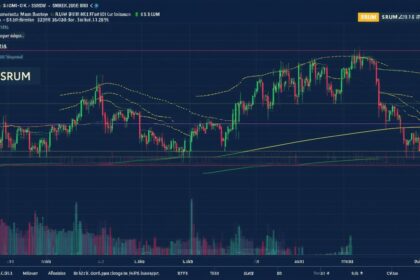
RUM’s chart is characterized by significant price swings, forming clear support and resistance zones that are closely watched by technical traders.
- Support levels tend to develop around previous areas of trading congestion, often following sharp corrections.
- Resistance levels frequently align with news-driven surges, where profit-taking is common.
Traders often employ momentum indicators, such as RSI and moving averages, to assess entry and exit points, but given the news-driven nature of $RUM, chart patterns are often secondary to external catalysts.
Fundamental Analysis
From a fundamentals perspective, investors scrutinize:
- Revenue Growth Rate: Sustained double-digit user growth is encouraging, but monetization remains in the early stages.
- Profitability Timeline: As with many high-growth tech companies, Rumble reinvests for expansion, pushing out the timeline for consistent earnings.
- Market Sentiment: The stock’s narrative plays a significant role, with sentiment shifts often preceding fundamental news.
Analyst Perspectives
Most analysts covering $RUM stock maintain a cautious but optimistic stance, citing the platform’s rapid adoption but acknowledging the challenges of translating engagement into predictable cash flows.
$RUM Stock Forecast: What Lies Ahead?
Forecasting the future of $RUM stock involves synthesizing user growth trends, regulatory backdrops, and the evolving appetite for independent media platforms.
Factors Driving Future Performance
- Content Acquisition: Continued recruitment of top creators and exclusive content deals are likely to fuel both engagement and media attention.
- Monetization Innovation: Rumble’s experimentation with features like live-streaming, direct tipping, and premium tiers will determine its long-term revenue potential.
- Regulatory Implications: Greater scrutiny of digital platforms could introduce new risks or opportunities, depending on the regulatory path chosen.
Potential Scenarios
- Bullish Case: Rumble solidifies its niche, achieves stickiness among creators and users, and unlocks new revenue streams, driving sustained price appreciation.
- Bearish Case: Growth taps out as mainstream competitors adapt, regulatory costs rise, or monetization lags behind user adoption, resulting in stagnated or declining share prices.
“The outlook for $RUM hinges on its ability to execute as both a technology platform and a trusted media brand. Those who align with its vision see considerable upside—but with higher-than-average volatility,” says fintech portfolio manager Elias Novak.
Conclusion: Key Takeaways for $RUM Stock Investors
Rumble’s journey from niche startup to public company marks it as a unique force in the video-sharing market. $RUM stock embodies both the opportunity and uncertainty present in today’s digital media space. While the platform has shown impressive user momentum and an appetite for innovation, translating attention into sustainable profits remains its core challenge. For investors, $RUM offers asymmetric risk and reward—best approached with a willingness to navigate volatility and monitor both financials and platform evolution closely.
FAQs
What is $RUM stock?
$RUM stock represents shares of Rumble Inc., a digital media platform focused on video sharing and live streaming, known for its minimal content moderation approach.
Why is Rumble considered unique among video platforms?
Rumble differentiates itself through its commitment to less restrictive content policies, appealing to creators who may feel constrained by mainstream alternatives.
What are the main risks for $RUM stock investors?
Major risks include intense competition from established platforms, regulatory developments, and the challenge of converting user growth into reliable revenue streams.
How does Rumble make money?
Rumble primarily earns through digital advertising and, increasingly, through premium subscriptions and creator monetization tools.
What factors could influence $RUM’s future stock performance?
Key influences include successful onboarding of high-profile creators, regulatory trends, and the effectiveness of expanding monetization features.
