

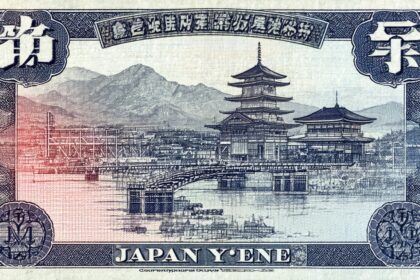

The Japanese yen has long been a bellwether for investor sentiment in global finance. As the world’s third-largest economy, Japan’s monetary decisions and currency fluctuations ripple across equity markets, supply chains, and international trade routes. In the past year, yen volatility has surged, drawing heightened interest from traders, policymakers, and multinational businesses alike. This update cuts through daily noise to examine what’s moving the yen, the forces behind its fluctuations, and the real-world impacts from Tokyo to Wall Street.
Key Drivers of Yen Volatility
Divergence Between Monetary Policies
One of the largest forces shaping yen news today is the divergence between the Bank of Japan (BOJ) and other major central banks, especially the U.S. Federal Reserve. While the Fed and the European Central Bank have raised interest rates in response to inflationary pressures, the BOJ has largely stuck with ultra-loose monetary policy—even with signs of inflation picking up in Japan for the first time in decades.
This gap in interest rates weakens the yen by making Japanese assets less attractive to foreign investors, who seek higher yields elsewhere. As a result, currency traders gravitate toward the U.S. dollar, driving the USD/JPY pair to multi-decade highs at points in the last year.
Economic Data and Market Sentiment
Besides central bank policy, the yen reacts sharply to domestic economic releases—such as GDP growth, inflation reports, and trade balances. For instance, better-than-expected export numbers often buoy the yen, since a robust trade surplus suggests underlying economic strength. Conversely, sluggish growth data or warnings of recessionary pressures can weigh on the currency.
Yet perhaps even more impactful is the ebb and flow of global risk sentiment. During periods of financial stress, the yen frequently strengthens as investors unwind riskier positions and flock to safe-haven assets—a counterintuitive dynamic considering Japan’s ongoing challenges with debt and deflationary pressures.
"The paradox of the yen is that it's both a reflection of Japan's internal challenges and a global barometer for risk aversion," notes Yuko Kawai, a former Bank of Japan official and financial markets analyst. "When volatility spikes worldwide, the yen often rallies even if Japan's own fundamentals are weak."
Market Impact: From Trade to Tourism
Corporate Profits Under Pressure
Japanese exporters benefit when the yen is weaker, as their products become more competitive overseas and profits, once repatriated, are amplified in yen terms. Automakers like Toyota and electronics giants such as Sony have reported significant swings in earnings as a direct consequence of currency moves.
However, the flip side is felt by smaller import-reliant firms, which face cost pressures as the price of raw materials and energy imported into Japan rise with a weaker currency. This squeeze on margins can be particularly acute in sectors with limited pricing power, including food and consumer goods.
Tourism and Consumer Spending
For inbound tourism, the weak yen offers a silver lining. As the currency loses value, travel to Japan becomes more attractive for foreign visitors. The post-pandemic reopening saw a surge in tourist arrivals, with destinations from Kyoto to Hokkaido experiencing record demand. Duty-free shopping, hospitality, and regional economies all benefit from this trend.
For Japanese consumers, though, a depreciating yen can result in higher prices for imports, putting pressure on household budgets and potentially dampening consumer sentiment over time.
Policy Responses and Public Debate
Bank of Japan’s Stance
The BOJ has faced growing scrutiny from both domestic critics and international observers over its commitment to an accommodative stance. Given Japan’s prolonged battle with low inflation and anaemic wage growth, policymakers have argued for patience and a “wait and see” approach.
Recent shifts—such as the gradual adjustment of the yield curve control mechanism—hinted at the possibility of policy normalization, but concrete hikes or sharp tightening moves remain elusive. This uncertainty keeps yen-watchers on high alert for any signals of forthcoming change.
Government Interventions
On several occasions, particularly during periods of rapid yen depreciation, Japanese authorities have intervened in forex markets to stem volatility. These direct interventions are rare but signal the government’s willingness to defend the currency if disorderly moves threaten financial stability.
Such actions have a mixed record in terms of efficacy. Often, the broader tide of global capital flows ultimately proves stronger than any short-term policy push. Nevertheless, intervention risk remains part of the calculus for currency traders.
Global Ripple Effects
Capital Flows and Investment Strategies
The yen plays a central role in the so-called “carry trade,” where investors borrow in yen at low—or even negative—rates to fund higher-yielding investments overseas. This dynamic amplifies movements in both directions: a weaker yen encourages outflows, while bouts of yen strength trigger rapid reversal in global risk assets.
International bond markets, particularly those in Asia-Pacific, are sensitive to these shifts. Similarly, Japanese institutional investors, including pension funds and insurance companies, adjust overseas allocations based on FX swings, influencing broader liquidity in global financial markets.
Case Study: Yen Volatility and Asian Exporters
In recent quarters, a number of South Korean and Taiwanese tech exporters have cited yen volatility as both a challenge and an opportunity. A cheaper yen can undercut their pricing power in certain markets, but it can also present opportunities to source components and capital equipment from Japan at favorable rates.
This illustrates the complex web of economic interdependencies shaped by even modest shifts in Japan’s exchange rate regime.
Outlook: What’s Next for the Yen?
As global markets navigate persistent inflation, shifting monetary policies, and geopolitical uncertainties, the yen is likely to remain a focal point for investors. Upcoming BOJ meetings, U.S. rate decisions, and global economic data releases will drive headlines and trading volumes.
Longer-term, structural shifts—such as Japan’s attempts at wage growth and revived inflation—could gradually alter currency dynamics. For now, however, the prevailing theme remains one of heightened volatility, uncertainty, and close monitoring of both domestic and international drivers.
Conclusion
The latest news on the Japanese yen is a story of contrasts: between external perceptions and domestic realities, short-term swings and long-term fundamentals, risk aversion and the search for yield. As monetary policy divergence and global market sentiment continue to shape the yen’s trajectory, all eyes remain on Tokyo’s next moves. For corporates, investors, and policymakers, disciplined hedging and strategic flexibility are the watchwords in this climate of uncertainty.
FAQs
What is driving the recent volatility in the Japanese yen?
Recent yen volatility is largely due to the gap between Japanese and U.S. interest rates, changes in global risk sentiment, and intermittent market interventions by Japanese authorities.
How does yen weakness impact Japanese companies?
While a weaker yen benefits major exporters by boosting overseas profits, it also raises import costs for many firms, squeezing margins—especially for those dependent on raw materials and energy inputs.
Why is the yen considered a safe-haven currency?
The yen is often seen as a safe-haven during global uncertainty because of Japan’s stable institutions, deep capital markets, and low external debt, prompting investors to seek it out when volatility rises elsewhere.
Has the Bank of Japan changed its long-standing monetary policy?
While the Bank of Japan has made incremental adjustments to its policy tools, core settings remain highly accommodative, and major shifts await clearer domestic inflation and wage data.
How do yen movements affect global markets?
Yen fluctuations influence international investment flows, the “carry trade,” and the relative competitiveness of exporters across Asia and beyond, often amplifying moves in other risk assets.
Could Japan intervene again if the yen falls too much?
The Japanese government could step into currency markets to limit excessive yen depreciation, especially if moves are rapid or threaten financial stability, but such efforts typically have only temporary effects.
